
How Enterprises Choose the Right SSD: From Storage Bottleneck to Performance Engine
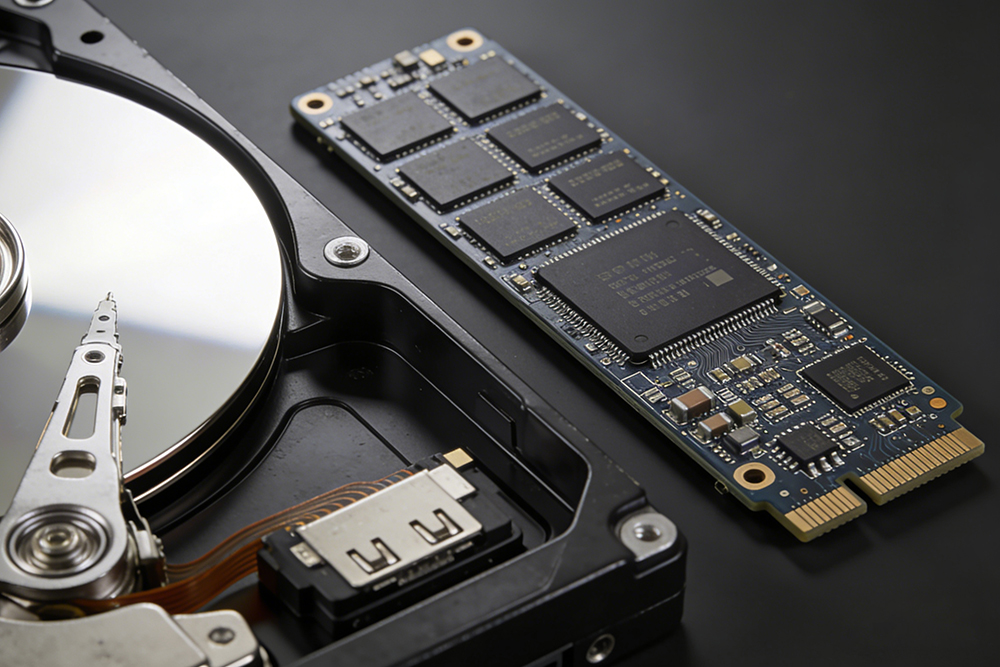
In the digital era, traditional HDDs create storage bottlenecks limiting enterprise efficiency, and SSDs are the key to solving this. This article explains SSD technology evolution, proposes three-dimensional selection strategies (scenario, reliability, performance), and introduces Loongtion’s full SSD range (enterprise, industrial, fully domestic) to help enterprises choose the right SSD, unlock efficiency and ensure data security and business stability.
In the era of digital transformation sweeping all industries, data has become the core asset of enterprise development. However, many enterprise IT systems still suffer from the speed limitations of traditional hard disk drives (HDDs). Slow boot times, lagging loads, and data throughput bottlenecks quietly waste employees’ working hours and cause businesses to miss valuable opportunities. According to industry statistics, for 8 hours of daily computer usage, nearly 292 hours per year are lost to waiting — equivalent to more than ten days of productivity wasted on traditional storage.
To break this bottleneck, solid-state drives (SSDs) are undoubtedly the optimal solution. Yet with a wide variety of SSDs on the market — including consumer, enterprise, and industrial grades, along with SATA, NVMe, and other protocols — how can enterprises make the right choice? This article combines industry technology trends and practical application needs to provide a clear selection guide, helping enterprises avoid pitfalls and select the right product.
1. Technology Evolution: From "Alternative" to "Customized Core"
The development of SSDs has gone far beyond simply replacing HDDs with faster storage. In early years, the industry systematically popularized the basic principles, selection, and optimization of SSDs, emphasizing that dedicated tuning is required to achieve full performance. By 2015, the industry began analyzing storage system architecture, highlighting the inherent characteristics of flash memory and the importance of firmware technologies such as FTL, garbage collection, and wear leveling, providing deeper guidance for enterprise SSD adoption.
Today, SSD technology has entered an era of deep collaborative design. Cutting-edge industry research shows that modern SSDs, especially enterprise and specialized SSDs, are highly adaptable layered systems. Their value lies not only in read/write speed (IOPS, bandwidth) but also in reliability, consistent latency, power management, and cooperative optimization with upper-layer applications such as databases. New protocols (such as NVMe), new form factors (such as EDSFF), and new technologies (such as ZNS and computational storage) continue to emerge, transforming storage from a passive component into an active performance engine.
2. Three Dimensions of Selection: Scenario, Reliability, and Performance
Choosing the right enterprise SSD requires more than just capacity and price. Enterprises must evaluate three dimensions to find the most suitable and cost-effective solution.
Scenario Adaptation Is Fundamental
Different scenarios demand drastically different SSD performance:
- General office and lightweight servers: Focus on cost efficiency and stability. Cost-effective enterprise SATA SSDs significantly improve system responsiveness and support daily business operations.
- Data centers, cloud computing, and HPC: Require extremely high IOPS, throughput, and QoS. Enterprise NVMe SSDs (U.2, EDSFF) are standard, delivering low latency and high concurrency for virtualization and databases.
- Industrial control, automotive, and edge computing: Operate in harsh environments. Industrial-grade SSDs supporting wide temperature ranges (-40℃~85℃), vibration resistance, and shock resistance are essential to ensure data integrity and system stability.
- Critical information infrastructure and independent control: Supply chain security is critical. Fully domestic SSDs, with self-developed controllers, flash memory, and firmware, provide a secure and reliable foundation.
Reliability Comes First
For enterprises, data is invaluable and business continuity is critical. The core value of enterprise SSDs lies in stability and endurance:
- DWPD / TBW: Key metrics for lifespan. Enterprise products typically support 1–3 DWPD or higher TBW for 24/7 writing.
- End-to-end data protection and power loss protection (PLP): Prevent data corruption or loss during transfers or unexpected outages.
- Strict testing and certification: Enterprise SSDs must pass long-term stress testing, compatibility testing, and industry certifications such as SNIA.
Performance Beyond Surface Specifications
Sequential read/write speeds (e.g., 3500MB/s) are often highlighted, but random read/write performance (IOPS) better reflects real-world experience in databases and system startup. Steady-state performance is more important than peak empty-drive performance, revealing the quality of the SSD controller and firmware optimization in garbage collection and wear leveling.
3. Loongtion Solutions: Reliable Performance for Diverse Enterprise Scenarios
Based on deep understanding of SSD evolution and precise insight into enterprise needs, Loongtion Smart Technology has built a complete storage product portfolio that matches the three core selection dimensions, delivering reliable solutions for enterprises across industries.
Built for Efficiency — Loongtion Enterprise SSD Series
Supports SATA and NVMe protocols, available in 2.5-inch, M.2, U.2 form factors. Rigorously tested for enterprise-level stability and endurance, with high TBW and power loss protection. Designed for servers, data centers, and high-performance workstations to reduce OPEX and ensure uninterrupted core services.
Built for Toughness — Loongtion Industrial / Rugged SSD Series
Features industrial wide-temperature (-40℃~85℃), vibration and shock resistance, ideal for factory automation, intelligent transportation, energy, power, and medical equipment. Available in standard, embedded, and memory card formats for compact, reliable operation in harsh environments.
Built for Security — Loongtion Battle-Soul Full Domestic SSD Series
Achieves 100% domestic production of controllers, memory chips, and firmware, compatible with mainstream operating systems and CPU platforms. Provides a secure, controllable, and reliable storage foundation for critical national infrastructure, meeting the highest information security standards.
Conclusion
For enterprises, choosing an SSD means choosing a powerful heart for the digital infrastructure. It should be viewed not as a consumable, but as a strategic investment in long-term efficiency, data security, and total cost of ownership (TCO). By understanding the true nature of SSD technology, matching business scenarios, and partnering with experienced providers like Loongtion, enterprises can fully unlock data potential and gain an edge in the efficiency revolution.
About Loongtion
Ningbo Loongtion Intelligent Technology Co., Ltd. specializes in the R&D, production, and sales of high-end storage products. Its portfolio includes enterprise, industrial, rugged, and fully domestic solid-state drives, committed to providing stable, reliable, and high-performance storage solutions for global customers.