Case Study: Upgrading a Battery Plant's Vision Line to DDR5 for Inference Throughput
How a battery manufacturer's quality line moved from DDR4 to wide-temperature DDR5 to stop frame drops on its AI inspection stations.
The situation
A lithium battery manufacturer runs a fleet of AI-based inspection stations across its electrode and cell lines. Each station pairs high-resolution cameras with an edge inference computer that detects surface defects in real time. As the company pushed line speed up to meet order growth, the inspection software began dropping frames — and on a defect-detection line, a dropped frame is a defective cell that ships.
The bottleneck was not the camera and not the inference model. It was memory bandwidth. The stations were built on DDR4-3200 boards, and the frame data plus model buffers were saturating the memory bus.
The problem
The upgrade had three hard constraints:
- Floor environment. The stations sit on the production floor, not in a server room. The cabinets are warm, dusty and subject to line vibration — consumer-grade memory was not an option.
- Solder-down design. The edge computers use soldered memory, not DIMMs. A memory upgrade meant selecting the right BGA part, not swapping a module.
- Minimal rework. The station boards were qualified. The ideal upgrade touched the memory BOM, not the board layout.
The search
Replacing the whole station was off the table — it would mean re-qualifying 40+ stations and months of downtime. The team needed the next memory generation in a footprint their existing controller boards could adopt, with the temperature rating the floor demanded.
That pointed to wide-temperature DDR5: roughly double the data-rate ceiling of DDR4-3200, with on-die ECC — an attractive feature for a solder-down board that nobody wants to rework in the field.
The solution
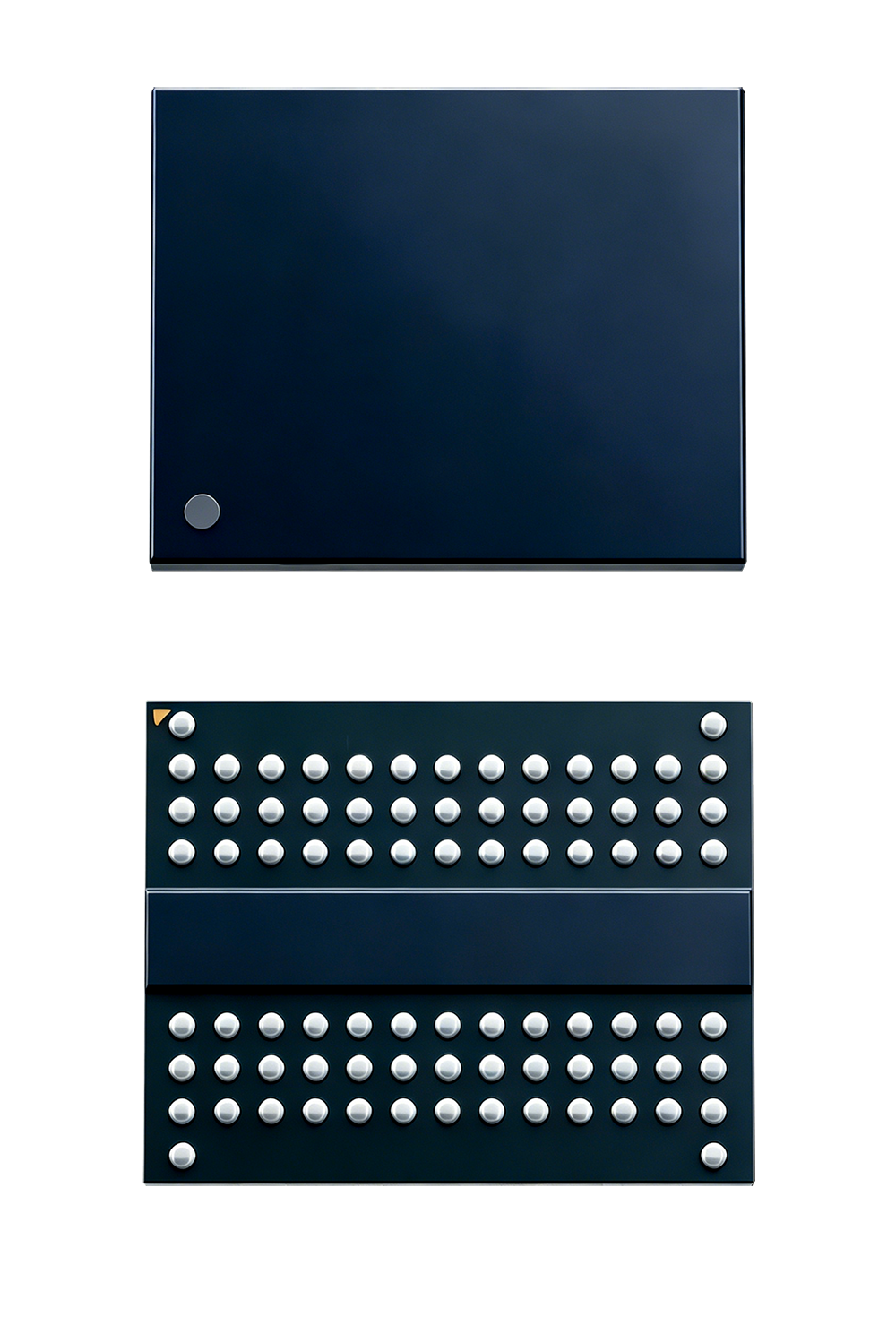
The team qualified a 16Gb DDR5 device in WBGA-82 (×8) package, rated -40°C to +85°C, running at 1.1V with on-die ECC. The key points that passed their review:
- Bandwidth headroom. DDR5's data rate moved the stations from frame-limited to sensor-limited — the memory bus stopped being the bottleneck.
- On-die ECC. For a solder-down design on a dusty factory floor, on-die ECC reduces single-bit failure modes that otherwise surface as intermittent crashes.
- Lower voltage. 1.1V operation trimmed the heat budget inside the cabinets.
- Domestic supply. Built on domestic die, the part avoided the allocation swings of the global DDR5 ramp.
The result
The first five stations were converted and ran for a month alongside the DDR4 units. Frame-drop events on the converted stations dropped to zero, and the inference software ran at full line speed with margin. The remaining stations were converted over the following quarter, with the DDR5 part added to the spare-parts list for new line builds.
The inspection yield gain was not from a better model — it was from a memory bus that finally kept up with the sensors.
Selection notes if you're in the same situation
- Size the bandwidth before the density. Vision and inference workloads are bandwidth-bound. If the existing board is frame-limited, DDR5's data-rate headroom is the upgrade that matters.
- Confirm the package against the controller. 16Gb DDR5 commonly comes in WBGA-82 (×8) or larger packages. Validate the ball map against the memory controller's layout.
- Require the temperature grade. Edge nodes end up on factory floors, in cabinets and outdoors. -40°C to +85°C covers the field; a commercial-grade part does not.
- Budget for signal integrity. DDR5 runs faster and is more layout-sensitive than DDR4. Use a validated reference layout, not a copied DDR4 trace design.
- Plan supply with a domestic source. DDR5 allocation is tight as the industry ramps; domestic die shortens lead times.
The lesson
When the bottleneck moved from the sensor to the memory bus, the fix was not more cameras — it was a memory generation with the bandwidth to keep up. Wide-temperature DDR5, built for solder-down industrial boards, is what let this line run at full speed without a redesign. Industrial memory suppliers such as Loongtion exist to serve exactly these applications.
Related products
Product lines commonly shortlisted for this application — open a page for PN, temperature grade, and datasheet request.