
Case Study: Keeping a PLC Production Line Running After DDR3 EOL
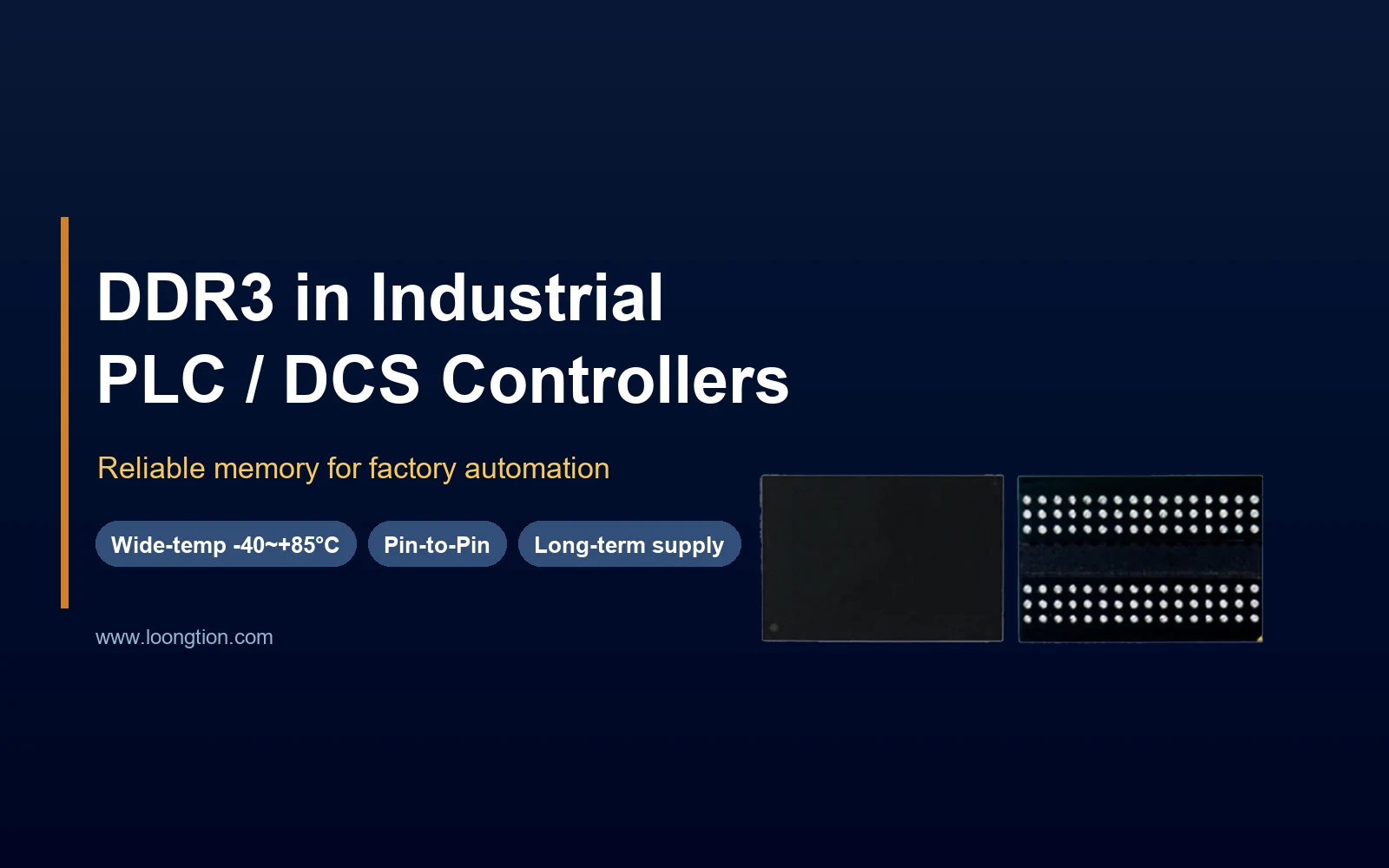
How a components manufacturer's maintenance team kept a 2018-era PLC line alive after the original DDR3 memory went EOL — with a pin-to-pin wide-temperature replacement.
The situation
In early 2025, the maintenance team at a tier-one automotive components plant in eastern China started seeing a pattern in their fault log: every few weeks, one of the PLC racks on the final-assembly line failed to boot on the Monday morning shift. The fault codes pointed at the memory, and the controller boards were 2018-era designs built around a 2Gb DDR3 chip in FBGA96.
The root cause was not a mystery. The original memory vendor had announced EOL for the DDR3 family years earlier, and the plant's usual distributors had quietly run out of the part. The maintenance team was buying the last stragglers from brokers at escalating prices — and wondering how long that would last.
The problem
Three constraints made this a difficult replacement job:
- No board redesign. The controller boards were qualified, field-proven and still under the plant's own extended support contract. Reworking the memory subsystem meant re-qualifying the whole controller.
- The cabinet is not climate-controlled. The line runs near the loading dock, and in winter the cabinet interior sits close to freezing at night. Commercial-grade memory was already marginal.
- Downtime is expensive. A failed boot on a Monday morning costs the plant a shift of production. The spare part had to be available now, not in twelve weeks.
The team needed a drop-in replacement that matched the original footprint — no layout change — and that would boot reliably at the temperatures the cabinet actually saw.
The search
They evaluated the usual options first. Refurbished pulls from brokers came without traceability and failed at roughly the same rate as the parts they were replacing. A direct-from-brand quote for a remaining stock lot came back with a lead time that stretched past the plant's production horizon. A third-party "compatible module" vendor wanted to replace the whole controller board — which would have meant re-qualifying the line.
What the team actually needed was the same chip, the same ball map, and a wider temperature rating than the original.
The solution
The search ended at domestically produced industrial DDR3 — a category that still serves the huge installed base of industrial controllers long after the major import vendors exited the market. The replacement part matched every requirement:
- Identical footprint. Same FBGA96 ball map as the original 2Gb ×16 chip — zero layout changes on the qualified board.
- Wider temperature rating. Rated -40°C to +85°C, covering the unheated cabinet envelope with margin — a step up from the marginal commercial-grade original.
- Dual voltage support. Both 1.5V and 1.35V rails supported, matching the controller's 1.35V design.
- Batch traceability. Lot-level records, which the plant's quality system required for line equipment.
The result
The plant ordered 300 pieces for the initial rollout: enough to refresh every controller on the line plus a service stock. Samples went through the controller's memory training and a two-week temperature cycling run at the plant's own reliability bench before full rollout. Twelve months in, the team reports zero memory-related boot failures on the refreshed racks — and the Monday-morning fault-code pattern is gone.
The same part is now the standard spare in their crib for the whole line family, including an extreme-temperature-grade variant for the two racks that sit in an unheated annex building.
Selection notes if you're in the same situation
- Confirm the package before ordering. If the controller uses a 2Gb ×16 DDR3 in FBGA96, look for a replacement with the identical ball map.
- Check the voltage rail. Measure 1.5V or 1.35V on the board. A dual-rail part covers both.
- Match the temperature grade to the cabinet. Unheated plant floor or outdoor: wide-temp (-40°C) or extreme (-55°C). Climate-controlled cabinet: industrial grade is enough.
- Validate with memory training and thermal cycling. Run the replacement through the controller's memory controller training and a temperature cycle before full rollout — not just a bench boot.
- Keep a service stock. A line that runs 24/7 deserves a crib spare, not a 12-week lead time after the failure.
The lesson
DDR3 is still the memory inside a huge installed base of industrial controllers, and EOL does not mean the equipment is ready for retirement. For this plant, the answer was not a redesign and not a broker gamble — it was a traceable, pin-to-pin, wide-temperature replacement that kept a proven controller design in service. Industrial memory suppliers such as Loongtion exist to serve exactly these long-life applications.
Related products
Product lines commonly shortlisted for this application — open a page for PN, temperature grade, and datasheet request.
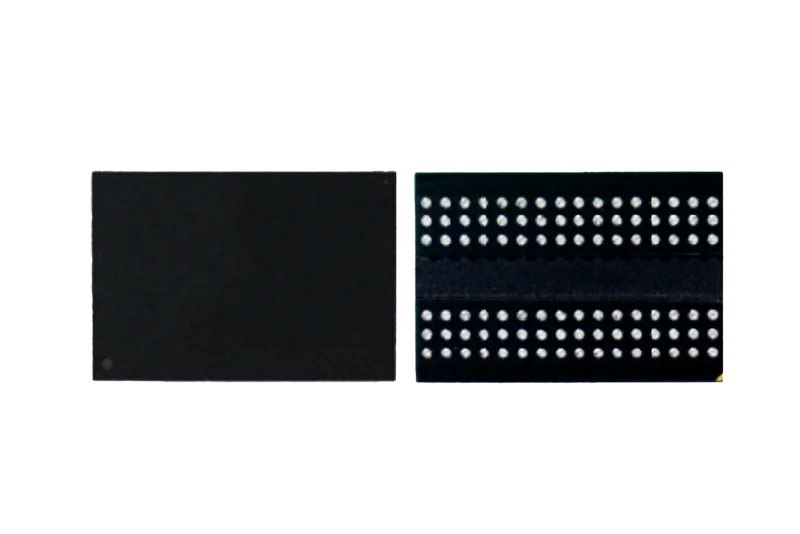
DDR3 DRAM Chip · Extreme · CN
- FBGA96 · ×16
- Dual-voltage rail
- China-localized supply (CN)
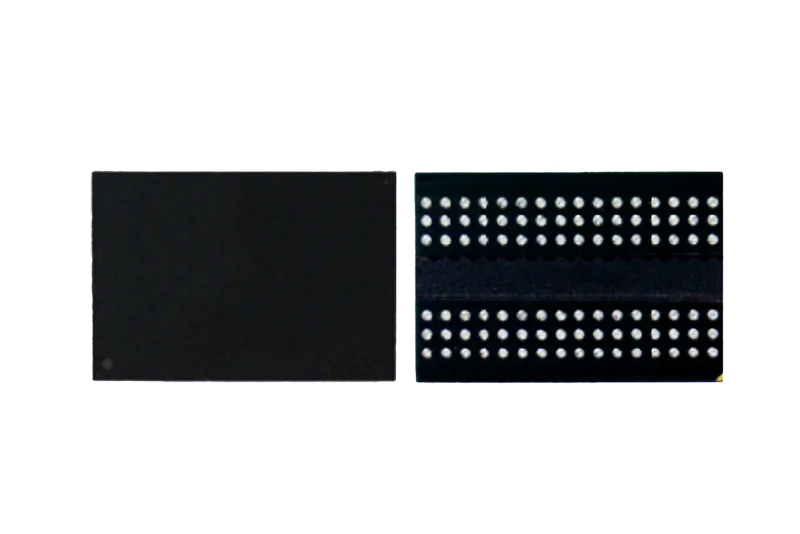
DDR3 DRAM Chip · Wide-temp · CN
- Both Wafer and Packaging &
- Standard SSTL Interface
- Supports Dual Voltages