
Wide-Temperature DDR4 for Oil & Gas SCADA RTUs
Unstaffed wellheads, solar-powered RTUs, enclosures that swing from -30°C to +70°C. Why -40°C to +85°C DDR4 at full DDR4-3200 speed is the dependable choice for SCADA remote terminal units, with verified pin-to-pin alternatives.
Scene
A remote wellhead in a desert oil field has no climate control. The SCADA RTU inside the control skid breathes air that swings from -30°C at night in winter to +70°C inside the enclosure at midday in summer. Power is intermittent — supplied by solar panels and batteries — and a technician may visit the site only once a quarter.
For oil and gas operators, the memory inside these remote terminal units is not a commodity. A boot failure at an unstaffed site means a lost data window from the well's sensors — pressure, flow, temperature — and a service truck dispatched across hundreds of kilometres. Reliability is measured in years of unattended operation, not in benchmark scores.
Why wide-temperature DDR4 fits SCADA RTUs
SCADA remote terminal units combine an application processor, a DDR4 DRAM array, and a small amount of non-volatile storage. The DRAM holds the real-time scan tables and communication buffers; it is exercised continuously, in an enclosure that can be significantly hotter than the ambient air around it.
Consumer-grade DDR4 is specified for 0°C to +85°C. Inside a solar-heated metal skid in the desert, the junction temperature of a DRAM device can approach that ceiling during summer afternoons — and marginal timing at high temperature is exactly the kind of intermittent fault that is hardest to diagnose remotely.
Loongtion's industrial DDR4 parts are rated -40°C to +85°C and sustain DDR4-3200 across that range. When a replacement part from a tier-one vendor drops to 2666 MT/s at extended temperature, the RTU's memory controller must either slow down or risk marginal operation — both undesirable in a device that may run for years without a reboot.
The Loongtion DDR4 option
| Original part | Loongtion equivalent | Density | Package | Fit |
|---|---|---|---|---|
| Samsung K4A8G165WC-BCWE | YZ48G16V-F9HPI-M | 8 Gb | FBGA96 (×16) | Pin-to-pin (verified) |
| Micron MT40A512M16JY-07EAIT:B | YZ48G16V-F9HPI-M | 8 Gb | FBGA96 (×16) | Pin-to-pin |
| Micron MT40A1G8WE-075EAIT:B | YZ48G08V-F7HPI-M | 8 Gb | FBGA78 (×8) | Functional alternative |
The ×8 and ×16 variants use different ball maps — FBGA78 and FBGA96 respectively — and are not interchangeable. Offering both from a single supplier lets a SCADA OEM qualify one BOM source across multiple RTU platforms, which matters when every component change triggers a re-certification cycle.
Selection notes
- Calculate the enclosure temperature, not the ambient. A sealed skid in direct sun can run 15-20°C above ambient. Choose the temperature grade based on the worst-case internal temperature, not the weather forecast.
- Keep the speed bin. If the RTU's SoC is configured for DDR4-3200, a part that derates to 2666 at high temperature forces a firmware change or a slower memory bus — verify the part sustains the rated speed at the operating temperature.
- Confirm the ball map. Replacing a ×16 original (FBGA96) with a ×8 part (FBGA78) fails at board level regardless of density.
- Plan for unattended service life. Oil and gas sites run 10+ years. A stable supply path and documented cross-reference for the DRAM are procurement requirements, not preferences.
For RTU and SCADA integrators managing EOL transitions on their existing DDR4 BOM, Loongtion's cross-reference database covers Samsung and Micron families with verified fit notes, and application engineering supports ball-map and timing validation before production.
Related products
Product lines commonly shortlisted for this application — open a page for PN, temperature grade, and datasheet request.
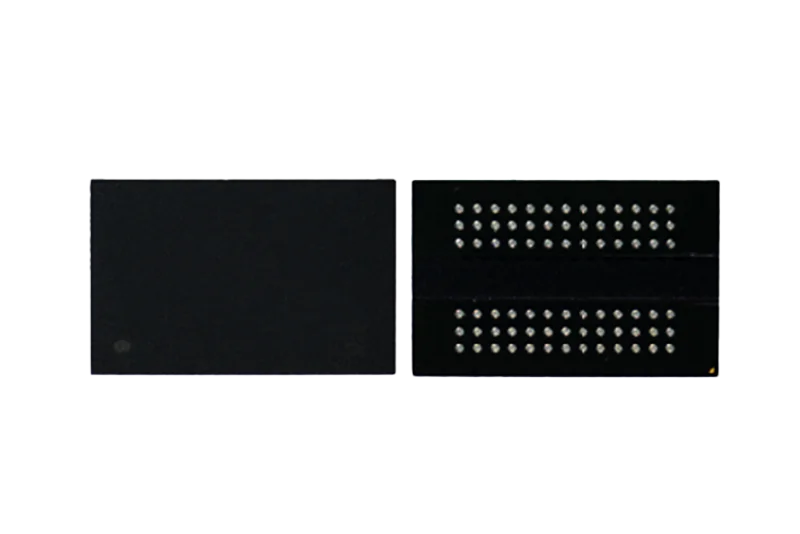
8Gb DDR4 DRAM Chip · Wide-temp · CN
- DDR4 bandwidth
- China-localized supply (CN)
- Drop-in planning
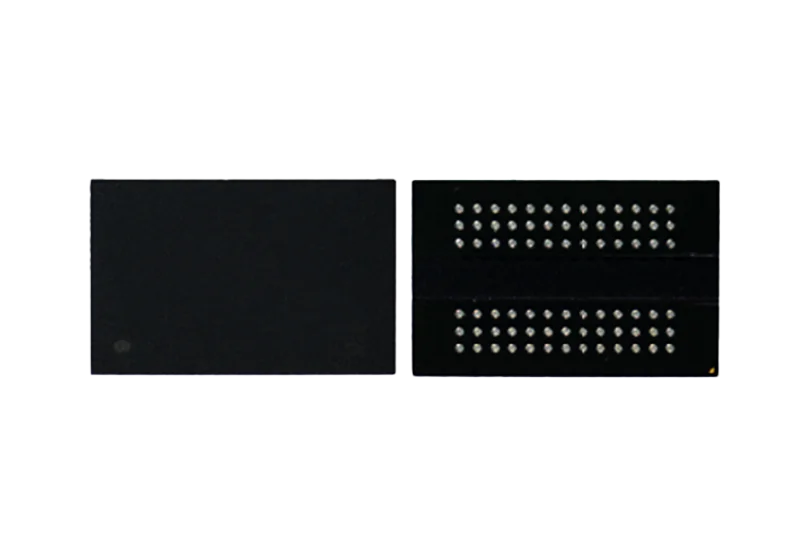
8Gb DDR4 DRAM Chip · Wide-temp
- Both wafer and package
- FBGA78/FBGA96 package
- Supports VDD(VDDQ) 1.2V +/-