
Case Study: Wide-Temperature DDR4 for Substation Bay Controllers After Import EOL
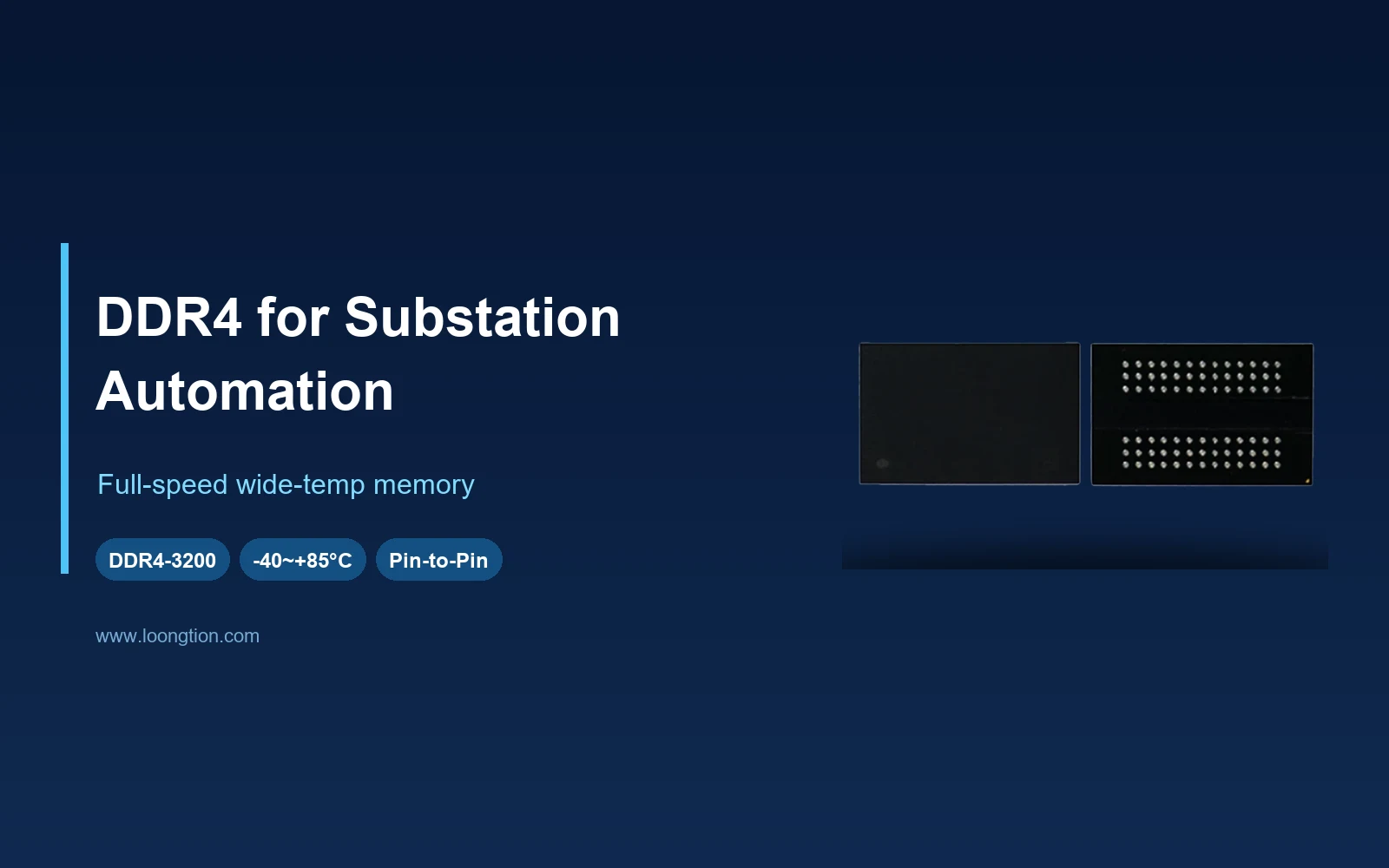
How a provincial grid operator's protection team replaced EOL'd import DDR4 in outdoor substation cabinets with a full-speed wide-temperature part — without redesigning the board.
The situation
A provincial power grid operator maintains thousands of protection relays and bay controllers across outdoor substations. Many of the newer units, commissioned after 2020, are built around an 8Gb DDR4 chip. In late 2024, one of the import semiconductor vendors formally announced EOL for the DDR4 family, and the operator's centralized spare-parts warehouse found itself unable to restock a part that several equipment generations depended on.
The problem
Three realities made this a supply-chain problem with no easy answer:
- The cabinets are not climate-controlled. In the northern part of the province, substation cabinets see -40°C in January and +70°C-plus in summer under transformer heat. The replacement had to work across the full envelope.
- The boards were qualified years ago. Re-laying out the memory section meant re-qualifying protection hardware that was already approved and in service — a multi-year process the operator could not afford.
- Speed could not be silently downgraded. Protection and measurement functions sample current and voltage waveforms continuously. A memory part that drops from DDR4-3200 to 2666 MHz when hot changes timing behaviour that validation engineers would have to chase across every cabinet.
The search
The warehouse first tried to buy remaining stocks through brokers. Prices climbed as inventory drained, and traceability was poor — a concern for equipment that must meet grid reliability audits. A vendor proposal to swap entire controller boards was rejected on cost and re-qualification grounds.
What the operator needed was a drop-in 8Gb DDR4: same ball map, same voltage, same speed grade — but rated for the real temperature range of an outdoor cabinet.
The solution
The search converged on domestically sourced wide-temperature DDR4 — a class of industrial memory that has matured specifically to serve power, rail and industrial applications abandoned by the major import vendors. The qualifying part met every constraint:
- Pin-to-pin footprint. Same FBGA96 ball map as the original ×16 part, so the qualified board layout was untouched.
- Full-speed at wide temperature. Rated -40°C to +85°C while holding DDR4-3200 — no derating at the top of the envelope.
- 1.2V operation. Matched the controller's existing power rail.
- Traceable lots. Batch-level traceability, which the reliability audit required.
The dual-rail flexibility (×16 in FBGA96 for the bay controllers, ×8 in FBGA78 for a related meter family) meant one domestic supplier could cover both boards.
The result
The operator qualified the part through a full temperature-cycle run on a representative bay controller, then rolled it into service stock for three substation classes. The first deployment batch covered 120 units across two northern substations before winter. After a full heating season, the team reports no memory-related faults, and the part is now in the provincial spare-parts catalogue for new bay controller builds.
Selection notes if you're in the same situation
- Confirm ×8 vs ×16 before ordering. FBGA78 for ×8, FBGA96 for ×16 — the ball maps are different and not interchangeable.
- Require full-speed wide-temp. If the design runs DDR4-3200, the replacement must hold 3200 MHz at -40°C to +85°C, not quietly drop to 2666 MHz.
- Check the low-temperature limit specifically. Outdoor installations need -40°C. A part rated 0°C or -25°C fails the requirement regardless of price.
- Validate with memory training and thermal cycling. Run the replacement through the controller's memory training and a full temperature cycle before warehouse rollout.
- Plan for long-term supply. With DDR4 capacity shifting to DDR5 and HBM, a stable domestic allocation avoids the lead-time swings that created this problem in the first place.
The lesson
For a grid operator, the memory inside a protection relay is infrastructure. When the import supply chain ended, the answer was not a redesign and not a broker gamble — it was a traceable, full-speed, wide-temperature DDR4 that kept qualified protection boards in service. Industrial memory suppliers such as Loongtion exist to serve exactly these long-life applications.
Related products
Product lines commonly shortlisted for this application — open a page for PN, temperature grade, and datasheet request.
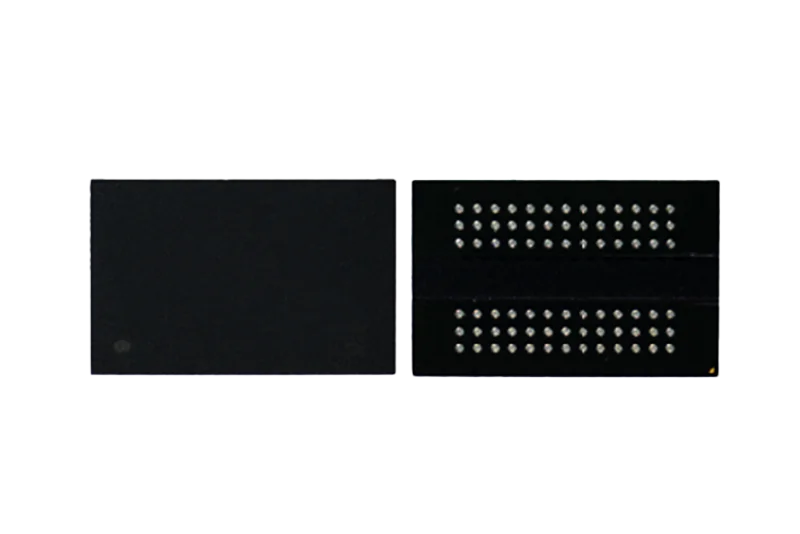
8Gb DDR4 DRAM Chip · Wide-temp · CN
- DDR4 bandwidth
- China-localized supply (CN)
- Drop-in planning
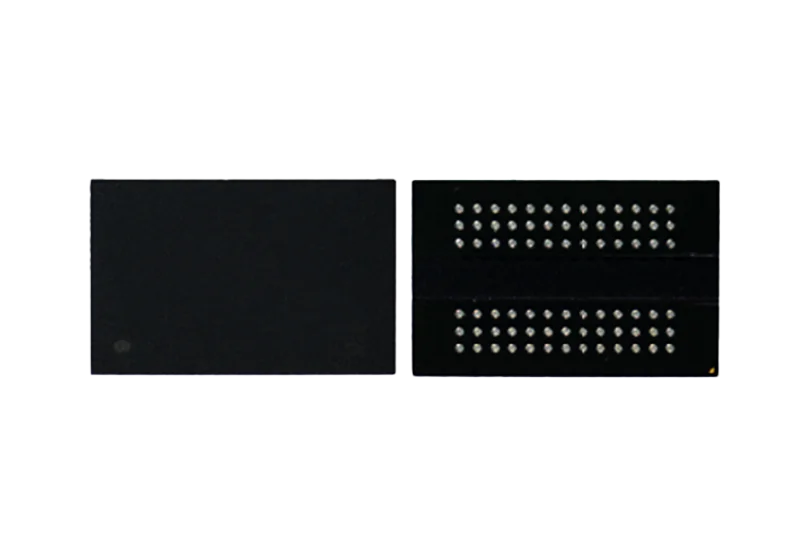
8Gb DDR4 DRAM Chip · Wide-temp
- Both wafer and package
- FBGA78/FBGA96 package
- Supports VDD(VDDQ) 1.2V +/-