
Industrial eMMC for Medical Devices: Dependability That Must Not Fail
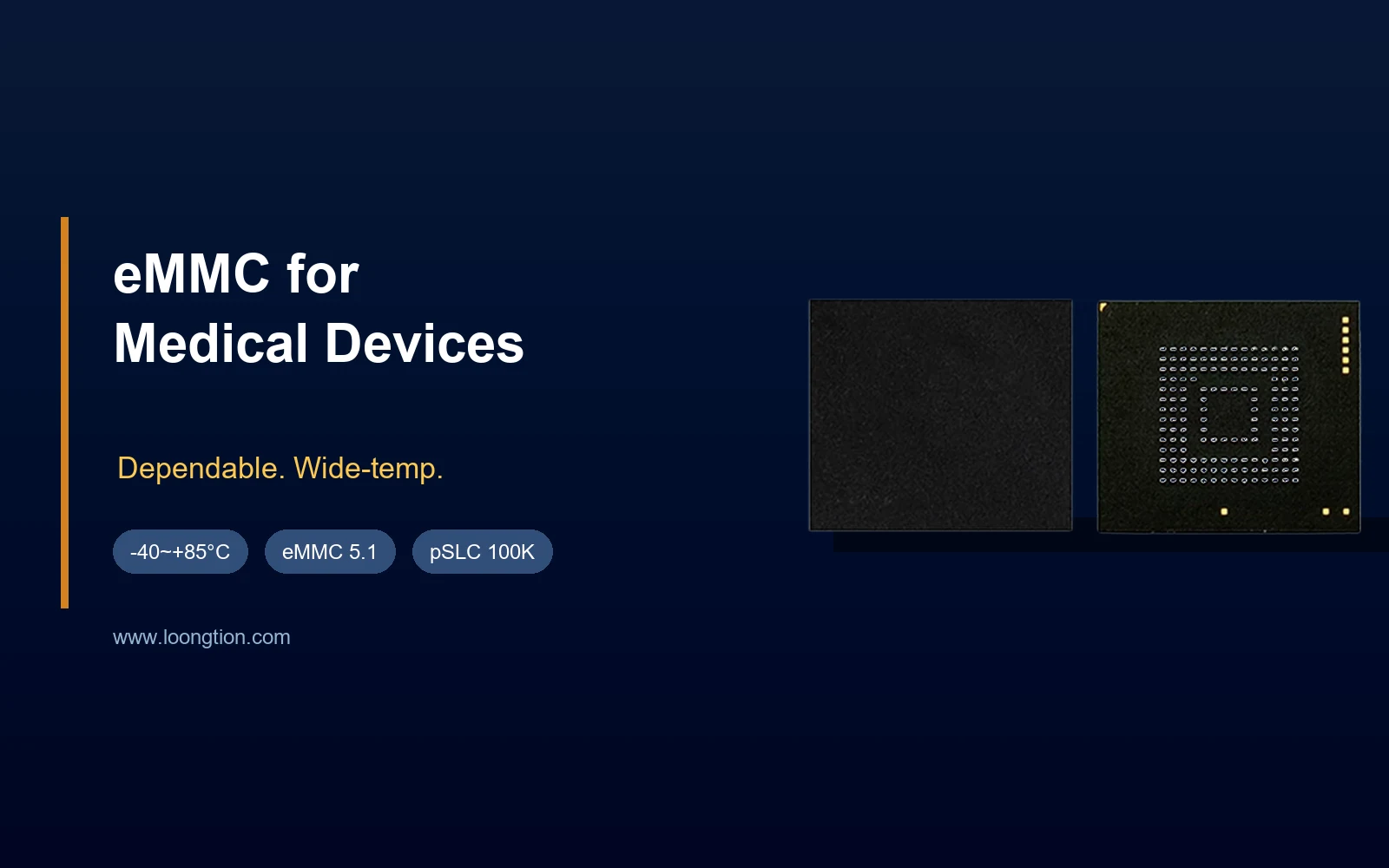
Patient monitors boot from eMMC for years without a power cycle. Why -40°C to +85°C industrial eMMC 5.1 with pSLC endurance is the right choice for medical equipment — and how verified cross-reference fit notes protect a certified BOM for its product life.
Scene
A patient monitor at a nurse station has been running for three years without a power cycle. Its embedded system boots from eMMC storage, logs vitals continuously, and is expected to keep doing so for the rest of its service life — which, for medical equipment, is measured in years, not in warranty periods.
Medical devices — patient monitors, ultrasound machines, infusion pumps, and imaging workstations — have storage requirements that differ from consumer electronics in three ways. First, the device must be dependable: a boot failure during a procedure is not an inconvenience, it is a patient-safety event. Second, the device must be maintainable: firmware updates and log archiving happen in the field, often for a decade. Third, the manufacturer must be able to source the same storage part for the life of the product — a requirement that consumer-grade eMMC, with its fast-moving product cycles, cannot always meet.
Why industrial eMMC 5.1 fits medical devices
eMMC 5.1 is the dominant embedded storage for medical devices that need a self-contained memory solution in a small footprint. It is soldered directly to the board, requires no host controller, and boots reliably — properties that matter in devices that are serviced by biomedical technicians rather than IT staff.
Consumer eMMC is typically TLC NAND rated for a few thousand program/erase cycles and a 0°C to +70°C operating range. Inside a medical device, the storage is written steadily — patient data, logs, and firmware staging — and the ambient is often controlled, but the device itself can sit in an unventilated cart or against a wall for years.
Loongtion's industrial eMMC 5.1 is offered in TLC with pSLC configuration, extending endurance to roughly 100,000 program/erase cycles — about 30 times that of TLC — for devices that write continuously. The -40°C to +85°C rating covers even unheated storage rooms and mobile medical carts that travel between wards and outdoor ambulance bays.
The Loongtion eMMC option
| Feature | Loongtion industrial eMMC 5.1 |
|---|---|
| Interface | eMMC 5.1 (HS400) |
| Package | FBGA153 |
| NAND | TLC (pSLC configurable) |
| Temperature | -40°C to +85°C wide temperature |
| Endurance | pSLC ~100,000 P/E cycles |
| Capacity | 8 GB to 128 GB |
Cross-reference coverage includes the major eMMC families used in medical and industrial designs — Samsung KLM series, Kioxia THGBM series, and Micron MTFC series — with verified fit notes for each.
Selection notes
- Match endurance to the write workload. A monitor that logs vitals around the clock should use pSLC-configured eMMC; a device that only stores firmware can use TLC comfortably. Over-specifying costs money; under-specifying costs reliability.
- Confirm the temperature grade for the deployment path. Devices stored in unheated warehouses or used in mobile carts need wide-temperature (-40°C to +85°C) storage even if the point-of-care environment seems benign.
- Lock the supply for the product life. Medical devices are certified once and rarely re-qualified. Choose a supplier with a documented cross-reference and a stable supply path so a mid-life EOL doesn't force an expensive re-certification.
- Verify the package fit. eMMC is a soldered BGA part (FBGA153 for eMMC 5.1); the board design cannot change without a hardware revision, so the replacement must match the original footprint exactly.
For medical device manufacturers managing EOL transitions on Samsung, Kioxia, or Micron eMMC, Loongtion's cross-reference database provides verified fit notes, and application engineering supports qualification testing before production.
Related products
Product lines commonly shortlisted for this application — open a page for PN, temperature grade, and datasheet request.
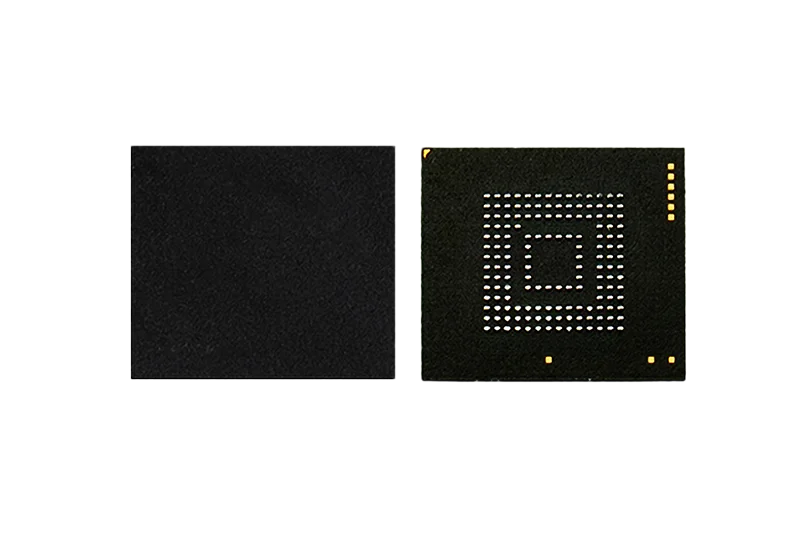
eMMC Storage Chip
- NAND Flash and controller
- Complies with the eMMC 5.1
- Operates over a wide
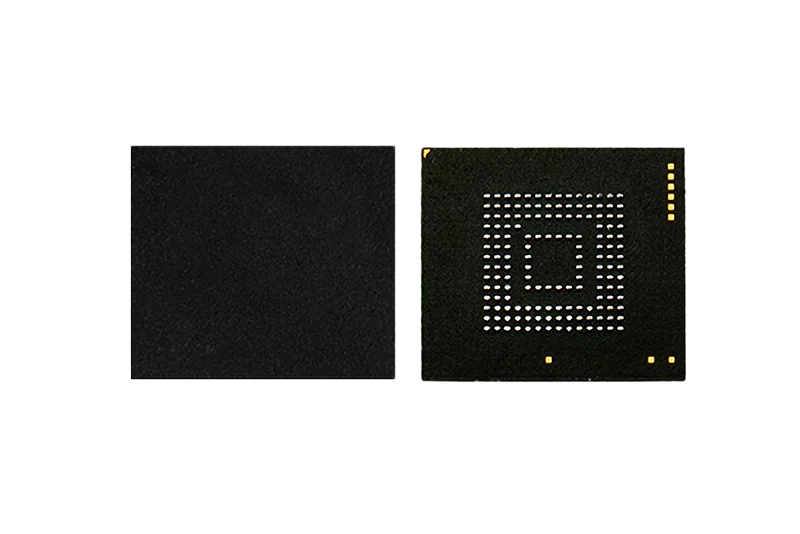
eMMC pSLC
- Encapsulates NAND flash
- Complies with the eMMC 5.1
- Clock speed up to 400MHz