
Case Study: Extreme-Temperature pSLC eMMC for a Research Institute's Flight Data Recorder
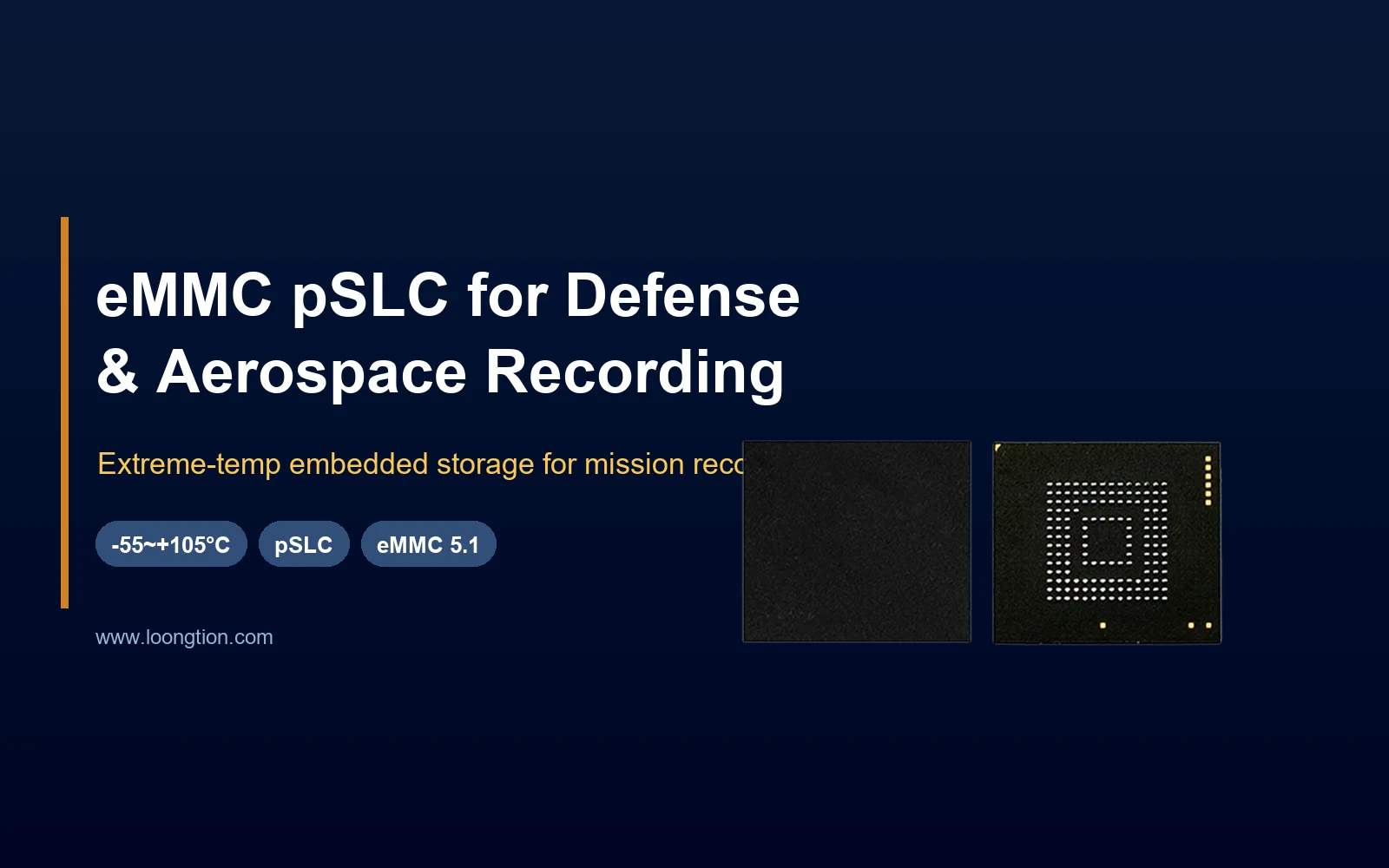
How an aerospace research institute kept its flight data recorder program alive after its embedded memory went EOL — with a -55°C-rated pSLC eMMC.
The situation
An aerospace research institute maintains a flight data recorder platform used across a family of unmanned test aircraft. The recorder logs sensor streams, bus traffic and video to embedded flash storage during every sortie, and the data has to survive the flight — including hard landings, temperature swings and abrupt power loss on impact.
The recorder's storage was a commercial eMMC part that the original vendor had long since stopped making. By 2024, the institute's stockpile was down to the last qualified batches, and the program office faced a choice: re-qualify a new recorder platform, or find a drop-in storage replacement with the same interface and a temperature rating the aircraft actually sees.
The problem
The recorder's requirements were unforgiving:
- -55°C to +105°C. Test aircraft sit unheated on the ramp in winter and bake on the tarmac in summer. The storage has to write and boot across that envelope.
- Write-heavy duty. A sortie is a continuous recording session. The storage needs endurance per cell, not just capacity.
- Power can die mid-record. On impact or electrical fault, the last seconds of data must survive — power-fail protection is a hard requirement, not a feature.
- Authenticated access. The recorded data feeds accident investigation; RPMB-style protected access is part of the data-chain integrity.
The search
Re-qualifying a new recorder meant years of flight testing and certification — off the table for a program with a finite budget. The team instead looked for an eMMC with the same 5.1 interface and package, but with an extreme-temperature rating and pSLC endurance.
The solution
They qualified a pSLC-mode eMMC family built for extreme environments:
- -55°C to +105°C rating. Covered the ramp-to-tarmac envelope with margin at both ends.
- pSLC flash mode. Higher endurance per cell for the continuous recording workload — the storage wears out slower than TLC under sustained writes.
- Power-fail data protection. Built-in protection for the last write transaction, which the recorder's power-loss scenario demanded.
- RPMB support. Authenticated access for the recorded data, keeping the investigation chain intact.
- Same interface, same package. eMMC 5.1 with an identical BGA footprint — the recorder board did not change.
The same family offers a TLC variant (rated -40°C to +85°C, up to 256GB) for platforms that need capacity rather than the extreme temperature tail — so the institute could standardize on one supplier across different recorder classes.
The result
The pSLC eMMC passed the institute's qualification: temperature cycling across the full -55°C to +105°C envelope, power-loss injection tests on the last-write scenario, and a 500-cycle endurance run at the maximum recording rate. The recorder program adopted it as the standard storage for new builds and for retrofit of the existing fleet.
Two flying seasons later, the recorders using the pSLC eMMC have logged zero storage-related data losses — including one hard landing where the recorder took the impact and the data came out intact.
Selection notes if you're in the same situation
- Match the temperature grade to the platform. If the requirement is -55°C or repeated cycling at both extremes, pSLC extreme-temperature is the right family. If -40°C to +85°C covers the envelope, a TLC variant gives more capacity per dollar.
- Confirm the write profile. Continuous recording is write-heavy — pSLC endurance per cell is the headroom that keeps a recorder alive for its full service life.
- Verify power-fail protection engages. The feature only works if the host implements the power-fail sequence. Test it with power-loss injection, not just a datasheet check.
- Provision RPMB keys in the factory flow if the recorded data needs authenticated access.
- Check the package against the layout. Confirm the ball map and keep clock/data routing within the eMMC 5.1 HS400 guidelines.
The lesson
A flight data recorder's storage has one job: keep the data when everything else fails. When the commercial eMMC supply ended, the answer was not a recorder redesign — it was an extreme-temperature pSLC eMMC with power-fail protection that met the aircraft's real envelope. Industrial memory suppliers such as Loongtion exist to serve exactly these applications.
Related products
Product lines commonly shortlisted for this application — open a page for PN, temperature grade, and datasheet request.
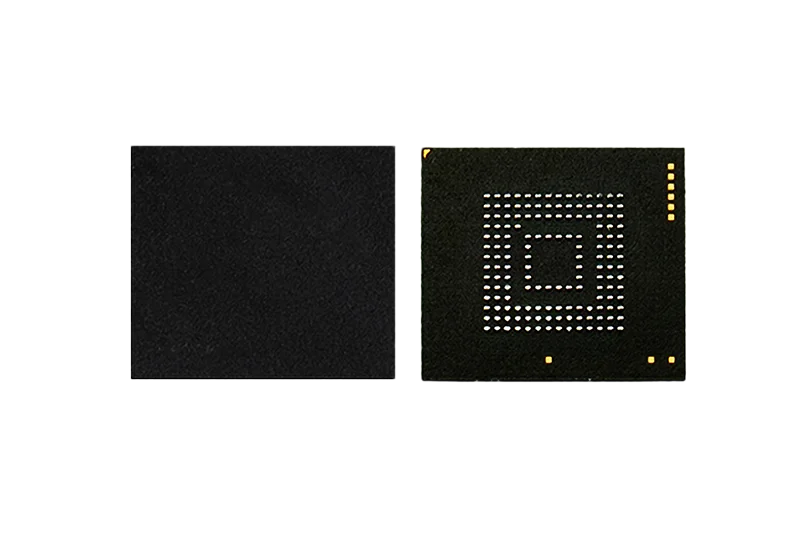
eMMC Storage Chip
- NAND Flash and controller
- Complies with the eMMC 5.1
- Operates over a wide
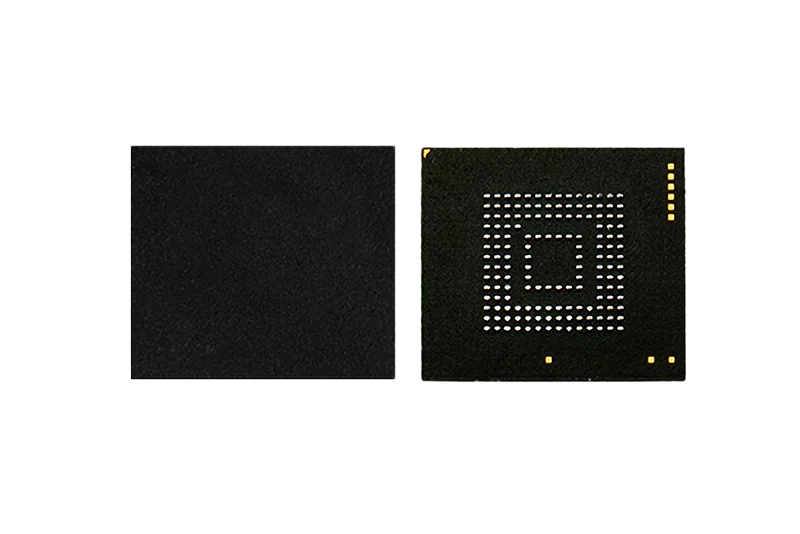
eMMC pSLC
- Encapsulates NAND flash
- Complies with the eMMC 5.1
- Clock speed up to 400MHz