
DDR4 DRAM Chip Cross Reference: Complete Pin-to-Pin Replacement Guide for Industrial Engineers
- Industrial DDR4 Memory Selection Guide
- CXMT CXDQ3BFAM → YZ48G08V Cross Reference
- Micron MT40A512M16JY → YZ48G16V Cross Reference
- Micron MT40A1G8WE → YZ48G08V Cross Reference
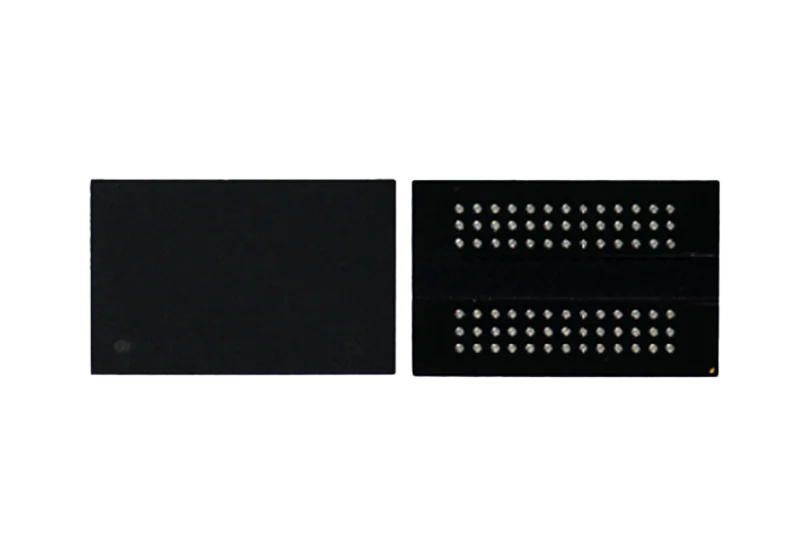
- Loongtion industrial DDR4 DRAM chip product page
Related Resources
The single most important lesson from DDR3 replacement experience: always verify the exact organization (1G×8 vs 512M×16) and package size before ordering a replacement. This is even more critical for DDR4.
| Replacement risk | Mostly straightforward | Pinout mismatch is the #1 risk | | Voltage flexibility | DDR3/DDR3L dual-voltage | Strictly 1.2V (no dual voltage) | | Temperature grading | Most industrial-grade | Many 8Gb DDR4 chips are commercial-grade only | | Speed uniformity | Mostly 800-1066 MHz | Wide range: 1600-3200 MT/s |
| Pinout standardization | Mostly FBGA96 ×16 across vendors | FBGA78 (×8) and FBGA96 (×16) — different pinouts |
|---|---|---|
| Factor | DDR3 | DDR4 |
Engineers familiar with DDR3 cross-referencing should be aware of key differences:
DDR4 Cross Reference vs. DDR3: What's Different?
Some defense avionics and ground-station communication equipment use DDR4 in extreme temperature ranges. Loongtion's military-grade variant (YZ48E series, operating from −55°C to +105°C, GJB 9001C certified) provides a drop-in alternative for applications where the commercial DDR4 is not sufficient.
Aerospace and Defense
Train signaling controllers, interlocking systems, and passenger information displays use DDR4 in harsh environments. The −40°C minimum operating temperature of the YZ48G series is essential for equipment installed in outdoor cabinets in northern climates, where ambient temperatures regularly drop below −30°C.
Railway and Transit Control Systems
CT scanners, MRI machines, and ultrasound systems use industrial DDR4 for image buffer memory and system control. These devices require 10-15 year component availability. Medical OEMs face particular pressure because any board redesign requires recertification (FDA, CE MDR), which can cost $500,000+ and take 12-18 months.
Medical Imaging Equipment
CNC controllers (Siemens 840D, Fanuc Series 3i, etc.) use DDR4 memory for motion control buffers, tool data storage, and part program caching. A memory failure means the machine stops—and each hour of downtime costs $2,000–$10,000 in lost production. Pin-to-pin DDR4 replacement via Loongtion chips eliminates the need for board redesign.
CNC Machine Controllers
Application Scenarios: Where DDR4 Replacement Matters Most
- Ask about PCN/EOL notification policy — Loongtion provides 6 months advance notice for any process changes
- Verify quality documentation (FAI report, reliability test data, GJB certification if needed)
- Confirm supply agreement terms (minimum commitment, lead time, price stability)
- Request a sample lot (10-50 units) from Loongtion for qualification testing
Before committing to a replacement chip for production:
Step 5: Validate Long-Term Supply
- For production validation, test across the full operating temperature range
- Embedded: Use the vendor's diagnostic binary
- SoC: Run
memtesterormemtester-equivalent for 4+ hours - FPGA: Use built-in LBERT (Linear Built-In Self-Test) or external MEMTEST pattern
- Run a comprehensive memory test:
- Power on and run DDR controller training (most modern controllers do this automatically)
After installation:
Step 4: Run DDR Training and Memory Tests
- Check that your board's termination resistors match the standard DDR4 termination
- Verify your PCB's VDD rail can handle the load at 3200 MT/s (slightly higher dynamic power at higher speeds, but running at 2400 MT/s keeps power similar to the original)
All DDR4 8Gb chips in this comparison use 1.2V VDD/VDDQ. No voltage modification is needed. However:
Step 3: Confirm Voltage and Signal Levels
The Loongtion YZ48G series is DDR4 JEDEC-compliant. It uses the same mode register programming sequence as any standard DDR4 chip. If your current configuration works for 2400 MT/s, change the speed setting to 2400 (or leave at default for auto-downgrade), and all mode registers will work identically.
- BIOS/UEFI — Adjust memory timing settings
- SoC bootloader — Modify the DDR training configuration
- FPGA bitstream — Update the memory initialization parameters
DDR4 memory controllers on modern SoCs and FPGA platforms have built-in SPD (Serial Presence Detect) read mechanisms. The replacement chip does not have an SPD EEPROM (these are bare DRAM chips), so your controller must be configured via:
Step 2: Verify Memory Controller Compatibility
If the marking is unreadable (common with worn silkscreen on old boards), check your PCB silkscreen or schematic for the original bill of materials.
- K4A8G165WB → 512M × 16 → FBGA96 → Replace with YZ48G16V
- MT40A512M16JY → 512M × 16 → FBGA96 → Replace with YZ48G16V
- MT40A1G8WE → 1G × 8 → FBGA78 → Replace with YZ48G08V
Look at the marking on your existing DDR4 chip. The first part of the Micron/Samsung part number tells you the organization:
Step 1: Identify Your Current Chip's Pinout
Verification Steps Before Deploying DDR4 Replacements
CXMT and Loongtion both source from Chinese domestic supply chains, making them natural alternatives in scenarios where supply chain diversification is a priority.
| Cross Reference | → YZ48G08V (×8 variant) | — | — | | Supply Status | In production | In production | In production | | Temperature | −40°C to +85°C | −40°C to +85°C | −40°C to +85°C | | Speed | 3200 MT/s | 3200 MT/s | 3200 MT/s | | Package | FBGA96 | FBGA78 | FBGA96 |
| Density | 8Gb | 8Gb (×8) | 8Gb (×16) |
|---|---|---|---|
| Parameter | CXMT CXDQ3BFAM | Loongtion YZ48G08V | Loongtion YZ48G16V |
Chiang Xin Memory Technology (CXMT) is another Chinese DRAM manufacturer. Their CXDQ3BFAM is functionally equivalent to Loongtion's offerings.
CXMT CXDQ3BFAM → Loongtion YZ48G08V / YZ48G16V
⚠️ If your original design used the Samsung K4A8G165WB, note that Samsung's chip is commercial-grade (0°C minimum). Replacing it with Loongtion's −40°C part is an upgrade, not a downgrade. Your system will work equally well, and you gain wider temperature coverage.
| Supply Status | Managed decline | In production | | Speed | 2400 MT/s | 3200 MT/s |
| Temperature | 0°C to +95°C | −40°C to +85°C |
|---|---|---|
| Difference | Samsung K4A8G165WB | Loongtion YZ48G16V |
This is a functional replacement (same package, same density, same bus width), but with important notes:
Samsung K4A8G165WB → Loongtion YZ48G16V
| Pin Compatibility | — | Identical FBGA96 pinout | | Operating Temp | −40°C to +95°C | −40°C to +85°C | | CAS Latency | CL17 @ 2400 | CL22 @ 3200 (equivalent timing) | | Voltage | 1.2V | 1.2V | | Speed Grade | 2400 MT/s | 3200 MT/s | | Package | FBGA96 | FBGA96 |
| Density | 8Gb (512M × 16) | 8Gb (512M × 16) |
|---|---|---|
| Parameter | Micron MT40A512M16JY-07EIT:B | Loongtion YZ48G16V |
Also a direct pin-to-pin replacement in FBGA96.
Micron MT40A512M16JY → Loongtion YZ48G16V
Why Loongtion is faster: The YZ48G08V operates at 3200 MT/s, which is 33% faster than the original 2400 MT/s chip. Because DDR4 memory controllers have timing裕度 (margin), a 3200 MT/s chip running at the controller's 2400 MT/s setting will work perfectly—and may even have slightly better signal integrity at the lower speed.
| Pin Compatibility | — | Identical FBGA78 pinout | | ZQ Calibration | Internal 240Ω | Internal 240Ω | | Refresh | 2x / 4x refresh rate | 2x / 4x refresh rate | | Operating Temp | −40°C to +95°C | −40°C to +85°C | | CAS Latency | CL17 @ 2400 | CL22 @ 3200 (equivalent timing) | | Voltage | 1.2V | 1.2V | | Speed Grade | 2400 MT/s (0.417ns) | 3200 MT/s (0.312ns) | | Package | FBGA78 | FBGA78 |
| Density | 8Gb (1G × 8) | 8Gb (1G × 8) |
|---|---|---|
| Parameter | Micron MT40A1G8WE-075EIT:B | Loongtion YZ48G08V |
This is a direct pin-to-pin replacement.
Micron MT40A1G8WE → Loongtion YZ48G08V
Complete Cross Reference Mapping
Critical insight: Samsung's K4A8G165WB is rated for 0°C to +95°C, not −40°C. This is a commercial-grade chip. It may work in your office-based test rig, but it will fail in a factory floor or outdoor enclosure during winter. This is the single most common mistake engineers make when sourcing DDR4 replacements.
| Command/Address | Single DQ bus | Single DQ bus | Single DQ bus | Single DQ bus | | CAS Latency | CL17 @ 2400 | CL17 @ 2400 | CL17 @ 2400 | CL22 @ 3200 | | Temperature | −40°C to +95°C | −40°C to +95°C | 0°C to +95°C | −40°C to +85°C | | Speed | 2400 MT/s | 2400 MT/s | 2400 MT/s | 3200 MT/s | | Package | FBGA78 | FBGA96 | FBGA96 | FBGA78 / FBGA96 |
| Density | 8Gb (1G × 8) | 8Gb (512M × 16) | 8Gb (512M × 16) | 8Gb (×8 or ×16) |
|---|---|---|---|---|
| Parameter | Micron MT40A1G8WE | Micron MT40A512M16JY | Samsung K4A8G165WB | Loongtion YZ48G08V/YZ48G16V |
Key Electrical Differences Between DDR4 8Gb Variants
These two families are NOT pin-compatible with each other. The FBGA78 package has 78 balls; the FBGA96 has 96. Even if you could mechanically fit one into the other's footprint, the electrical mapping would be wrong.
-
Loongtion YZ48G16V (FBGA96)
-
CXMT CXDQ3BFAM (FBGA96)
-
Samsung K4A8G165WB (FBGA96)
-
Micron MT40A512M16JY (FBGA96) Family B: 512M × 16 organization
-
Loongtion YZ48G08V (FBGA78)
-
Micron MT40A1G8WE (FBGA78) Family A: 1G × 8 organization
The Two Main 8Gb DDR4 Families
The 8Gb DDR4 chip family is more fragmented than its DDR3 predecessor. This is because DDR4 introduced multiple internal organizations that directly impact pin mapping:
Understanding DDR4 8Gb Pinout Diversity
The difference from DDR3? DDR4 was never a single-pin standard. Even within the 8Gb density class, you face multiple pinouts, different addressing schemes, and temperature range variations that make cross-referencing more nuanced than a simple datasheet lookup.
This is happening across the industry. Samsung's K4A8G165WB and Micron's MT40A512M16JY (8Gb DDR4 variants) are entering managed decline as chipmakers reorient toward DDR5 and high-bandwidth memory for data centers. But industrial equipment has a 15-20 year lifecycle. A PLC installed in 2024 will still be running in 2040—and it needs 8Gb DDR4 chips.
You are a hardware engineer at an industrial automation company. Your CNC controller, designed five years ago, uses a Micron MT40A1G8WE DDR4 chip. Production is running smoothly. Then your supplier notifies you: this density is being phased out. Lead times are extending from 8 weeks to 30+ weeks. The spot market price has tripled.
The DDR4 Supply Challenge in Industrial Systems
DDR4 DRAM Chip Cross Reference: Complete Pin-to-Pin Replacement Guide for Industrial Engineers
Related products
Shortlist lines referenced in this guide — open the product page for PN, grades, and datasheet request.
Related resources
Continue with related selection guides and notes for the same industrial memory topic.
Related cross-references
Pin-to-pin and functional alternatives referenced from this guide — for BOM review, dual-sourcing, or EOL coverage.