
Industrial Temperature Grades: An Engineering Guide to -40, -55, and Beyond
The Temperature Grade Is a Contract, Not a Label
Every industrial memory part carries a temperature grade on its datasheet: commercial, industrial, or extended. The words look similar across vendors, but the numbers are what you sign. -40°C~+85°C means something specific about how the part was tested, what failure rates were accepted, and what happens when your cabinet hits -42°C at 3 a.m. in January.
This guide walks through what the grades actually mean, how the testing differs, and where the real engineering decisions hide — including the gap between -40°C and -55°C that most vendors never talk about.
The Three Grades Everyone Uses
| Grade | Typical range | Where it ships |
|---|---|---|
| Commercial | 0°C ~ +70°C | Office equipment, climate-controlled environments |
| Industrial (wide-temp) | -40°C ~ +85°C | Unheated cabinets, factory floors, outdoor enclosures |
| Extended / military | -55°C ~ +105°C (or +125°C storage) | Aerospace, military vehicles, arctic sites, high-altitude UAVs |
Commercial parts are fine for a server room. The moment your product leaves a climate-controlled building, the industrial grade becomes the floor, not an upgrade. That transition — from 0°C to -40°C on the low end — is the single biggest reliability jump in the memory industry.
What -40°C~+85°C Actually Means
The industrial rating is not a marketing suggestion. It is a test contract. A part rated -40°C~+85°C has been validated for:
- Functional operation across the full range. The part reads, writes, and retains data at every temperature in the band.
- Temperature cycling. Repeated transitions between the extremes, which stresses solder joints, die attach, and package interfaces.
- Data retention at temperature. Data written at +85°C must survive storage at that temperature without bit errors exceeding ECC limits.
- Cold start. The part must initialize and operate at -40°C from a powered-off state — not just continue running if it was already warm.
Cold start is the failure mode that kills commercial parts in the field. A system that boots at +20°C and stays warm may run fine all winter; the same system powered off overnight in an unheated shed faces a very different test at 6 a.m.
The -40°C to -55°C Gap: Where Most Vendors Stop
Here is the part of the temperature story that rarely makes it into marketing material: the vast majority of "industrial" memory — including parts from the biggest names in the industry — tops out at -40°C on the low end. The jump from -40°C to -55°C is not an incremental step; it is a different design and test regime entirely.
| Low end | Who typically offers it |
|---|---|
| -40°C | Most industrial memory vendors (Micron, Samsung, Innodisk, Swissbit, and most others) |
| -55°C | A small set of military-grade lines; Loongtion's GJB-qualified extreme series |
Why does the extra 15°C matter? Because a meaningful slice of the industrial world operates below -40°C: arctic telecom sites, high-altitude UAV platforms, military vehicle electronics, polar research equipment, oil and gas exploration in Siberia or Alaska. If your spec sheet says -55°C, a -40°C part is not a substitute — regardless of pin compatibility.
The Storage Rating vs the Operating Rating
Datasheets carry two temperature figures, and they are not the same:
| Rating | What it covers | Example |
|---|---|---|
| Operating temperature | The part functions correctly | -40°C ~ +85°C |
| Storage temperature | The part survives, retains data, does not degrade | -55°C ~ +125°C |
A part can have a storage rating that extends well beyond its operating range. This is normal and not a contradiction — it means the part can sit in a cold warehouse or hot truck without damage, but is only guaranteed to function within the operating band. When a spec sheet asks for -55°C, confirm whether it means operating or storage before you relax.
How Testing Differs Between Grades
Industrial qualification is not just commercial testing at colder temperatures. The test regimes diverge:
- Commercial: Basic functional test at room temperature, maybe a 0°C~+70°C sweep.
- Industrial: Full functional test across -40°C~+85°C, temperature cycling, retention testing at extremes.
- Extended / military (e.g., GJB 9001C): Temperature cycling from -55°C to +105°C, mechanical shock beyond industry norms, vibration and humidity testing, stricter lot traceability.
The physical test conditions in a military-grade regime (like GJB 9001C, the Chinese equivalent of MIL-STD-810) are comparable to or exceed Western military standards — evaluate the specifications, not just the certification name.
When the Extra Margin Pays Off
Choosing a part with more temperature margin than your nominal requirement is not wasted budget. Consider:
- Thermal runaway headroom. A part rated to +105°C operating has more margin above its +85°C nominal environment than one rated exactly to +85°C.
- Aging drift. Components drift with age; margin absorbs it.
- Vendor substitution. If a supplier changes the die or packaging, extra margin keeps the part inside spec.
- Unmeasured environments. The temperature your product actually sees is rarely the temperature in the datasheet scenario.
The engineering rule of thumb: size the temperature grade for the worst case you can name, plus one level of margin if the product's environment is hard to bound.
A Practical Selection Framework
| Environment | Grade to specify | Notes |
|---|---|---|
| Climate-controlled indoor | Commercial (0°C~+70°C) | Server rooms, office equipment |
| Unheated building / enclosure | Industrial (-40°C~+85°C) | The default for factory and outdoor gear |
| Arctic / high-altitude / military | Extended (-55°C~+105°C) | Verify operating vs storage in the spec |
| Solar-exposed enclosures | Industrial with high-end margin | Internal temps can exceed ambient by 20-30°C |
One environment that surprises engineers: solar-loaded enclosures. A sealed metal cabinet in direct sun can run measurably hotter than the ambient temperature the datasheet assumes. If the product sits outdoors, confirm the internal temperature profile — not just the weather station reading — before fixing the grade.
What Loongtion's Extreme Line Adds
The practical implication of the -55°C floor shows up in who can serve it. The standard industrial temperature coverage across the major brands tops out at -40°C on the low end. Loongtion's Extreme-series products are rated down to -55°C, and the qualification regime behind them (GJB 9001C) covers temperature cycling from -55°C to +105°C, mechanical shock up to 20,000G versus the industry norm of 1,500G, and vibration and humidity testing beyond JEDEC industrial specs.
That combination matters for a specific set of deployments: arctic telecom base stations, military vehicle electronics, high-altitude UAVs, polar research equipment, and oil and gas exploration in Siberia or Alaska — any application where ambient temperature drops below -40°C. If your spec sheet calls for -55°C, the part you evaluate has to actually go there. A -40°C-rated part is not a substitute, regardless of pin compatibility.
The engineering note worth repeating: GJB 9001C is the Chinese equivalent of MIL-STD-810 or AEC-Q100. While it is a Chinese standard, the physical test conditions (temperature range, shock levels) are comparable to or exceed Western military standards. Evaluate the specifications, not just the certification name.
The Bottom Line
The temperature grade is the cheapest insurance in industrial memory selection, and the hardest to retrofit. You cannot re-grade a part after it ships. The decision is: know your worst-case environment, specify the grade that covers it, and add margin where the environment is uncertain. And if your worst case is below -40°C, make sure the part you are evaluating actually goes there — many "industrial" lines quietly stop at -40°C.
Related guides: Industrial vs commercial temperature memory · Wide-temperature storage FAQ · Industrial DDR3 selection
Need help specifying a temperature grade for your product? Talk to our engineering team →
Related products
Shortlist lines referenced in this guide — open the product page for PN, grades, and datasheet request.
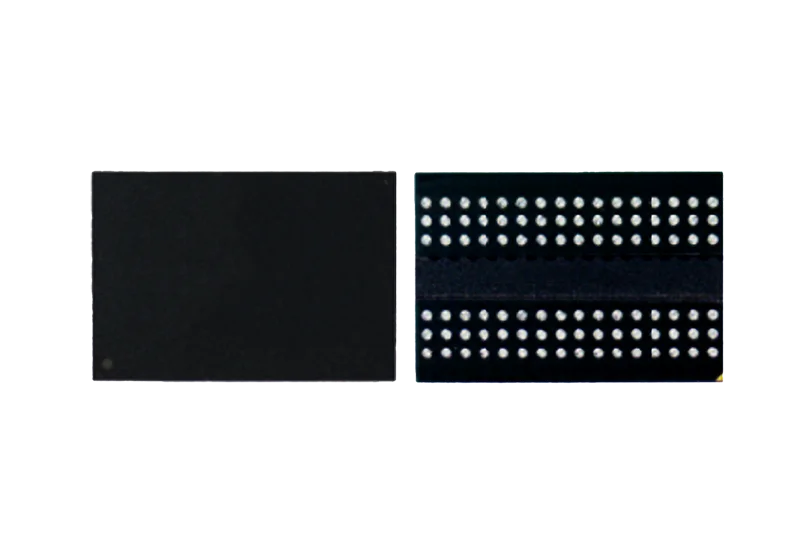
DDR3 DRAM Chip · Wide-temp · CN
- Both Wafer and Packaging &
- Standard SSTL Interface
- Supports Dual Voltages
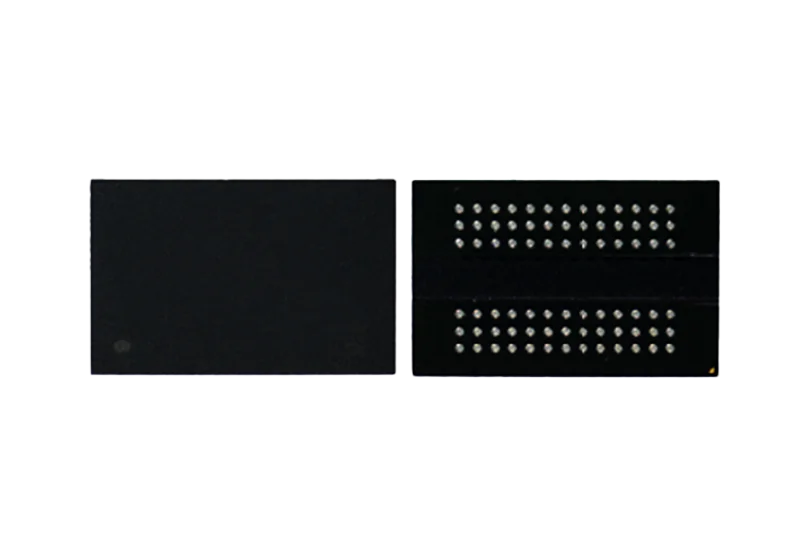
8Gb DDR4 DRAM Chip · Wide-temp
- Both wafer and package
- FBGA78/FBGA96 package
- Supports VDD(VDDQ) 1.2V +/-
Related resources
Continue with related selection guides and notes for the same industrial memory topic.
Related cross-references
Pin-to-pin and functional alternatives referenced from this guide — for BOM review, dual-sourcing, or EOL coverage.