
| Parameter | Specification |
|---|---|
| Industrial M.2 NVMe SSD (Cacheless) | DRAM-less, cost- and power-optimized NVMe storage in M.2 2280/2242 form factors, delivering up to 2500 MB/s read with industrial-grade wide-temperature reliability. |
- JEDEC Compliant
- Industrial Temp
- −40°C to 85°C
- 256 GB-2TB
Ningbo Loongtion Intelligent Technology Co., Ltd.
hi@loongtion.com | www.loongtion.com
Document Version 2.2 | June 2026
1.Executive Summary
The Loongtion M.2 NVMe Series Solid State Drive (cacheless/DRAM-less design) is a high-performance, power-efficient storage solution designed for industrial, embedded, medical, and commercial applications. Manufactured by Ningbo Loongtion Intelligent Technology Co., Ltd. (Loongtion®), this drive uses a China-domestic controller with a DRAM-less architecture, Triple-Level Cell (TLC) NAND flash memory, and a PCIe 3.0 x4 interface compliant with the NVMe 1.4 protocol.
Available in capacities from 256 GB to 2 TB and offered in M.2 2280 and M.2 2242 form factors, the Loongtion M.2 NVMe SSD delivers the following minimum sequential read speeds: ≥1500 MB/s (256 GB), ≥2000 MB/s (512 GB), ≥2200 MB/s (1 TB), and ≥2500 MB/s (2 TB). Minimum sequential write speeds range from ≥700 MB/s (256 GB) to ≥1800 MB/s (2 TB). The drive is engineered for reliability across extreme environments, with an industrial operating temperature range of –40°C to 85°C and a 5-year warranty.
Key attributes include low power consumption (sleep power as low as 0.3 W), robust endurance with Total Bytes Written (TBW) up to 1400 TB for the 2 TB model, and support for TRIM, NCQ, S.M.A.R.T., and an optional custom-configurable soft self-destruct function. This whitepaper provides a technical overview of the architecture, specifications, performance, and system integration considerations for the Loongtion M.2 NVMe SSD.
2. Product Overview
| Attribute | Description |
|---|---|
| Product Name | Loongtion M.2 NVMe Series Solid State Drive (cacheless/DRAM-less design) |
| Manufacturer | Ningbo Loongtion Intelligent Technology Co., Ltd. |
| Product Category | Solid-State Storage — NVMe SSD |
| Form Factors | M.2 2280 (80 mm × 22 mm × ≤5 mm) and M.2 2242 (42 mm × 22 mm × ≤5 mm) |
| Weight | |
| Interface | Standard M.2 gold finger interface (3 μin gold plating), 75-pin connector |
| Protocol | PCIe 3.0 x4, NVMe 1.4 compliant |
| NAND Flash Type | TLC (Triple-Level Cell) |
| Controller Architecture | China-domestic controller, DRAM-less (cacheless) |
| Available Capacities | 256 GB, 512 GB, 1 TB, 2 TB (2242 form factor maximum capacity is 1 TB) |
2.1 Product Marking and Identification
Each drive bears product marking that includes the model or code, year of production, lot number, serial number, and manufacturer code.
2.2 Key Interface Pins
| Pin | Function | Description |
|---|---|---|
| 67 (QE) | Intelligent Soft Erase / Soft Self-Destruct | Standard models: Intelligent Soft Erase; custom -SD models: soft self-destruct trigger |
| 10 | LED Drive | Active low output for external transistor to indicate drive status |
| 50 | PERST# | PCIe reset (active low), must be provided by host |
| 52 | CLKREQ# | PCIe clock request (active low, bidirectional) |
| 53, 55 | REFCLKN, REFCLKP | PCIe differential reference clock, must be provided by host |
| 2, 4, 12, 14, 16, 18, 70, 72, 74 | Power (3.3 V) | Supply voltage input pins |
| 1, 3, 9, 15, 21, 27, 33, 39, 45, 51, 57, 71, 73, 75 | Ground (GND) | Ground return pins |
3. Technology and Architecture
3.1 Internal Architecture
The Loongtion M.2 NVMe SSD uses a DRAM-less (cacheless) architecture. The internal data flow operates as follows:
- Host Interface Layer: The host communicates with the SSD via the NVMe interface over a PCIe 3.0 x4 link.
- Protocol Parsing and Link Verification: The PCIe protocol is parsed and link integrity is verified by the SSD controller.
- SSD Controller: A China-domestic controller manages all NAND flash operations, including command processing, data distribution, error handling, and wear leveling.
- NAND Flash Array: Data is distributed to and from the TLC NAND flash memory array.
3.2 Controller and NAND Flash
- Controller: China-domestic controller with DRAM-less design. The absence of a dedicated DRAM cache reduces power consumption and board space.
- NAND Flash: TLC NAND flash memory, providing a balance between cost, density, and performance.
- Wear Leveling: An implemented wear leveling algorithm distributes program/erase cycles evenly across the NAND flash array to extend drive lifespan. The PE (Program/Erase) cycle rating is 3000.
3.3 Power Management
The drive incorporates high-reliability power management circuitry that includes:
- Short-circuit protection
- Under-voltage protection
Power supply filtering ensures noise and ripple on the 3.3 V rail do not exceed 50 mV p-p.
3.4 Interface Pinout Architecture
The standard M.2 75-pin connector includes:
- PCIe Lanes: Four differential lane pairs (PERn/p, PETn/p) for Lane 0 through Lane 3.
- Reference Clock: Differential REFCLKP/REFCLKN (pins 55, 53).
- Reset: PERST# (pin 50), active low, system reset signal.
- Clock Request: CLKREQ# (pin 52), active low, bidirectional signal for clock management.
- Wake: PEWAKE# (pin 54), reserved.
- Host Interface Indicator: PEDET (pin 69), reserved.
- UART Interface: Reserved pins for UART communication: UART_TXD (pin 22), UART_RXD (pin 32), UART_RTS (pin 34), UART_CTS (pin 36).
- Manufacturing Interface: Reserved pins for MFG_DATA (pin 56) and MFG_CLK (pin 58).
- Vendor Defined: VENDOR_DEF (pin 42), reserved.
- 3.3V Enable: P3V3_EN (pin 40), reserved.
- Reserved No-Connect Pins: NC_6, NC_8, NC_20, NC_24, NC_26, NC_28, NC_30, NC_44, NC_46, NC_48, SUSCLK.
4. Key Features
4.1 Cacheless (DRAM-less) Design
The DRAM-less architecture reduces component count, board complexity, and power consumption while maintaining competitive sequential performance through the NVMe 1.4 protocol.
4.2 Industrial Temperature Range
The Loongtion M.2 NVMe SSD is rated for industrial temperature operation:
- Operating ambient temperature: –40°C to 85°C
- Storage temperature: –45°C to 90°C
4.3 High Endurance
With TLC NAND rated at 3000 PE cycles, the drive delivers the following endurance specifications (TBW with ±10% tolerance):
- 256 GB: 180 TB
- 512 GB: 360 TB
- 1 TB: 720 TB
- 2 TB: 1400 TB
4.4 Soft Self-Destruct (Custom Models)
Custom models with the "-SD" suffix (available in 2280 form factor only) integrate a soft self-destruct function accessed via pin 67 (QE). This function enables host-controlled secure data erasure.
4.5 Intelligent Soft Erase
Standard models use pin 67 (QE) for Intelligent Soft Erase functionality, providing a configurable data clearing mechanism.
4.6 Low Power Consumption
The drive achieves low power consumption:
- Sleep power: as low as 0.3 W (256 GB, 2 TB)
- Standby power: as low as 0.4 W (512 GB, 1 TB, 2 TB)
- Maximum sequential read power: from 1.25 W (256 GB) to 1.65 W (2 TB)
- Maximum sequential write power: from 0.99 W (256 GB) to 1.495 W (2 TB)
4.7 Standard NVMe Features
- TRIM
- NCQ (Native Command Queuing)
- S.M.A.R.T. (Self-Monitoring, Analysis, and Reporting Technology)
4.8 LED Status Indication
Pin 10 provides an active low output for driving an external transistor, enabling visual status indication of drive activity.
5. Technical Specifications
5.1 Physical Dimensions
| Parameter | M.2 2280 | M.2 2242 |
|---|---|---|
| Length | 80 mm ± 0.2 mm | 42 mm ± 0.2 mm |
| Width | 22 mm ± 0.2 mm | 22 mm ± 0.2 mm |
| Total Height | ≤5 mm | ≤5 mm |
| Weight |
5.2 Electrical Specifications
| Parameter | Specification |
|---|---|
| Supply Voltage (Nominal) | 3.3 V |
| Supply Voltage Range | 3.15 V – 3.45 V |
| Supply Noise / Ripple | ≤50 mV p-p |
| Gold Plating Thickness (gold finger) | 3 μin |
5.3 Power Consumption by Capacity
| Capacity | Sleep | Standby | Max Sequential Read | Max Sequential Write |
|---|---|---|---|---|
| 256 GB | 0.3 W | 0.415 W | 1.25 W | 0.99 W |
| 512 GB | 0.317 W | 0.4 W | 1.32 W | 1.12 W |
| 1 TB | 0.31 W | 0.4 W | 1.43 W | 1.18 W |
| 2 TB | 0.3 W | 0.4 W | 1.65 W | 1.495 W |
5.4 Interface Protocol Specification
| Parameter | Specification |
|---|---|
| Interface Standard | M.2 (75-pin) |
| PCIe Generation | PCIe 3.0 |
| PCIe Lane Width | x4 (four lanes) |
| NVMe Protocol Version | NVMe 1.4 |
| Reference Clock | Differential (REFCLKP, REFCLKN) |
| Reset Signal | PERST# (active low) |
| Clock Request Signal | CLKREQ# (active low, bidirectional) |
5.5 Environmental and Reliability Specifications
| Parameter | Specification |
|---|---|
| Operating Ambient Temperature (Industrial Grade) | –40°C to 85°C |
| Storage Temperature | –45°C to 90°C |
| Recommended Storage Conditions | 0°C to 35°C, relative humidity ≤80%, free from strong magnetic fields |
| PE Cycle Rating | 3000 |
| Warranty Period | 5 years |
| MTBF | Not specified in source documentation |
| ECC | Not specified in source documentation |
5.6 Endurance (TBW)
| Capacity | TBW (with ±10% tolerance) |
|---|---|
| 256 GB | 180 TB |
| 512 GB | 360 TB |
| 1 TB | 720 TB |
| 2 TB | 1400 TB |
5.7 Performance Specifications (Minimum Average Sequential)
| Capacity | Sequential Read Speed (Minimum) | Sequential Write Speed (Minimum) |
|---|---|---|
| 256 GB | ≥1500 MB/s | ≥700 MB/s |
| 512 GB | ≥2000 MB/s | ≥900 MB/s |
| 1 TB | ≥2200 MB/s | ≥1400 MB/s |
| 2 TB | ≥2500 MB/s | ≥1800 MB/s |
Note: Test speed is for reference only. Actual performance may vary depending on system configuration, workload, and operating conditions.
5.8 Capacity vs. Usable Capacity
| Nominal Capacity | Usable Capacity |
|---|---|
| 256 GB | 238 GB |
| 512 GB | 476 GB |
| 1 TB | 943 GB |
| 2 TB | 1.86 TB |
Note: Tolerance between nominal capacity and usable capacity: ±10%.
6. Performance and Reliability
6.1 Performance Characteristics
The Loongtion M.2 NVMe SSD delivers sequential performance that scales with capacity. Higher-capacity models (1 TB and 2 TB) benefit from increased NAND die parallelism, achieving minimum sequential read speeds of ≥2200 MB/s and ≥2500 MB/s, respectively. Minimum sequential write speeds range from ≥700 MB/s (256 GB) to ≥1800 MB/s (2 TB). Power consumption scales with performance; the 2 TB model draws up to 1.65 W during maximum sequential read and up to 1.495 W during maximum sequential write. Sleep power is consistently low across all capacities at approximately 0.3 W.
6.2 Endurance and Data Integrity
The TLC NAND flash is rated for 3000 program/erase cycles. The implemented wear leveling algorithm distributes write operations uniformly across the NAND array. The TBW specifications provide a measure of write endurance:
- 256 GB: 180 TBW
- 512 GB: 360 TBW
- 1 TB: 720 TBW
- 2 TB: 1400 TBW
All TBW values carry a ±10% tolerance.
6.3 Protection and Safety Mechanisms
- Power Management: High-reliability circuitry with short-circuit and under-voltage protection.
- Soft Self-Destruct (Custom -SD Models): Pin 67 (QE) can be configured for a soft self-destruct function, allowing host-controlled secure data erasure.
- Intelligent Soft Erase (Standard Models): Pin 67 (QE) supports Intelligent Soft Erase for configurable data clearing.
6.4 Health Monitoring
The drive supports S.M.A.R.T. for proactive health monitoring and predictive failure analysis.
6.5 Environmental Durability
The industrial temperature rating (–40°C to 85°C operating, –45°C to 90°C storage) ensures reliable operation in harsh environments. The drive is packaged in anti-static bags with anti-static foam and includes a certificate of conformity and test reports. Appearance quality standards require no burrs, deformation, contamination, or corrosion; uniform coating without defects; and complete, secure fasteners.
7. Applications and Target Markets
7.1 Primary Applications
- Embedded devices and systems
- Industrial medical equipment
- Commercial computers
7.2 Ideal Use Cases
The Loongtion M.2 NVMe SSD is suitable for applications requiring:
- Low Power Consumption: The DRAM-less design and optimized power management benefit battery-powered or thermally constrained systems.
- Small Form Factor: M.2 2280 and M.2 2242 form factors enable integration into space-constrained designs.
- Wide Temperature Operation: The –40°C to 85°C operating range supports deployment in unenclosed or outdoor environments.
- High Reliability: TBW specifications and 5-year warranty provide confidence for long-life industrial deployments.
- Data Security: The optional soft self-destruct function (-SD models) addresses security-sensitive applications.
7.3 Target Industries
- Industrial automation and control
- Medical and healthcare equipment
- Digital signage and kiosks
- Network appliances and routers
- Storage caching and acceleration
- Transportation and logistics
8. System Integration and Design Considerations
8.1 System Requirements
- Host Protocol Support: The host system must support the NVMe protocol and PCIe 3.0 x4 interface.
- M.2 Slot Compatibility: The drive is compatible with standard M.2 slots. Ensure mechanical clearance for the 80 mm (2280) or 42 mm (2242) length and maximum 5 mm height.
8.2 Power Delivery Considerations
- Provide a clean 3.3 V power supply within the specified range of 3.15 V to 3.45 V.
- Ensure supply noise and ripple do not exceed 50 mV p-p.
- The drive draws power from nine designated 3.3 V pins and returns current through fourteen ground pins. Power distribution should account for peak current draw during sequential write operations (up to 1.495 W for 2 TB).
8.3 Signal Integrity
- Reference Clock: The host must provide a differential PCIe reference clock (REFCLKP/REFCLKN) on pins 53 and 55.
- Reset: The host must drive PERST# (pin 50) active low to reset the device.
- Clock Request: CLKREQ# (pin 52) is a bidirectional open-drain signal used for clock management.
8.4 Reserved Pins and No-Connect Requirements
All reserved and no-connect (NC) pins must remain unconnected unless their function is specifically defined for the application:
- NC_6, NC_8, NC_20, NC_24, NC_26, NC_28, NC_30, NC_44, NC_46, NC_48
- NC_UART_TXD, NC_UART_RXD, NC_UART_RTS, NC_UART_CTS
- NC_P3V3_EN, NC_VENDOR_DEF, NC_MFG_DATA, NC_MFG_CLK
- SUSCLK, PEDET, PEWAKE#
Note: UART and manufacturing pins are reserved for future use or debugging.
8.5 LED Drive Integration
Pin 10 provides an active low output for LED status indication. An external transistor is required to drive the LED, as the output is designed to sink current through a pull-up resistor configuration.
8.6 QE Pin (Pin 67) Integration
- Standard Models: Pin 67 implements Intelligent Soft Erase functionality. System designers should provide host GPIO access to this pin for software-controlled erase operations.
- Custom Models (-SD Suffix): Pin 67 is configured for soft self-destruct. The trigger mechanism is customer-defined. Care must be taken to prevent accidental activation.
8.7 Capacity Considerations
Designers should account for the difference between nominal capacity and usable capacity (approximately 93% of nominal). For example, a 256 GB nominal drive provides 238 GB usable capacity. The tolerance between nominal and usable capacity is ±10%.
8.8 Thermal Management
With a maximum height of 5 mm, the drive relies on system-level airflow or passive heatsinking for thermal management. During sustained write-intensive workloads, especially on high-capacity models (2 TB), adequate thermal dissipation should be ensured to maintain operating temperature within the –40°C to 85°C range.
8.9 Environmental Handling
- Do not store with acids, alkalis, or corrosive materials.
- During transportation: protect from rain/snow, do not transport with corrosive substances, do not stack heavy objects, handle with care.
- Storage conditions: 0°C to 35°C, relative humidity ≤80%, free from strong magnetic fields.
9. Standards Compliance and Quality
9.1 Protocol Compliance
| Standard | Compliance Level |
|---|---|
| NVMe Protocol | NVMe 1.4 compliant |
| PCIe Interface | PCIe 3.0 x4 |
| M.2 Form Factor | Standard M.2 |
9.2 Electrical Compliance
- Electrical characteristics comply with NVMe protocol specification.
- Supply voltage: 3.3 V nominal (3.15 V – 3.45 V).
- Supply noise/ripple tolerance: ≤50 mV p-p.
9.3 Quality Assurance
Each unit ships with:
- Certificate of conformity
- Test reports (including nominal/usable capacity, average sequential read/write speed, power consumption)
9.4 Appearance and Workmanship Quality
- No burrs, deformation, contamination, or corrosion.
- Uniform coating without defects.
- Fasteners complete and secure.
9.5 Documentation
The product manual (current revision v2.2 dated 2025.08.01) provides detailed specifications, pin definitions, and test requirements. The revision history reflects product evolution:
| Revision | Date | Key Changes |
|---|---|---|
| v1.0 | 2022.01.04 | Initial release |
| v1.1 | 2023.10.15 | Updates |
| v2.0 | 2024.01.10 | Removed 128 GB capacity |
| v2.1 | 2024.02.10 | Added 2242 form factor |
| v2.2 | 2025.08.01 | Format modifications, added table of contents |
Document revised by: Tian Yue (v1.0–v2.1), Yang Yingchun (v2.2)
9.6 Warranty
The Loongtion M.2 NVMe SSD carries a 5-year warranty.
10. Ordering Information
10.1 Part Number Naming Convention
Orderable part numbers follow this pattern:
YIDJ + capacity + form code + flash/grade code + -S (see handbook)
Example: YIDJ512NZT-S
| Segment | Meaning | Options |
|---|---|---|
| YIDJ | Industrial grade family | Fixed prefix |
| Capacity | Density code | 256G, 512G, 01T (1 TB), 02T (2 TB) |
| Form code | M.2 length / origin | N*=2280, V*=2242; X=China-localized TLC, Z/M=import (handbook) |
| ZT | Product line marker | Fixed |
| Suffix | Option | -S = published handbook standard grade |
10.2 Available Models
| Capacity | M.2 2280 (import NZT) | M.2 2242 (CN VXT) | M.2 2280 (same handbook -S; soft-erase is custom quote) |
|---|---|---|---|
| 256 GB | YIDJ256NZT-S | YIDJ256VXT-S | YIDJ256NZT-S |
| 512 GB | YIDJ512NZT-S | YIDJ512VXT-S | YIDJ512NZT-S |
| 1 TB | YIDJ01TNZT-S | YIDJ01TVXT-S | YIDJ01TNZT-S |
| 2 TB | YIDJ02TNZT-S | — | YIDJ02TNZT-S |
Notes:
- 2 TB is not available in the 2242 form factor.
- Soft self-destruct / soft-erase options are custom-quoted; published handbook PNs use the
-Ssuffix. - The 2242 form factor maximum capacity is 1 TB.
- Pin 67 (QE) is used for the soft self-destruct function; the interface can be customized as needed.
10.3 Packaging
Each drive is packaged in:
- Anti-static bag with anti-static foam
- Certificate of conformity
- Test reports
11. About Loongtion
Ningbo Loongtion Intelligent Technology Co., Ltd. (Loongtion®) is a China-domestic developer and manufacturer of memory and solid-state storage products. The company serves industrial, embedded, medical, and commercial markets with a portfolio that includes:
- Memory Modules: DDR3, DDR4, DDR5, LPDDR4X SDRAM
- Embedded Storage: eMMC 5.1
- Solid-State Drives: M.2 NVMe SSD, NVMe BGA SSD
Loongtion offers local supply chain advantages, technical support, and custom configuration capabilities.
Contact Information:
- Email: hi@loongtion.com
- Website: www.loongtion.com
Disclaimer: Specifications and product information contained in this whitepaper are subject to change without notice. Users should refer to the latest product datasheet from Ningbo Loongtion Intelligent Technology Co., Ltd. for current and complete technical information. Performance figures are for reference only and may vary depending on system configuration, workload, and operating conditions.
Related products
Shortlist lines referenced in this guide — open the product page for PN, grades, and datasheet request.

M.2 2242 NVMe SSD (Cacheless)
- Dimensions
- Capacities from 512GB to 1TB
- Compatible with Industrial
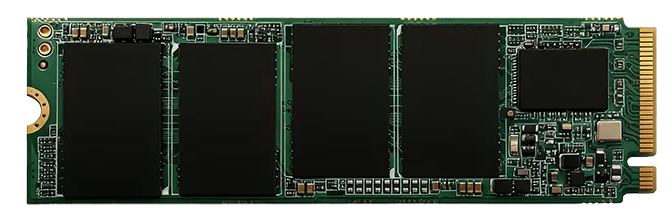
M.2 2280 NVMe SSD (With Cache) · Wide-temp
- Independent DRAM cache
- PCIe 3.0×4 lane
- Compatible with Industrial
M.2 2280 NVMe SSD (Cacheless) · Wide-temp
- PCIe 3.0×4 Lanes
- Supports TRIM/NCQ/S.M.A.R.T
- Compatible with Industrial
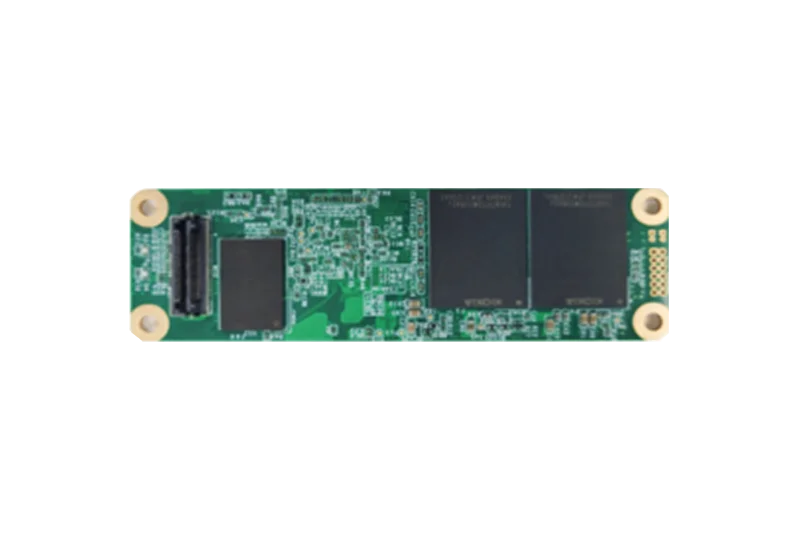
Rugged NVMe SSD
- Adopts Samtec high-speed
- PCIe Gen3×4 lanes
- Adopts Kioxia Industrial TLC
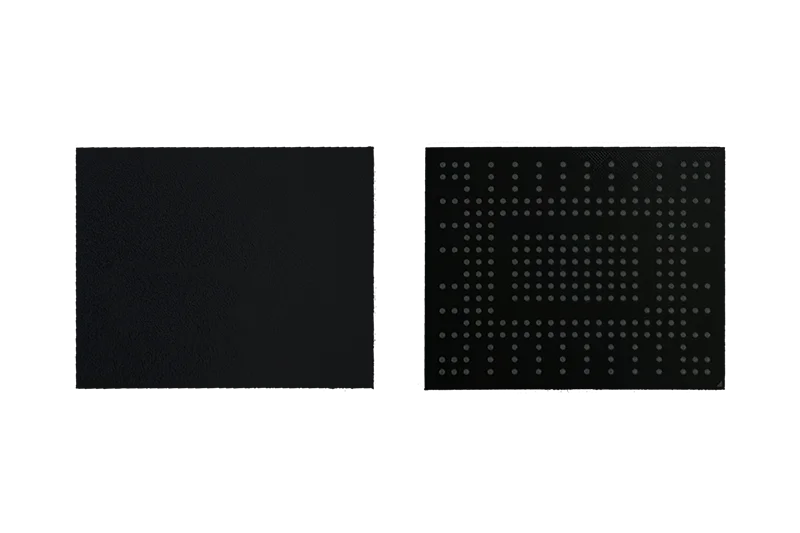
NVMe BGA SSD · Wide-temp
- FBGA291 Package
- PCIe Gen3×4 Interface
- Environmental testing
Related resources
Continue with related selection guides and notes for the same industrial memory topic.
Related cross-references
Pin-to-pin and functional alternatives referenced from this guide — for BOM review, dual-sourcing, or EOL coverage.