
Series overview
Industrial eMMC 5.1 provides managed NAND for boot, OS, and application partitions on sealed boards. Loongtion offers TLC wide-temp (−40°C to +85°C) and pSLC GJB extreme-temp lines in FBGA153 — a functional alternative path when Samsung KLM*/KLMBG*, Micron MTFC*, or Kioxia THGBM* SKUs are hard to source. eMMC remains the default soldered storage choice when the SoC expects a JEDEC managed device rather than raw NAND or a full NVMe SSD. The product list below covers the active industrial eMMC capacities and grades used on long-lifecycle embedded hosts.
Technical points to align
Match JEDEC eMMC revision (5.0 vs 5.1), package (153FBGA 11.5×13), capacity, and temperature. Commercial eMMC often stops at −25°C; industrial Loongtion grades start at −40°C with pSLC options for higher endurance. Always qualify CID/CSD, boot partitions, and firmware on the host SoC. Protocol generation mismatches (5.0 incumbent vs 5.1 Loongtion) must be called out during bring-up — see the Kioxia/THGBM cross-reference notes. Endurance (TLC vs pSLC), boot mode support, and RPMB features should be checked against the OS image and secure-boot plan before freezing capacity.
How to select in this series
Pick capacity and grade from the product list, then open related guides: eMMC 5.1 storage guide. For incumbent PNs, use cross-reference. If the design needs higher bandwidth, compare NVMe BGA before locking the board stack-up. SSD form browsing: industrial SSD hub. Specify the same firmware generation you plan for production — eMMC bring-up issues are often firmware- and partition-table related, not only ball-map related.
Products in this series
2 models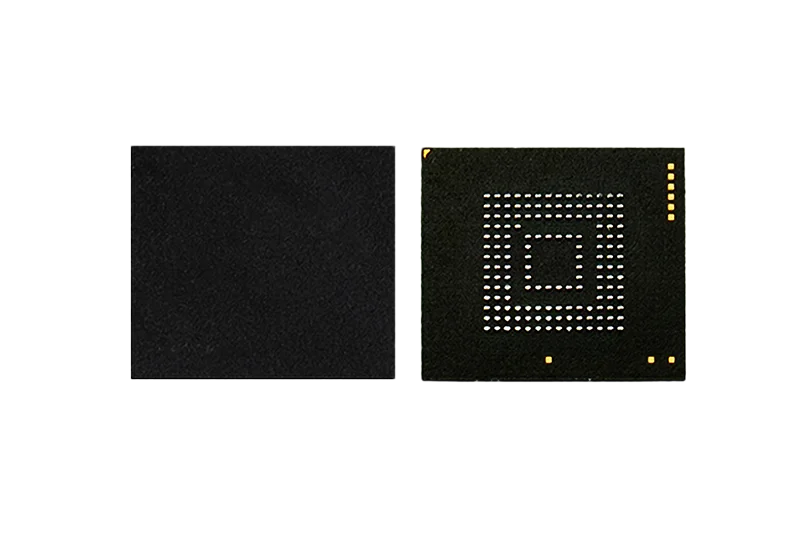
eMMC 5.1 Module
- NAND Flash and controller
- Complies with the eMMC 5.1
- Operates over a wide
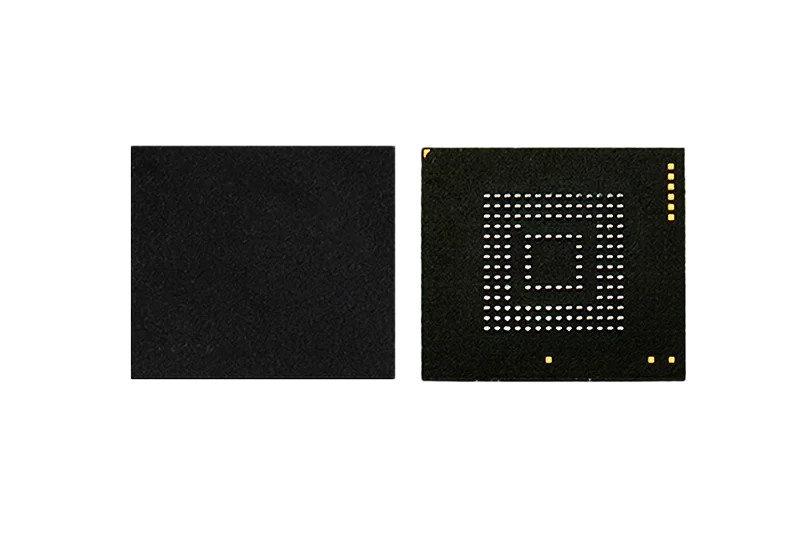
eMMC pSLC
- Encapsulates NAND flash
- Complies with the eMMC 5.1
- Clock speed up to 400MHz
Technical resources
All resourceseMMC vs NAND trade-offs and industrial eMMC integration notes.
Need a custom configuration?
Firmware, temperature screen, silk-screen, or a full custom storage design — talk to application engineering.
Contact engineering