
DDR3 vs DDR4 in Industrial Embedded Systems: A Performance Trade-off Analysis for Migration Decisions
When Migration from DDR3 to DDR4 Makes Sense (and When It Doesn't)
Industrial embedded system designers face a recurring dilemma: stick with mature DDR3 memory or migrate to DDR4 for new designs. On the surface, the choice seems simple — the newer generation is faster and more efficient. But in industrial environments, where product lifecycles span a decade or more, migration decisions involve more than just peak bandwidth. You need to weigh controller compatibility, power budgets, thermal constraints, signal integrity at higher speeds, and long-term supply availability.
Consider a PLC upgrade scenario: a DDR3-1600 based system using 4 Gb devices has served reliably for years, but the next revision demands higher memory bandwidth for real-time data logging and HMIs with larger displays. Should you redesign the memory subsystem around DDR4-3200, or can you simply step up to DDR3-2133? The answer depends on processor support, latency tolerance, and power constraints.
What the Two Generations Deliver
DDR3 DRAM supports speed bins from 800 MT/s to 2133 MT/s, with a 1.5 V (DDR3) or 1.35 V (DDR3L) supply. Its 8-bank core with 8n-prefetch is well-proven. DDR4 pushes to 3200 MT/s at 1.2 V, with 16-bank organization (×8) and 8n-prefetch, but adds architectural improvements: bank groups for greater parallelism, CA parity, write CRC, data bus inversion (DBI), and post-package repair (PPR). Note: DDR4 does not include on-die ECC; that feature is introduced with DDR5. For error correction in DDR4 systems, designers must rely on external ECC (e.g., via the memory controller) or use the ECC capability built into some MPUs.
Both generations are available with industrial temperature ranges (–40°C to 85°C) and extended ranges (–55°C to 105°C). The voltage difference is critical: DDR4's 1.2 V operation reduces dynamic power compared to 1.35 V DDR3L, but the exact improvement depends on the memory controller and workload. The reduction from 1.5 V to 1.2 V yields approximate dynamic power savings, but exact values vary with system configuration.
Latency is where DDR4 can disappoint in embedded systems. CAS latency (CL) for DDR4-3200 typically falls between 16 and 22 cycles, while DDR3-1600 can achieve CL 11. In absolute time, DDR4-3200 CL20 is 12.5 ns, versus DDR3-1600 CL11 at 13.75 ns — comparable. However, DDR4's additive latency (AL) and write latency (WL) are longer, which can increase command-to-data turnaround in small-burst transactions common in industrial control. DDR4's additive latency (AL) is typically set to 0 for many industrial controllers, but if enabled to optimize bandwidth, it introduces deterministic delay that must be accounted for in real-time control loops. If your application mostly does random 64-byte reads, DDR3 may actually feel more responsive.
Real-World Selection Criteria
When evaluating migration, consider these five factors:
1. Memory bandwidth demand. If your application streams large data blocks — such as video capture, high-speed ADC logging, or multi-display graphics — DDR4's extra bandwidth (up to 25.6 GB/s per channel vs 17.1 GB/s for DDR3-2133) justifies the redesign. For most PLC and RTU tasks, DDR3-1600 is sufficient.
2. Power and thermal budget. DDR4's 1.2 V reduces active power compared to 1.35 V DDR3L and 1.5 V DDR3. In fanless enclosures with 85°C ambient, this savings can help keep junction temperatures below derating thresholds. The DDR4 specification includes Fine Granularity Refresh (FGR) and Max Power Saving Mode for further tuning.
3. Error detection requirements. DDR4 adds CA parity and write CRC on the command/address and data buses — features absent in DDR3. If your system operates near high-EMI sources (motor drives, inverters), DDR4's built-in error detection can prevent silent data corruption without external ECC. However, for single-bit error correction, you still need an external ECC controller or chipkill support.
4. Controller and PCB complexity. DDR4 requires more intricate training sequences (write leveling, CA training, VREF training) and stricter layout for fly-by topology at 3200 MT/s. If your existing controller only supports DDR3, the cost of redesign may outweigh performance gains.
5. Long-term supply. DDR3 remains available but is no longer the focus for new silicon. DDR4 has broader industry support, but for designs with 15-year lifecycles, verify that your chosen DDR4 speed grade (e.g., 3200 MT/s) is assured for the product's lifetime. Both generations are available in industrial temperature grades from major manufacturers, including Loongtion.
Latency in Real-Time Control
Real-time control loops demand deterministic memory access latency. DDR3's simpler internal architecture often provides more predictable timing for small transactions. In a motor drive controller that reads position data every 62.5 µs, a 2-cycle latency variation from DDR4 training algorithms could force wider safety margins. If your application requires strict determinism, consider locking the DDR4 speed to a lower bin where training overhead is minimal, or stick with DDR3 where timing is more straightforward.
Decision Framework: When to Choose DDR3 or DDR4
The table below summarizes trade-offs for common industrial scenarios.
| Scenario | Recommended Generation | Rationale |
|---|---|---|
| Legacy controller only supports DDR3 | DDR3 | No migration possible without processor change. Use DDR3L to save power. |
| Fanless embedded system, >85°C ambient, moderate bandwidth | DDR3L or DDR4 | DDR4 at 1.2 V may ease thermals; DDR3L is a drop-in if controller supports it. |
| High-bandwidth data acquisition (>1 GB/s needed) | DDR4 | DDR3-2133 maxes out below 2 GB/s per DIMM; DDR4-3200 offers room to grow. |
| Mission-critical with ECC requirement | DDR4 with external ECC | DDR4's CA parity and CRC detect errors, but external ECC is needed for correction. DDR3 requires external ECC controller. |
| Cost-sensitive, long-life design, 800–1600 MT/s enough | DDR3 | Mature, lower PCB cost, no training overhead. Loongtion offers 2 Gb–8 Gb parts. |
| High-reliability networking equipment (Telco) | DDR4 | CA parity and CRC improve data integrity over backplanes. |
| Real-time control with strict latency requirements | DDR3 | Lower and more predictable latency for small bursts. |
Practical Migration Considerations
When moving from DDR3 to DDR4, designers should account for several practical differences beyond speed. DDR4 requires a separate 2.5 V VPP supply for wordline boost and dedicated VREF generation, whereas DDR3 uses only VDD and VDDQ. Adding a 2.5 V rail increases power supply cost and board area, which may offset some power savings from the lower 1.2 V core.
Signal integrity becomes more critical at DDR4 data rates. Fly-by topology is mandatory for the command/address bus at 3200 MT/s, requiring careful trace length matching and termination. In contrast, many DDR3 designs can use T-branch routing with simpler constraints. If your PCB design team lacks high-speed layout experience, staying with DDR3 at moderate speeds (e.g., 1600 MT/s) reduces risk.
Thermal management also differs. At extended temperature ranges (–55°C to 105°C), DDR4's self-refresh current can be higher than DDR3's due to the larger bank count. However, DDR4's temperature-compensated refresh (TCR) helps adapt refresh rate to temperature. For applications that spend significant time at low temperature, verify that the memory controller supports the standby power modes you need.
Supply and Qualification Notes
Both DDR3 and DDR4 DRAM chips are available in industrial (-40 to 85°C) and extended (-55 to 105°C) temperature grades, with standard ×8 and ×16 organizations. For designs where the performance uplift of DDR4 is marginal but the power savings are valuable, consider that DDR4 at lower data rates (e.g., 1600 MT/s) can operate at reduced voltage, but the controller must support the lower frequency bin. The DDR4 spec supports down-binning, but specific timing parameters for sub-2133 operation are not standardized — consult the datasheet for your target speed.
When migrating, also account for differences in package ball-out and PCB footprint. DDR3 ×16 uses 96-ball FBGA, while DDR4 ×16 uses 96-ball with different pinout. Always verify compatibility with your processor's memory controller. For designs requiring long-life support, both generations are available with extended life programs from suppliers.
Ultimately, the choice between DDR3 and DDR4 in industrial embedded systems is rarely a pure performance question. It is a system-level engineering decision involving controller capabilities, power budgets, signal integrity expertise, and reliability requirements. Both options are available with industrial-grade support, allowing you to match the memory generation to your application's true needs — not just the latest spec.
For related products and specifications, see the industrial memory product line. For additional technical resources, explore our application notes on DRAM selection.
Additional Resources
For more technical guidance on DRAM selection, refer to application notes on thermal management and signal integrity from your memory supplier. Evaluating your actual workload with memory bandwidth profiling tools can help quantify the need for DDR4. If you are uncertain about controller compatibility, contact your processor vendor for validated memory configuration lists.
By Loongtion Technical Team
Related products
Shortlist lines referenced in this guide — open the product page for PN, grades, and datasheet request.
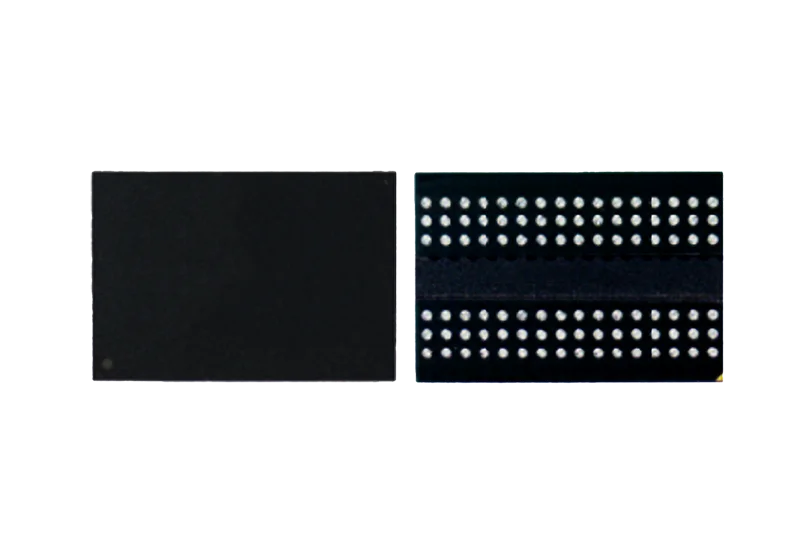
DDR3 DRAM Chip · Wide-temp · CN
- Both Wafer and Packaging &
- Standard SSTL Interface
- Supports Dual Voltages
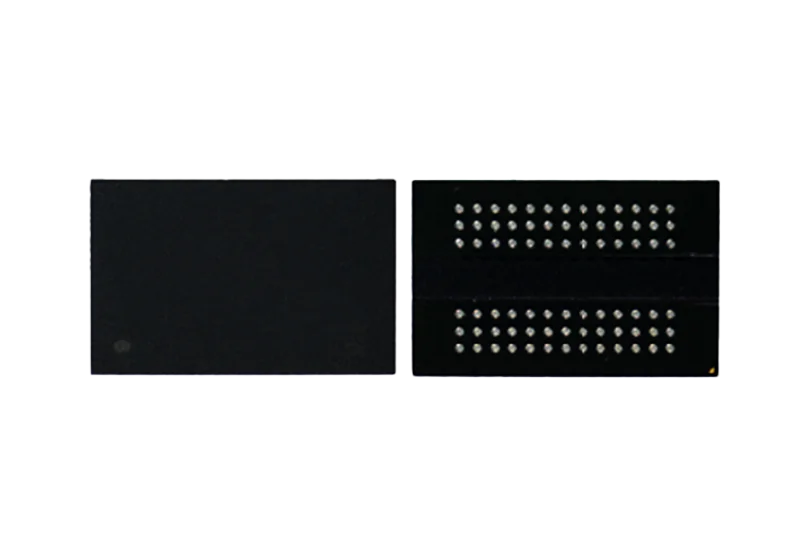
8Gb DDR4 DRAM Chip · Wide-temp
- Both wafer and package
- FBGA78/FBGA96 package
- Supports VDD(VDDQ) 1.2V +/-
Related resources
Continue with related selection guides and notes for the same industrial storage topic.
Related cross-references
Pin-to-pin and functional alternatives referenced from this guide — for BOM review, dual-sourcing, or EOL coverage.