
DDR3 vs DDR4 in Industrial Systems: Supply Chain Risks and Long-Term Design Reliability
The Problem: 15-Year Product Life vs. Shorter Memory Generations
Industrial products often require 10–15 years of production support, while memory generations typically see active production for 5–7 years. This mismatch creates supply risk: a design using a mature memory type may face component shortages before the product's end of life. Engineers must weigh technical performance against long-term availability to avoid emergency requalifications and redesigns.
This article helps hardware and procurement engineers assess supply chain risks and technical trade-offs between DDR3 and DDR4 early in design. By understanding performance, power, temperature, and lifecycle dynamics, you can make a strategic memory selection that balances cost, reliability, and future availability.
Technical Context: Where DDR3 and DDR4 Stand Today
DDR3 has been the workhorse of embedded and industrial designs since 2007. For industrial applications, DDR3 options typically include densities from 2 Gb to 8 Gb (×8 and ×16 data widths), speed bins from 800 MT/s to 2133 MT/s, and temperature grades from industrial (–40°C to +85°C) to extended (–55°C to +105°C). The devices incorporate an 8-bank core architecture with 8n-bit prefetch, and support DDR3L at 1.35 V for power-sensitive designs (Loongtion KB: DDR3 Overview).
DDR4 became mainstream around 2014. It operates at 1.2 V nominal, offers data rates up to 3200 MT/s, and includes reliability features such as CA parity, write CRC, and data bus inversion (DBI). Note that Post-Package Repair (PPR) is a redundancy mechanism, not on-die ECC; standard DDR4 does not include on-die ECC per JEDEC. DDR4 also introduces Fine Granularity Refresh (FGR), which adjusts refresh rate based on temperature, improving reliability at high temperatures without unnecessary power at lower temperatures (Loongtion KB: DDR4 Industrial).
From a supply perspective, DDR3 is a mature product. As major manufacturers shift production to DDR4 and DDR5, DDR3 availability may become uncertain. Engineers should verify long-term availability with their supplier and consider a written lifetime support agreement if DDR3 is mandatory. DDR4, still in volume production, is expected to remain widely available for years, making it a safer choice for new designs with extended production horizons.
Performance, Power, and Temperature: Engineering Trade-Offs
Performance – DDR4's higher data rate (up to 3200 MT/s) benefits bandwidth-intensive applications such as high-resolution imaging, real-time video processing, and advanced data acquisition. Many industrial control applications, however, do not require more than DDR3-1333 or DDR3-1600, so the performance gap may not be decisive. Some DDR3 chips support down-binning, simplifying inventory for multiple speed grades.
Power consumption – DDR4 operates at 1.2 V (VDD), a reduction from DDR3's 1.5 V. Many DDR3 chips also support DDR3L at 1.35 V, narrowing the gap. For battery-operated or thermally constrained systems, DDR4 has an edge in active and standby power. Typical IDD values for DDR3 vary by configuration, but DDR4 generally offers lower per-bit active current due to voltage reduction and process improvements. In a multi-chip system, the cumulative power savings can be significant.
Temperature range – Both memory types are available with industrial and extended temperature options. DDR4's FGR adjusts refresh rate according to temperature, improving reliability at high temperatures. DDR3 uses a fixed refresh rate but supports extended temperature up to 105°C with increased IDD derating above 95°C (per datasheet typical values). For designs requiring –55°C operation, industrial DDR3 parts are specifically rated; DDR4 extended temperature options should be verified per supplier. Loongtion's DDR4 modules, for example, offer temperature options covering –40°C to +85°C and –55°C to +105°C with FGR (Loongtion KB: DDR4 Product Brief).
Lifecycle and Supply Chain Dynamics
For product lifecycles over 8 years, DDR4 offers a more stable supply outlook. DDR3 may become difficult to source as the industry transitions. Engineers should ask their memory vendor for specific roadmap commitments and seek second-source options. The decision should factor in not only memory IC availability but also module (DIMM/SO-DIMM) supply, which may phase out DDR3 support earlier. Recent industry announcements indicate that multiple DRAM manufacturers have issued end-of-life notices for several DDR3 density-speed combinations, with last-time-buy windows typically 6–12 months.
When evaluating supply risk, engage directly with the memory supplier. For existing DDR3 designs, qualification of a fallback component—or planning a future migration to DDR4—is advisable. For new designs, DDR4 components typically offer a clearer path forward. Loongtion's DDR4 modules, available as industrial-grade SO-DIMM/UDIMM modules, support data rates up to 3200 MT/s at 1.2 V, using an 8 Gb die in ×8 or ×16 configurations. They include CA parity, write CRC, and DBI for improved signal integrity. Temperature options cover industrial –40°C to +85°C and extended –55°C to +105°C (with FGR). More details are available in the industrial memory selection guide.
Application Scenarios: Where the Decision Becomes Clear
Scenario 1: Long-life industrial controller – A PLC designed for a 15-year field life requires memory that will be available for the entire production run. Using DDR4 ensures that replacement parts can be sourced without requalification. The extra bandwidth may also support firmware upgrades over time. An engineering team designing a new line of PLCs chose DDR4-2400 even though their current design only needed DDR3-1333, because the DDR4 supply outlook was significantly longer based on supplier roadmaps.
Scenario 2: Cost-sensitive IoT gateway – A high-volume gateway with a 3-year lifecycle might use DDR3 to minimize BOM cost. The risk of EOL within that short window is low, and lower speed grades are sufficient for data logging and communication tasks. However, if the product has multiple variants with longer life spin-offs, the team should qualify DDR4 as an option.
Scenario 3: Medical device with strict power budget – A portable ultrasound system requires low active and standby power. DDR4's 1.2 V operation and FGR provide a measurable advantage over DDR3L. The extended temperature range (up to 85°C) is sufficient for clinical environments. By switching from DDR3L to DDR4, the design team could achieve meaningful power savings, extending battery life.
Scenario 4: Upgrade of existing DDR3 design – A networking switch originally using DDR3-1600 sees supply constraints. The engineering team must decide whether to requalify a different DDR3 supplier or redesign the PCB for DDR4. In a typical cost-benefit analysis, the requalification effort is shorter and cheaper, but redesign offers longer supply assurance. The team may choose to redesign if the product has a long remaining lifecycle.
Scenario 5: Extreme-temperature environment – An outdoor telecom base station must operate from –40°C to +85°C ambient, with component temperatures reaching 105°C. DDR3 extended-temperature parts meet this requirement but require increased IDD at high temperatures. DDR4 with FGR can adjust the refresh rate dynamically, maintaining reliability with less power penalty. The telecom OEM selected DDR4 for new installations, reserving DDR3 only for field replacement where PCB reuse was mandatory.
Decision Framework: A Practical Guide
The table below summarizes a decision framework based on common industrial design scenarios:
| Scenario | Recommended Option | Rationale |
|---|---|---|
| New design, expected lifecycle >8 years | DDR4 | Broader supply base, lower EOL risk, performance headroom |
| Existing DDR3 design, cost-sensitive | Stick with DDR3 (verify supplier support) | Avoid requalification cost; plan gradual migration within 2–3 years |
| Bandwidth >2133 MT/s required | DDR4 | DDR3 maxes out at 2133 MT/s; DDR4 required for higher rates |
| Lowest power consumption priority | DDR4 (or DDR3L) | DDR4's 1.2 V delivers lower active/standby power; FGR improves thermal efficiency |
| Extreme-temperature environment (–55°C to +105°C) | DDR3 or DDR4 (check extended temp models) | Both support this range; DDR4's FGR provides additional flexibility |
| High cost pressure, low bandwidth needs | DDR3 (if EOL risk is acceptable) | Typically lower unit cost; requires careful supply agreement and quarterly availability checks |
| Design with existing DDR3 controller | DDR3 (avoid controller change) | No need to requalify memory controller; verify pinout compatibility with future DDR4 variant |
| High-reliability mission-critical system | DDR4 (with CA parity and CRC) | DDR4's signal integrity features improve reliability in noisy industrial environments |
Migration and Second-Source Planning: A Prudent Approach
A well-designed memory subsystem should anticipate supply changes. For a design originally built around DDR3, consider whether the PCB can accommodate a DDR4 layout with minor changes (e.g., different VREF scheme, fly-by topology). DDR3 and DDR4 packages are not pin-compatible, so a PCB redesign is usually required. However, the controller often supports both memory types via a flexible memory interface. Early identification of a second-source memory part—even from a different generation—can reduce time-to-market if shortages arise.
For long-life equipment, it may be worthwhile to qualify two separate memory sources: one current-gen part (DDR4) and one next-gen (DDR5) if the controller supports it, although DDR5 is still emerging in industrial applications. The qualification process should include temperature cycling, signal integrity testing, and accelerated life testing per industry best practices. Contact the sales team for lifecycle status of specific part numbers.
When planning a migration, document the following: memory controller compatibility, PCB routing constraints (DDR4 requires fly-by topology for higher speeds), thermal profile of the new memory, and procurement lead times. A typical migration from DDR3 to DDR4 takes several months from concept to production validation. Starting the assessment early—before shortages hit—gives the team bargaining power with suppliers and time to qualify alternative sources.
Conclusion: Balancing Risk and Performance
Selecting between DDR3 and DDR4 for an industrial design is not merely a technical choice but a supply-chain and lifecycle decision. DDR4 offers higher performance, improved power efficiency, and a production lifecycle that better aligns with long-term industrial products. DDR3 remains relevant for cost-sensitive or legacy designs, but its availability is becoming uncertain. By applying the decision framework in this article and working closely with memory suppliers, engineering and procurement teams can mitigate supply risks and ensure their products remain manufacturable for years to come.
For current specifications, lifecycle status, and assistance with migration planning, refer to the Loongtion industrial DDR4 product page or contact your Loongtion sales representative.
By Loongtion Technical Team
Related products
Shortlist lines referenced in this guide — open the product page for PN, grades, and datasheet request.
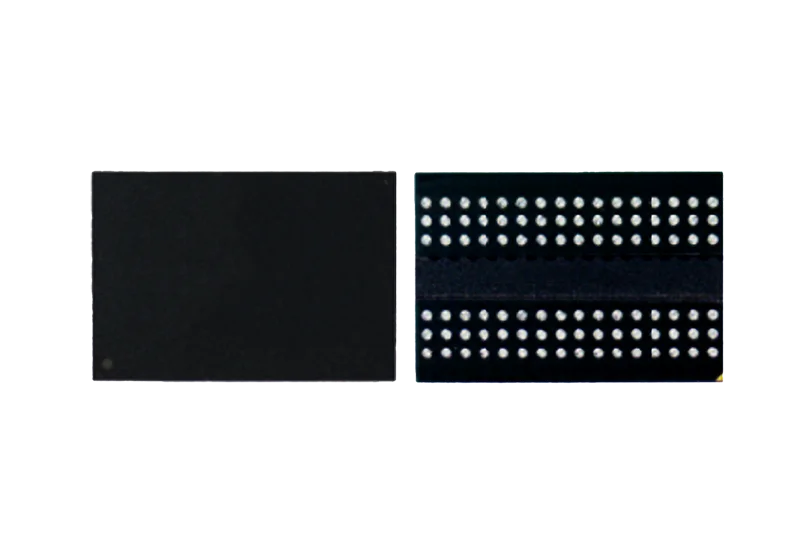
DDR3 DRAM Chip · Wide-temp · CN
- Both Wafer and Packaging &
- Standard SSTL Interface
- Supports Dual Voltages
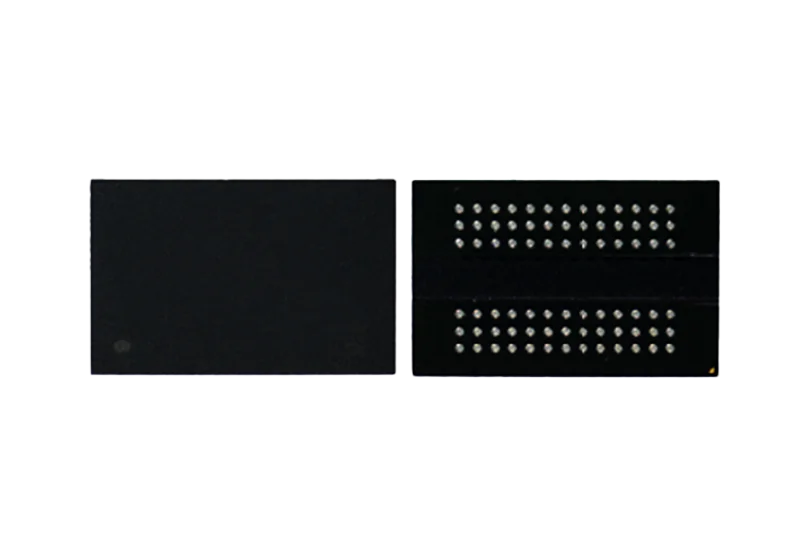
8Gb DDR4 DRAM Chip · Wide-temp
- Both wafer and package
- FBGA78/FBGA96 package
- Supports VDD(VDDQ) 1.2V +/-
Related resources
Continue with related selection guides and notes for the same industrial storage topic.
Related cross-references
Pin-to-pin and functional alternatives referenced from this guide — for BOM review, dual-sourcing, or EOL coverage.