
DDR3 Legacy Replacement: A Field Engineer's Guide
Long-life industrial boards still ship on DDR3 — not because the market prefers it, but because the controller, layout, and qualified BOM already exist. This guide is for hardware and sustaining engineers who must keep a DDR3 platform alive, shortlist a drop-in or near-drop-in China-localized (CN) DRAM chip, and document the verification steps before units leave the lab.
It is not a full JEDEC datasheet rewrite. For device-level timing and MR programming, use the product datasheet. For multi-generation BOM strategy (DDR3 + DDR4 + DDR5 on one program), see Multi-Generational DRAM BOM Strategies.
When this job shows up
Typical triggers on the floor:
- An incumbent Micron / Samsung / SK hynix DDR3 PN is allocation-constrained, EOL, or broker-only.
- A sealed-cabinet or outdoor host needs Ind WT (−40~85°C) or Ext / GJB-STD screening that consumer bins never promised.
- Purchasing wants a China-localized (CN) labeling path without respinning the PCB.
- Sustaining must prove pin, organization, voltage, and temperature grade before the next production lot.
If the controller already supports DDR4/DDR5 and you are free to respin, prefer a planned migration. If the board is frozen, stay on DDR3 and treat replacement as a field verification problem.
Replacement checklist (use this before you quote)
Confirm each item against the incumbent datasheet and the Loongtion PN you shortlist. A mismatch on any row is a stop for approval.
| Check | What to verify | Why it fails in the field |
|---|---|---|
| Package / ball-out | FBGA ball count, outline, pitch | Wrong package → not solderable as a drop-in |
| Organization | ×8 vs ×16, density (2 / 4 / 8 Gb typical) | Controller DQ width or density decode mismatch |
| Voltage | DDR3 1.5 V vs DDR3L 1.35 V (dual-voltage parts help) | Brown-out, training fail, or rail overstress |
| Speed bin | e.g. DDR3-1600 / 1866 / 2133 vs host max | Boot fail or intermittent SI at corner temp |
| Temperature grade | Ind WT −40~85°C vs Ext / GJB-STD SKUs | Cold boot or sealed-cabinet heat fails |
| Refresh / timing corner | tREFI, CL/CWL set the host actually trains | Marginal SI only appears at Ext temperature |
| Supply path | CN vs import-only labeling requirement | Commercial/compliance path blocked late |
Rule of thumb: treat “pin-to-pin compatible” as a hypothesis until package drawing, organization, and temperature grade are signed off on your host.
Common incumbent PNs → Loongtion shortlist
Documented handbook crosses (always re-validate package, speed bin, and temp grade on the target board):
| Incumbent (example) | Loongtion PN family | Notes |
|---|---|---|
| Micron MT41K128M16JT-125IT:K | YZ38E16SBB-9MFB-M(O) / YZ38E16SBB-9MFB-M | 2Gb ×16 — see cross-reference |
| Micron MT41K256M16HA-125IT | YZ38F16SBB-9MFD-M(O) / YZ38F16SBB-9MFD-M | 4Gb ×16 — see cross-reference |
Browse the full catalog: Part cross-reference. If you only have a partial PN or a broker label, send the marking photo or BOM line to engineering — do not guess density from the label alone.
Field validation sequence
- Paper match — package drawing, organization, VDD/VDDQ, speed bin, temp grade.
- Bring-up — cold start and warm restart at the lowest and highest case temperatures you claim.
- Training corner — confirm write leveling / read training stable across voltage corners if the host exposes them.
- Lot plan — lock the Loongtion PN (including temp-grade suffix) on the BOM before bulk.
Only after steps 1–3 should purchasing scale quantity.
Products to open first
These CN solder-down DDR3 chip lines are the usual shortlist for legacy industrial boards:
- DDR3 DRAM Chip · Wide-temp · CN — Ind WT path for most outdoor / sealed industrial hosts.
- DDR3 DRAM Chip · Extreme · CN — Ext / higher-stress screening when the enclosure grade demands it.
- Series hub: Industrial DDR3 DRAM
- Campaign landing (datasheet + quote thread): Industrial DRAM chips · CN
When not to stay on DDR3
- The SoC/FPGA roadmap already trains DDR4 or DDR5 and you have a respin window.
- Bandwidth or capacity needs exceed what the DDR3 controller can sustainably deliver.
- The program must standardize on one newer generation for the next decade of builds.
In those cases, use Multi-Generational DRAM BOM Strategies and the DDR4/DDR5 chip pages — do not force a DDR3 replacement story onto a migration program.
Next step
Send the incumbent PN (or BOM excerpt), package constraint, and required temperature grade. Engineering typically returns a Loongtion match note plus datasheet on the same thread.
Contact engineering · Browse DDR3 products · Request quote on DRAM LP
By Loongtion Technical Team
Related products
Shortlist lines referenced in this guide — open the product page for PN, grades, and datasheet request.
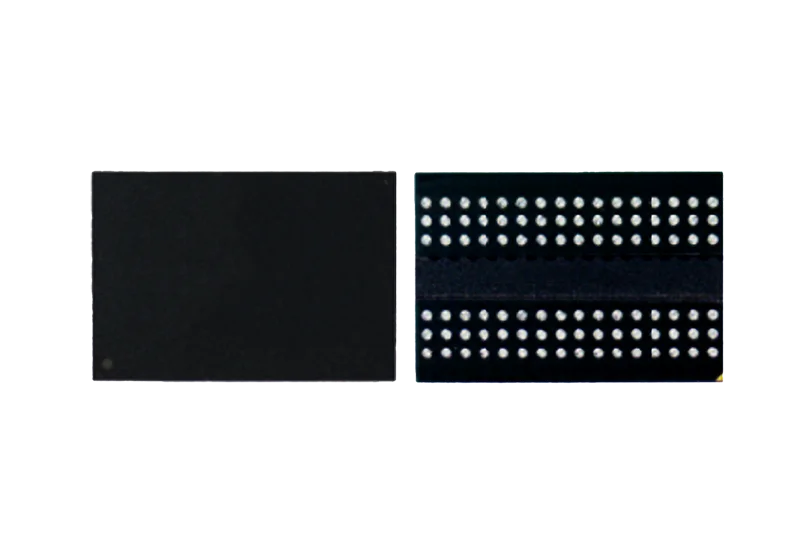
DDR3 DRAM Chip · Wide-temp · CN
- Both Wafer and Packaging &
- Standard SSTL Interface
- Supports Dual Voltages
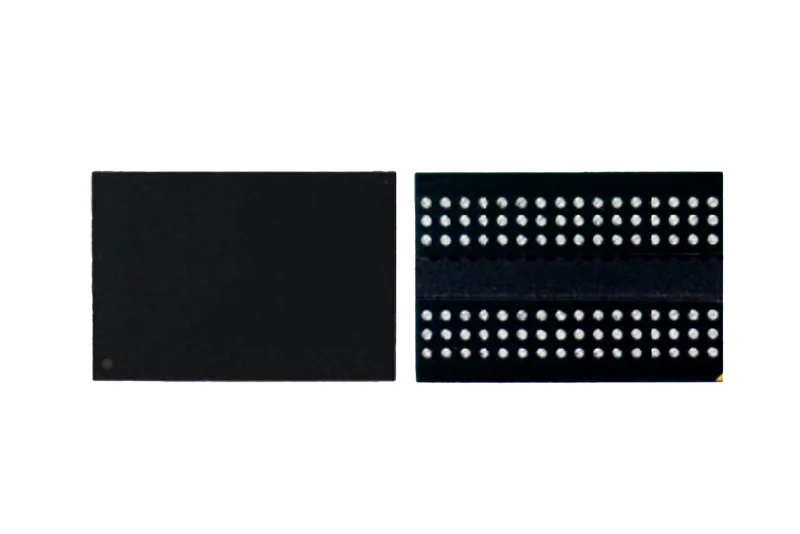
DDR3 DRAM Chip · Extreme · CN
- FBGA96 · ×16
- Dual-voltage rail
- China-localized supply (CN)
Related resources
Continue with related selection guides and notes for the same industrial storage topic.
Related cross-references
Pin-to-pin and functional alternatives referenced from this guide — for BOM review, dual-sourcing, or EOL coverage.