
Multi-Generational DRAM BOM Strategies: Balancing DDR3, DDR4, and DDR5 in Long-Life Industrial Designs
The Long-Life Industrial Product Dilemma
Industrial equipment such as PLCs, HMIs, and embedded controllers often have production lifecycles exceeding ten years. A product designed today may need to be manufactured until 2035 or later. During that period, DRAM generations shift: DDR3 remains available but is aging, DDR4 is mature, and DDR5 is gaining traction. The procurement and design teams face a common challenge: how to maintain a single BOM that can flexibly accommodate multiple DRAM generations without a full board respin.
Consider a new industrial controller designed in 2025 using a processor that supports both DDR4 and DDR5. The team wants to qualify both generations so that if one becomes scarce or costly in 2028, they can switch to the other using the same PCB. Alternatively, an existing DDR3-based product needs a performance upgrade, but the cost and risk of a new layout are prohibitive. Understanding the trade-offs between these memory generations is essential for making informed BOM decisions—especially for procurement engineers who need to ensure long-term supply.
Option Comparison: DDR3 vs. DDR4 vs. DDR5
Each DRAM generation brings distinct electrical and architectural features that influence system integration. Instead of a spec-by-spec table, we focus on the engineering implications.
DDR3 remains attractive for low-bandwidth industrial applications because of its wide voltage tolerance and proven reliability at extreme temperatures. Standard voltage is 1.5 V for DDR3 and 1.35 V for DDR3L, while DDR4 uses 1.2 V and DDR5 uses 1.1 V. This difference means the power supply must be adaptable if the BOM includes multiple generations. Maximum data rates climb from 2133 MT/s for DDR3 to 3200 MT/s for DDR4, and up to 8400 MT/s for DDR5 (preliminary). However, the core prefetch increases from 8n for DDR3/DDR4 to 16n for DDR5, giving higher bandwidth per clock but also requiring more sophisticated signal integrity management.
DDR4 introduced CA parity and write CRC for improved reliability, features absent on DDR3. DDR5 includes on-die ECC, which can reduce the system-level error rate at the cost of some latency. For industrial temperature ranges, extended temperature grades for DDR3 and DDR4 commonly cover –40 °C to +105 °C, while DDR5 is currently limited to –40 °C to +85 °C from most suppliers. This makes DDR5 unsuitable for high-temperature environments without additional cooling.
PCB complexity also varies. DDR3 and DDR4 use fly-by topology with write leveling, which is well-understood. DDR5 requires decision feedback equalization (DFE) training due to higher speeds, increasing layout and initialization demands.
Ultimately, the choice involves trade-offs in voltage compatibility, bandwidth needs, temperature limits, and PCB complexity.
Selection Criteria for Long-Lifetime BOMs
When planning a multi-generational BOM, the design team must evaluate three primary axes: performance headroom, thermal environment, and supply chain stability.
Performance headroom: Estimate the memory bandwidth required for the product’s lifetime. If the target is DDR3-1600, a controller that also supports DDR4-2400 may allow future upgrades without changing the layout. However, moving to DDR5 might require a different power delivery network (1.1 V vs. 1.2 V) and tighter signal integrity margins.
Thermal environment: For applications with case temperatures above 85 °C, DDR5 is currently not an option (most DDR5 devices are rated to 85 °C only). DDR3 and DDR4 both offer extended temperature grades up to 105 °C, making them suitable for rugged environments. Note that at elevated temperatures, derating may apply: for example, some DDR3 datasheets indicate IDD derating beyond 95 °C—always check the specific component datasheet.
Supply chain stability: DDR3 production is declining, but many foundries still offer it. DDR4 is in its prime, and DDR5 is ramping. Qualifying two generations on the same BOM—say DDR4 and DDR5—provides flexibility if one supply tightens. For products that can tolerate lower performance, keeping DDR3 as a drop-in option (if the controller supports it) can be a cost-effective hedge.
Practical Qualification Checklist for Multi-Generational BOMs
To ensure a smooth qualification process when supporting multiple DRAM generations, consider the following steps:
- Verify controller compatibility: Confirm the processor supports the voltage rails and training sequences for each targeted DRAM generation (e.g., DDR3L at 1.35 V and DDR4 at 1.2 V).
- Design adaptable power rail: Use a programmable voltage regulator or one with a GPIO-selectable output to switch between VDD values.
- Validate ODT configurations: Program boot-time training to detect DRAM type via mode register reads and apply appropriate ODT values (e.g., RZQ/6 for DDR3L vs. RZQ/4 for DDR4).
- Test temperature extremes: Qualify each DRAM part at the maximum rated temperature for the intended application. For DDR5, limit to 85 °C; for DDR3/DDR4, test up to 105 °C if needed.
- Document PCB layout constraints: Ensure signal integrity simulations account for the highest-speed generation planned. For DDR5, include DFE training margins.
- Maintain supplier diversity: Qualify at least two part numbers per generation (e.g., two different DRAM suppliers) to mitigate single-source risk.
For detailed part numbers and specifications, see Loongtion industrial memory products.
When to Choose What: A Decision Framework
The following table guides the selection based on typical industrial use cases.
| Application Scenario | Recommended DRAM Generation | Rationale |
|---|---|---|
| Low-speed control (PLC, simple HMI) | DDR3L-1333/1600 | Low cost, adequate performance, wide temperature option, simple layout. |
| Mid-range embedded (medical imaging, gateway) | DDR4-2400/3200 | Good balance of speed and power; CA parity improves reliability; extended temp available. |
| High-speed data acquisition (industrial cameras, edge AI) | DDR5-4800/5600 | High bandwidth required; on-die ECC reduces system-level error handling; use with adequate cooling. |
| Battery-powered or compact IoT | LPDDR4X-3733/4266 | Lower voltage (0.6 V I/O), smaller package; extended temperature variants available. |
| Multi-generational BOM flexibility | DDR4 + DDR5 or DDR3 + DDR4 | Controller must support both; use same PCB with separate termination ODT settings; qualify both currently. |
For products that must operate at elevated temperature (≥85 °C), DDR5 is currently not recommended. In such cases, DDR4 remains the best high-performance choice. If the design can accept reduced throughput, DDR3L provides the widest temperature range and most forgiving layout tolerances.
Supply and Qualification Notes
All three DRAM generations are available from industrial memory suppliers in a range of temperature grades. For instance, typical DDR3 parts (e.g., 4 Gb density) are available from –40 °C to 105 °C, and DDR4 parts (e.g., 8 Gb) similarly offer extended temperature grades. DDR5 is currently offered in industrial range (–40 °C to 85 °C) with speeds up to DDR5-8400 from some suppliers. For specific offerings, refer to the relevant product documentation.
Qualification of a multi-generational BOM requires careful attention to PCB layout. DDR3 and DDR4 share similar fly-by topology and write-leveling mechanisms, but their supply voltages differ (1.5/1.35 V vs. 1.2 V). A board designed to support both must have a programmable power rail or a regulator that can output either voltage. Similarly, ODT settings are generation-specific and must be configured in the controller’s training sequences.
For DDR5, the PCB design is more challenging due to the higher data rates and the need for decision feedback equalization (DFE). However, if the controller supports DDR4 and DDR5, the same physical layer can be reused by adjusting training algorithms. Some DDR5 devices use a POD interface and internal VREF generation, which can simplify some aspects of routing.
Obsolescence management: When sourcing from multiple generations, select part numbers with the same package and footprint where possible. DDR3 and DDR4 use different ball-out (e.g., 96-ball FBGA for x16 DDR3 vs. 96-ball FBGA for x16 DDR4)—they are not pin-compatible. The BOM strategy must therefore be at the system level: the controller, not the DRAM itself, is the common element. Qualify at least two DRAM part numbers from the same generation family (e.g., two different suppliers) to mitigate single-source risk.
Integration Lessons from Real Designs
Consider a new industrial controller that targets both DDR4 and DDR3L compatibility. The processor supports both, but the PCB must be optimized for DDR4’s 1.2 V rail while allowing a 1.35 V rail for DDR3L. The design uses a single voltage regulator with an adjustable output controlled by a GPIO signal during initialization. The ODT configuration is programmed in the boot loader to match the installed DRAM type.
During prototyping, the team discovered that DDR3L modules required a different write-leveling calibration sequence than DDR4. The controller’s firmware was updated to detect the DRAM generation by reading the mode registers (MR0 for burst length and CAS latency). After adjusting the training routine, both generations worked reliably on the same board with only a component change.
Lesson: Multi-generational support is feasible, but it requires firmware flexibility. The hardware cost is minimal—an extra GPIO for voltage selection and a broader termination resistor tolerance. The engineering effort lies in the boot-time initialization code and in validating two sets of timing parameters.
Another example: an existing DDR3-based embedded system needed a performance boost without a new layout. The team replaced the DDR3 DRAM with DDR3L (which is backward-compatible at 1.35 V) and increased the clock speed from 1066 MT/s to 1600 MT/s. This required only a firmware update and a change in the ODT settings (using RZQ/6 = 40 Ω instead of RZQ/4 = 60 Ω). The same PCB and passive components were reused.
Lesson: Within the same generation, a simple speed-grade upgrade can extend product life with zero hardware modification—provided the controller and power supply can handle the higher load.
Conclusion
Balancing DDR3, DDR4, and DDR5 in a long-life industrial BOM is not about picking one winner. It is about designing for flexibility: choose a controller that supports multiple generations, design a power rail that can be adjusted, and allocate firmware resources for adaptive training. Qualify at least two DRAM generations to guard against supply disruptions. For extreme-temperature environments, DDR3 and DDR4 remain the safest choices; for high-bandwidth, low-power needs, LPDDR4X or DDR5 are emerging options. Industrial memory suppliers offer parts across all these generations, enabling engineers to build products that last a decade or more.
Where to start on Loongtion
- Legacy DDR3 keep-alive (frozen board): DDR3 Legacy Replacement: A Field Engineer's Guide
- DDR3 chips: Wide-temp · CN · Extreme · CN
- DRAM chip campaign (datasheet + quote): Industrial DRAM chips · CN
- Cross-reference catalog: Part cross-reference
For a BOM match, contact engineering with the incumbent PN and required temperature grade.
Related products
Shortlist lines referenced in this guide — open the product page for PN, grades, and datasheet request.

2.5" SATA SSD (DRAM Cache)
- DRAM cache
- TLC capacity ladder
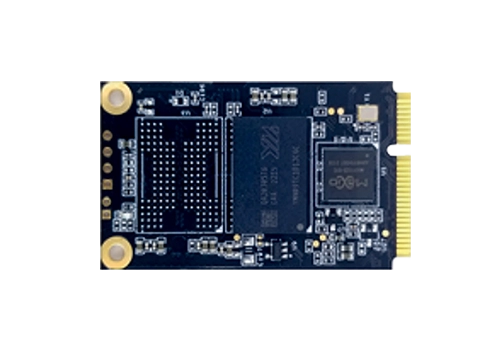
mSATA SSD (DRAM Cache)
- DRAM cache
- TLC capacity ladder
- Import supply line
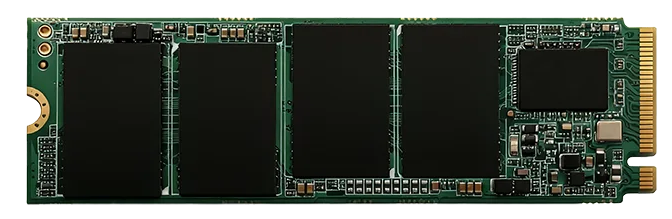
M.2 2280 NVMe SSD (DRAM Cache) · Wide-temp
- Independent DRAM cache
- PCIe 3.0×4 lane
- Compatible with Industrial
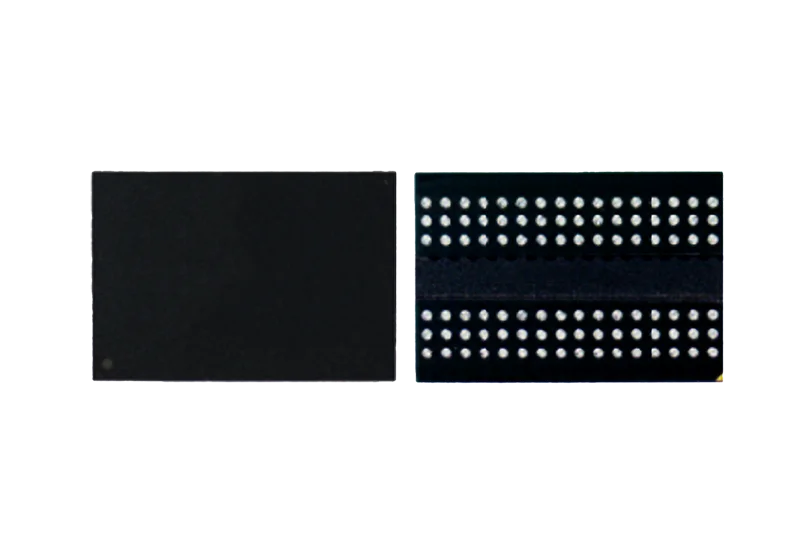
DDR3 DRAM Chip · Wide-temp · CN
- Both Wafer and Packaging &
- Standard SSTL Interface
- Supports Dual Voltages
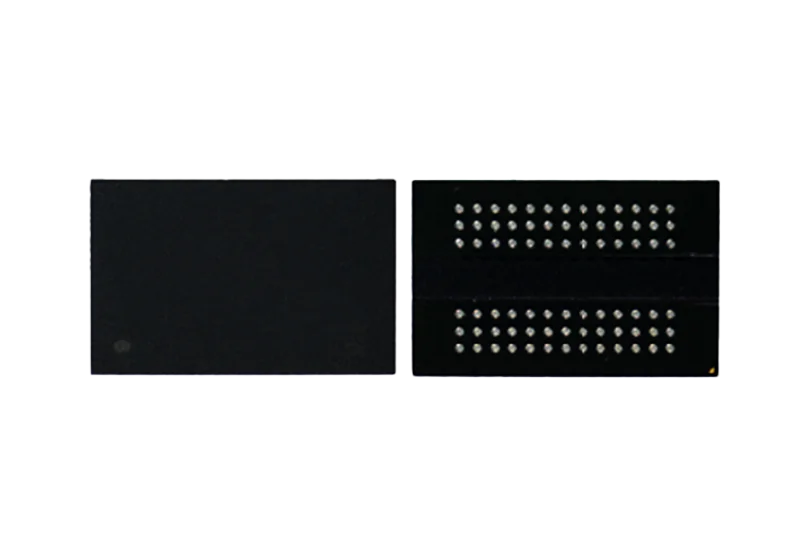
8Gb DDR4 DRAM Chip · Wide-temp
- Both wafer and package
- FBGA78/FBGA96 package
- Supports VDD(VDDQ) 1.2V +/-
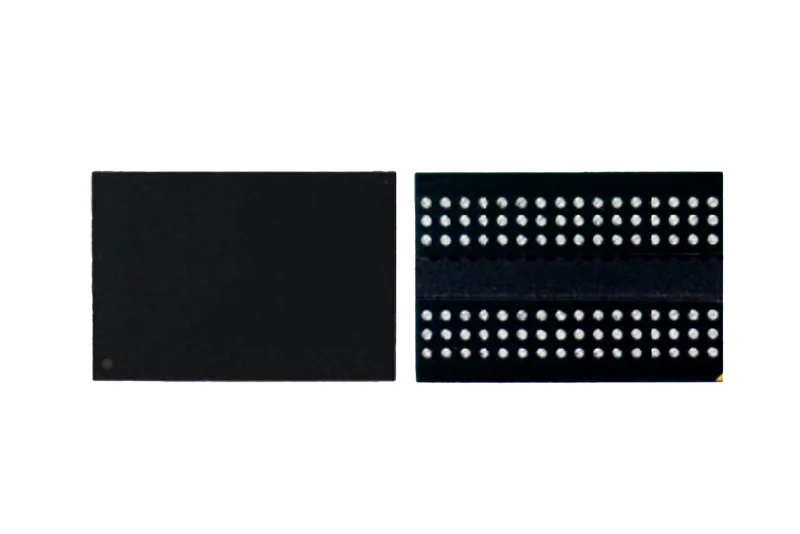
DDR3 DRAM Chip · Extreme · CN
- FBGA96 · ×16
- Dual-voltage rail
- China-localized supply (CN)
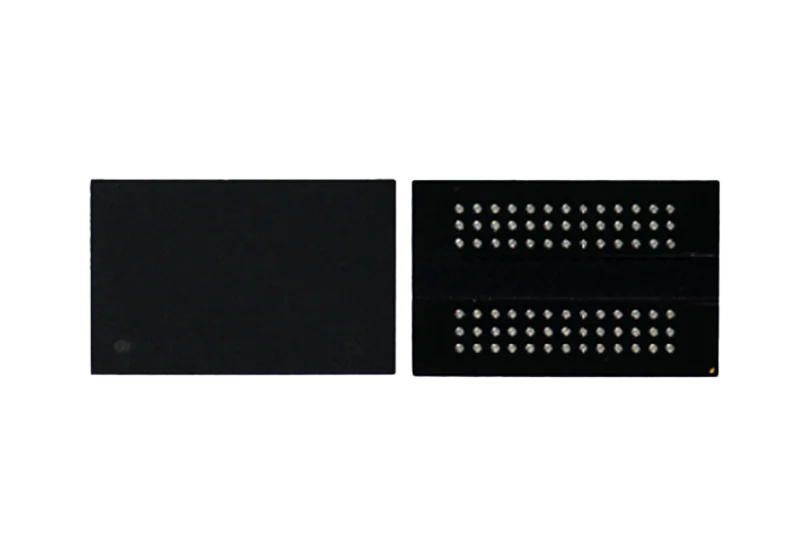
8Gb DDR4 DRAM Chip · Wide-temp · CN
- DDR4 bandwidth
- China-localized supply (CN)
- Drop-in planning
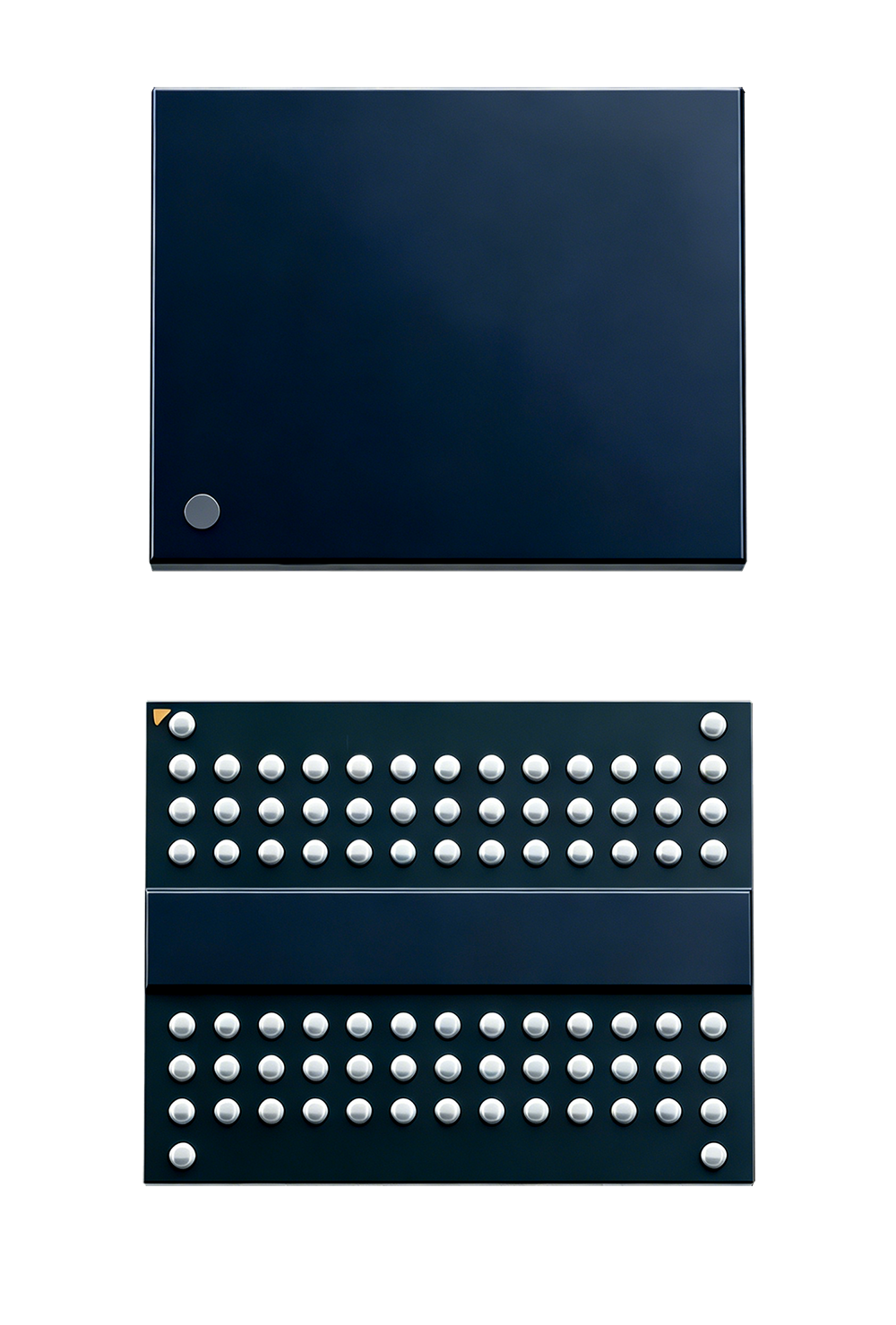
Industrial 16Gb DDR5 DRAM Chip
- DDR5 bandwidth
- 1.1 V operation
- WBGA-82 · ×8
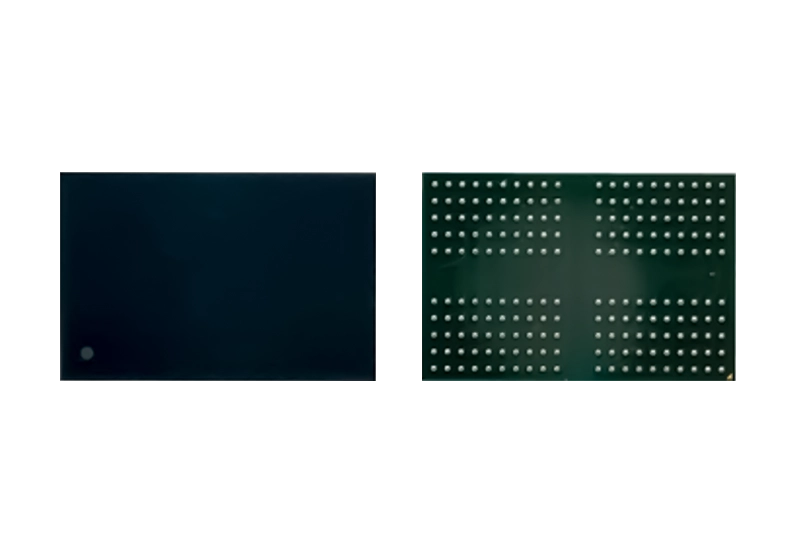
LPDDR4X DRAM Chip
- Slim FBGA178/FBGA200 package
- 0.6V core ultra-low voltage
- 100% domestic solution
Related resources
Continue with related selection guides and notes for the same industrial storage topic.
Related cross-references
Pin-to-pin and functional alternatives referenced from this guide — for BOM review, dual-sourcing, or EOL coverage.