
Enterprise SSD: Technical Architecture Evolution and Industry Pattern Outlook
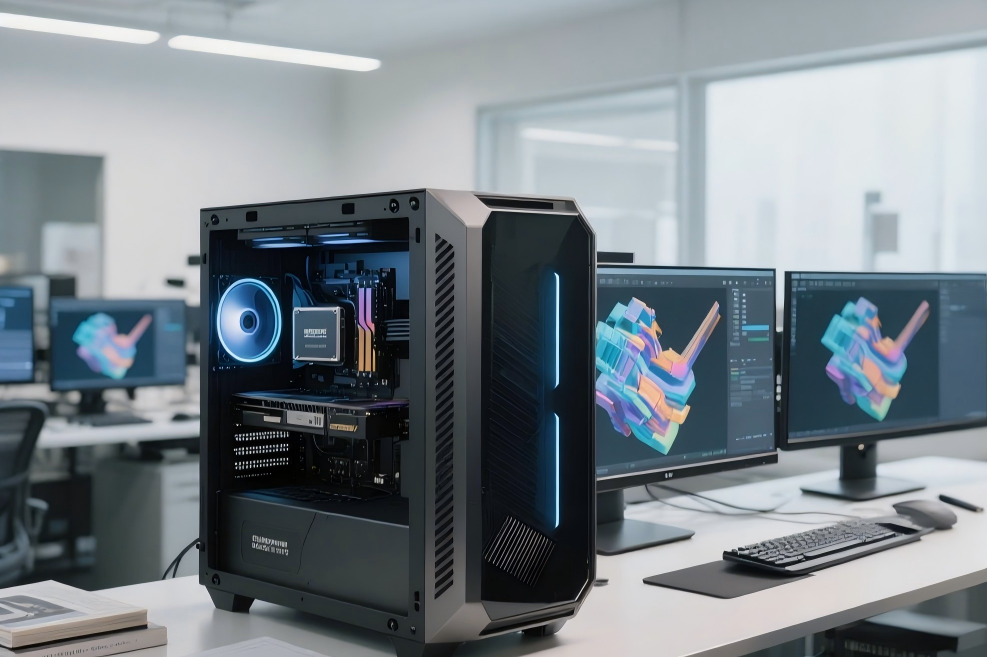
Driven by digital transformation and data surge, enterprise SSD has become the core storage medium for data centers. This article analyzes its technical evolution, core components, industry pattern and cutting-edge trends, with Loongtion providing full-scenario solutions covering standard and industrial-grade products.
Driven by digital transformation and data surge, enterprise SSD has become the core storage medium for data centers. This article analyzes its technical evolution, core components, industry pattern and cutting-edge trends, with Loongtion providing full-scenario solutions covering standard and industrial-grade products.
1. Preface: Enterprise SSD Becomes the Core of Modern Storage Infrastructure
Driven by digital transformation and the data surge, enterprise storage systems are facing unprecedented challenges in performance, reliability and efficiency. Solid State Drives (SSDs), with their superior random read-write performance, low latency, high energy efficiency and silent operation, have fully replaced traditional Hard Disk Drives (HDDs), becoming the preferred storage medium for data centers, cloud computing and enterprise core business systems.
This article deeply analyzes the technical development path, core component composition, market ecological changes and future innovation directions of enterprise SSDs, providing professional insights for enterprises to build high-performance and high-reliable storage infrastructure.
2. Performance Foundation: Generational Leap of Interfaces and Protocols
The performance leap of enterprise SSDs is mainly attributed to the continuous innovation of storage interfaces and communication protocols. This evolutionary path clearly reflects the design philosophy shift from "compatible with tradition" to "born for flash memory".
2.1 SATA and SAS: A Transitional Stage Connecting the Past and the Future
In order to quickly integrate into existing IT infrastructure, early enterprise SSDs generally adopted SATA (Serial ATA) and SAS (Serial Attached SCSI) interfaces from the mechanical hard disk era. SATA interfaces are widely used in consumer and some enterprise scenarios due to their popularity and low cost, but their maximum bandwidth of 6Gbps and high command latency based on AHCI (Advanced Host Controller Interface) protocol have gradually become performance bottlenecks.
SAS interfaces, with their high availability brought by dual-port design, richer command sets and more stable transmission links, have established a position in traditional enterprise storage arrays with high reliability requirements. However, both are essentially not tailor-made for highly parallel NAND flash memory and cannot fully release the potential of flash memory.
2.2 NVMe and PCIe: A Revolution to Release Flash Performance
The birth of the NVMe (Non-Volatile Memory Express) protocol is a decisive turning point. It abandons AHCI optimized for rotating disks from the underlying design, adopts a highly parallel and low-latency command queue mechanism, and perfectly matches the access characteristics of flash memory. Combined with the high bandwidth advantage of the PCIe (Peripheral Component Interconnect Express) bus, NVMe SSDs have achieved an exponential performance improvement.
From the bandwidth of about 4GB/s for PCIe 3.0 x4, to about 8GB/s for PCIe 4.0 x4, and then to about 16GB/s for PCIe 5.0 x4, the interface rate has continued to double, enabling high-end enterprise NVMe SSDs to break through the 10GB/s level in sequential read-write speed and reach the million IOPS (Input/Output Operations Per Second) level in random read-write performance. NVMe has become the standard storage interface for cutting-edge workloads such as high-performance computing, artificial intelligence and real-time databases.
3. Core Triangle: Collaboration of Controller, Flash Memory and Firmware
The reliability, service life and steady-state performance of an enterprise SSD depend on the "iron triangle" composed of its controller chip, flash memory medium and firmware algorithm. These three components work together to determine the comprehensive performance of the SSD in enterprise scenarios.
3.1 Controller Chip: The Intelligent Core of the Storage System
The controller chip is the "brain" of the SSD, undertaking core tasks such as data routing, error correction, wear leveling, garbage collection and bad block management. Enterprise-grade controller chips need to balance extreme performance, ultra-high reliability and complex functions. After years of integration, the market has formed a pattern of coexistence between internationally renowned manufacturers and domestic design companies.
The rise of domestic controller design forces has provided key support for the independent controllability of the storage industry chain. Enterprise-grade controllers usually integrate multi-core CPUs and hardware acceleration engines, and support advanced functions such as SR-IOV (Single Root I/O Virtualization) and multiple namespaces to meet complex needs in virtualized and cloud environments.
3.2 Flash Memory Medium: 3D Stacking and Type Evolution
Flash memory chips are the physical carriers of data, and their technological development has always focused on the core goals of improving density, reducing costs and maintaining reliability.
From 2D to 3D NAND: 3D NAND technology breaks through the physical limit of planar processes by vertically stacking memory cells and has become the mainstream. The number of stacking layers has developed from 32 layers and 64 layers in the early stage to more than 200 layers currently, continuously improving the storage capacity of a single chip and effectively reducing the cost per GB.
Selection of memory cell types: The enterprise market has fully shifted from early SLC (Single-Level Cell) and MLC (Multi-Level Cell) to high-durability TLC (Triple-Level Cell, often referred to as eTLC). QLC (Quad-Level Cell), with its higher storage density and more competitive cost, has begun to expand applications in specific scenarios such as warm data storage and archiving. In addition, Storage-Class Memory (SCM) based on new media such as phase-change memory, with microsecond-level latency close to memory and ultra-high durability, provides an option for the extreme performance level.
3.3 Firmware and FTL: The Soul Determining Long-Term Stability
The Flash Translation Layer (FTL) firmware is the "soul" software of the SSD. It is responsible for mapping the logical addresses issued by the host to the physical addresses of the flash memory and managing many inherent characteristics of the flash memory:
Garbage Collection (GC): Since flash memory needs to be erased before writing, FTL needs to actively recover flash blocks containing invalid data. This process may cause Write Amplification, affecting performance and service life. The GC algorithm of enterprise-grade firmware is crucial.
Wear Leveling (WL): Ensure that all flash blocks are used evenly, avoid premature wear of some blocks, and extend the overall service life.
Error Handling and Data Protection: Adopt powerful error correction code (ECC) technologies such as LDPC (Low-Density Parity-Check) to combat the increasing Bit Error Rate (RBER) with service time and ensure data integrity.
4. Form Evolution: Design Standards Adapted to Data Centers
To optimize the space, heat dissipation, power consumption and maintainability of data centers, the physical form (Form Factor) of enterprise SSDs is also constantly evolving, aiming to better adapt to the intensive deployment needs of data centers.
4.1 Mainstream Forms: 2.5-Inch and Add-In Card
2.5-inch (U.2/U.3 interface) and Add-In Card (AIC) are currently the most widely deployed forms. 2.5-inch drives are easy to hot-swap and compatible with traditional hard disk brackets; AIC cards can directly use the PCIe slot on the motherboard, providing higher power budget and potential performance.
4.2 Future Direction: EDSFF Standard
EDSFF (Enterprise and Data Center SSD Form Factor) is a new standard specially designed for modern data centers, which effectively solves the pain points of traditional forms in high-density deployment and heat dissipation.
E1.S ("Slim Form"): Specially designed for the front panel of high-density 1U/2U servers, it has a slim size and can deploy up to 32 drives in 1U space, which is significantly superior to the M.2 form in heat dissipation efficiency, space utilization and signal integrity.
E3: Close in size to 2.5 inches but thicker, it supports wider PCB layout and higher power (such as 70W), aiming to carry higher-performance and higher-power SSDs in the PCIe 5.0/6.0 era, providing stronger scalability and heat dissipation capacity. Some products supporting CXL 2.0 specification also adopt the E3.S form factor of EDSFF, which can directly connect to server motherboards and backplanes supporting CXL specifications and E3.S interfaces, expanding server memory capacity and bandwidth.
5. Industry Pattern: Rise of Domestic Forces and Full-Stack Capabilities
The global enterprise SSD market has long been dominated by flash memory original manufacturers with vertical integration capabilities. However, the rapid maturity of China's storage industry chain is reshaping the competitive ecology, and domestic forces are gradually emerging as an important force in the global market.
Breakthroughs in flash memory original manufacturers: Domestic flash memory manufacturers have successfully developed and mass-produced multiple generations of 3D NAND products through innovative architectures, ranking among the world's major flash memory suppliers and providing a core material foundation for the downstream industry chain.
Maturity of professional SSD manufacturers: A number of domestic enterprise SSD manufacturers have the strength to compete with international brands, launching high-performance NVMe SSD products based on PCIe 4.0/5.0 interfaces, which have been widely applied in industries such as the Internet, finance and communications, and their products have reached the advanced level of the industry in performance, reliability and enterprise-level functions.
Provision of full-scenario solutions: Facing the special needs of industrial control, special equipment, high-end manufacturing and other fields for extreme environmental adaptability, full localization and high security, some manufacturers provide broader full-stack solutions. For example, Loongtion offers a product line that not only covers standard enterprise SSDs but also extends to industrial-grade and rugged storage products supporting wide temperature (-40℃ to +85℃ and even wider), domestic components, and specific reliability certifications, meeting the diverse storage needs from general data centers to harsh edge scenarios.
6. Cutting-Edge Trends: Toward Specialization and Intelligence
Innovation in enterprise SSDs has not stopped at performance improvement, but is moving towards in-depth collaboration with workloads and even embedding computing capabilities, bringing new changes to enterprise storage systems.
6.1 ZNS (Zoned Namespace)
ZNS allows host applications to perceive the physical storage structure of SSDs (such as erase block boundaries) and manage and write data in "zones" as units. This can greatly reduce garbage collection activities inside the SSD, thereby reducing write amplification, improving throughput, improving read-write latency consistency and extending flash memory life, which is particularly suitable for applications mainly based on sequential writing such as big data and object storage.
6.2 Computational Storage
By integrating dedicated processing units (such as FPGA and ASIC) inside the SSD, data can be directly processed at the storage location (such as filtering, compression, encryption, format conversion, search, etc.). This reduces the invalid movement of data between host memory and storage, significantly reduces total system power consumption and improves overall processing efficiency, which is of great significance for scenarios such as AI inference and big data analysis.
6.3 CXL (Compute Express Link) Interconnection
CXL is an emerging high-speed CPU-to-device interconnection protocol. It provides high-bandwidth and low-latency connections between host processors and accelerators, memory buffers, intelligent I/O devices and other equipment, meeting the requirements of high-performance heterogeneous computing. In the future, SSDs supporting CXL are expected to be directly accessed by CPUs with lower latency and higher bandwidth, and even can be used as an extension of volatile memory, further blurring the hierarchical boundary between memory and storage and opening up new system architectures.
7. Conclusion
The development history of enterprise SSDs is a history of technical evolution from "substitute" to "definer". Currently, selecting enterprise SSDs is far more than simply comparing peak speeds, but needs to comprehensively evaluate their steady-state performance, Quality of Service (QoS), durability (DWPD/TBW), power consumption, form compatibility and Total Cost of Ownership (TCO).
With the maturity of the NVMe ecosystem, the improvement of domestic industry chain capabilities and the landing of new technologies such as ZNS and computational storage, enterprise users will have more abundant, accurate and efficient storage options. Manufacturers such as Loongtion are helping customers in various industries build a solid, flexible and future-oriented data storage foundation by providing product solutions covering standard enterprise-level and special industrial-grade scenarios, to cope with increasingly complex data challenges and drive continuous business innovation.
If you have related needs such as product selection, solution customization and technical consultation, please feel free to contact our team. We will wholeheartedly provide you with exclusive enterprise storage solutions and work together to promote the upgrading of enterprise storage infrastructure.