
Industrial BGA SATA SSD Price Fluctuation: Causes and Market Response Strategies
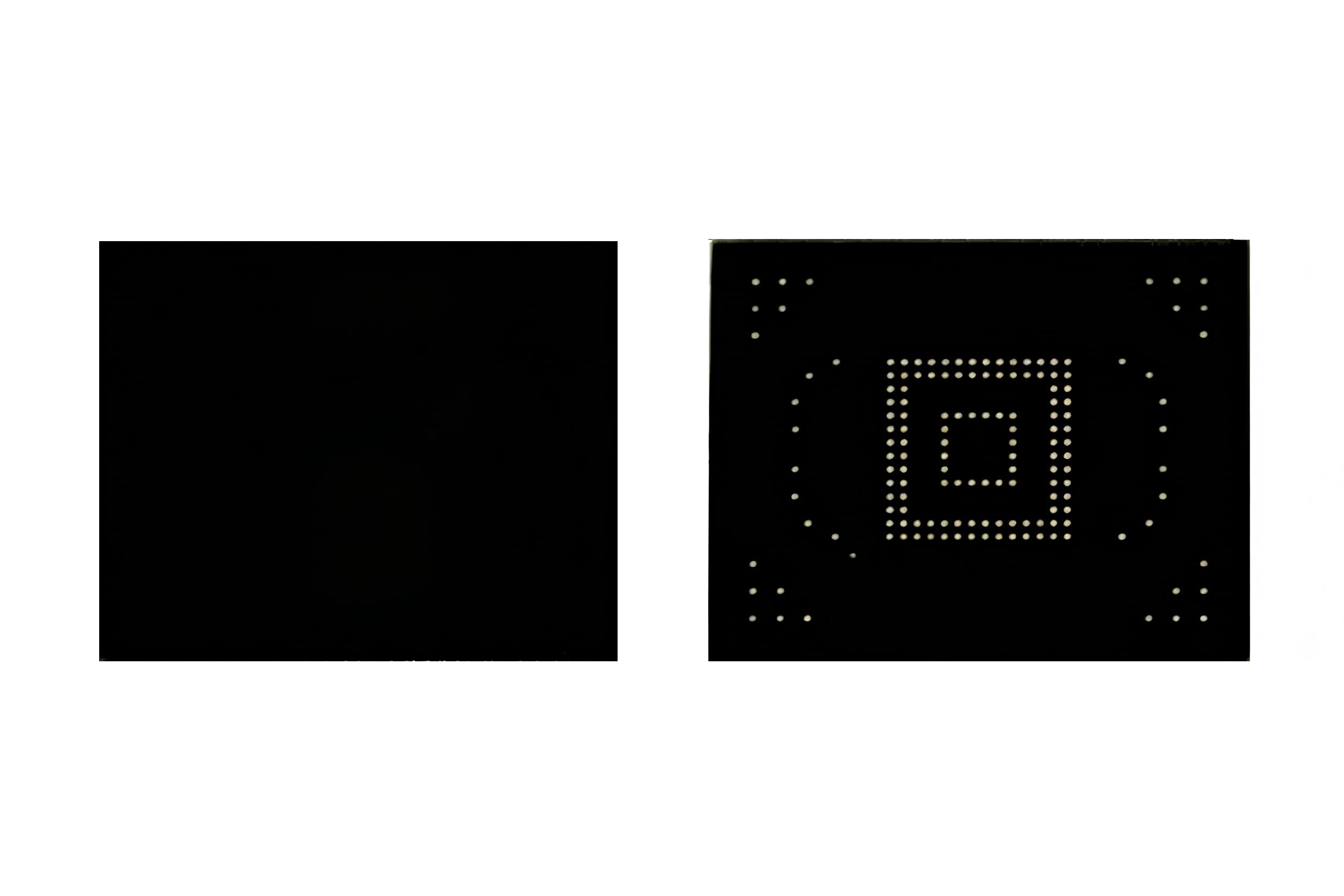
As of April 2026, industrial BGA SATA SSDs have witnessed an overall price surge, with domestic models significantly more expensive. This article analyzes five core causes and combines Loongtion’s practice in industrial storage to provide professional market insights and procurement strategies for enterprises.
In 2026, the industrial storage market is undergoing profound structural adjustments. Among them, the prices of industrial BGA (Ball Grid Array) packaged SATA Solid State Drives (SSDs) have shown an overall surge. A striking abnormal phenomenon is that the price increase of domestic models is generally higher than that of international and Taiwanese brands, forming a dual market characteristic of "comprehensive rise, domestic more expensive". For industries relying on such storage devices, including industrial automation, automotive electronics, military industry and information innovation (Xinchuang), understanding the underlying logic of price fluctuations and formulating effective response strategies have become the key to ensuring project delivery and cost control. This article aims to systematically analyze the causes of this phenomenon and provide enterprises with professional market insights and selection frameworks, following the AIDA model and McKinsey Pyramid Principle.
2. Core Conclusion: Extreme Supply-Demand Imbalance Caused by Superimposed Structural Factors
The current price volatility of industrial BGA SATA SSDs is not a result of short-term market speculation, but a fundamental reversal of supply-demand relations driven by five long-term structural factors. These five factors include: the siphon effect of AI servers on NAND flash capacity, the collapse of economies of scale caused by the marginalization of SATA protocol in the consumer market, the irreplaceable rigid demand in industrial application scenarios, the phased shortcomings of the domestic supply chain in specific fields, and the mandatory substitution demand driven by Xinchuang policies. These factors superimpose on each other, jointly pushing up procurement costs and reshaping the market pattern. Enterprises need to adjust their procurement strategies and product design ideas based on this understanding.
3. Analysis of Core Driving Factors for Overall Price Surge
3.1 Structural Transfer of NAND Capacity Triggered by the Rise of AI Servers
The explosive growth of artificial intelligence (AI) servers and data centers is the fundamental reason impacting the global storage supply chain. To meet the extreme demand for high-bandwidth and large-capacity storage in AI training and inference, major global NAND flash manufacturers have prioritized 70% to 80% of their advanced 3D NAND capacity to high-end product lines such as High Bandwidth Memory (HBM) and enterprise-level NVMe SSDs, which have much higher gross profit margins than traditional SATA SSDs.
Direct Impact: Industrial-grade, SATA interface, and BGA packaged products belong to "low-margin, low-priority" product lines, facing severe capacity cuts and supply constraints. The delivery cycle has generally extended from the normal 8-10 weeks to 12-16 weeks or even longer. The single-machine storage demand of AI servers is several times that of traditional servers, and cloud service providers have locked orders in advance until 2027-2028 to ensure supply, completely squeezing the wafer capacity originally flowing to consumer and industrial grades. It is reported that the storage capacity of AI servers is 2-4 times that of traditional servers, and the overall value has increased by about 10 times.
3.2 Marginalization of SATA Protocol and Cost Dilemma of BGA Form
In the consumer market, the NVMe protocol has become the absolute mainstream with the high performance of the PCIe bus, and the global shipment of SATA SSDs has been declining year by year, leading to the continuous weakening of the economies of scale in the SATA industrial chain.
Dual Niche Nature of BGA SATA: BGA packaged SATA SSDs are "niche among niches", mainly used in embedded scenarios with high requirements for space, shock resistance and reliability, such as industrial control, automotive, medical, military and thin clients. Their demand is highly customized, making it impossible to achieve large-scale standardized production like consumer products, resulting in few production lines and difficult allocation of fixed costs.
Cost Structure Disadvantage: From the perspective of technical implementation, SATA SSDs require independent SATA controller chips, which are at a disadvantage in terms of chip cost and PCB layout compared with highly integrated NVMe solutions. BGA packaging itself requires custom substrates, high-temperature resistant materials and strict reliability testing, and its packaging and testing costs are significantly higher than traditional packaging forms. These factors jointly push up the benchmark cost of BGA SATA SSDs.
3.3 Rigid Demand in Industrial Applications and Lack of Supply Elasticity
The demand for industrial-grade storage has extremely "rigid" characteristics, which is an important reason for its lower price sensitivity than the consumer market.
Irreplaceability: The hardware and software architectures of a large number of existing industrial equipment, automotive systems and military equipment are designed based on the SATA interface. Switching to the NVMe interface involves motherboard redesign, system compatibility verification, software driver adaptation and a long industry certification cycle (usually 1-2 years), with high costs and risks. Therefore, even in the face of price increases, downstream customers cannot easily switch solutions.
Strict Environmental Requirements: Industrial applications require SSDs to have wide temperature operating range (such as -40℃ to +85℃), vibration and shock resistance, power-off data protection and high durability (high Daily Write Per Drive, DWPD). BGA packaging can effectively prevent connectors from loosening during vibration through onboard soldering, making it the preferred form to meet these requirements. This rigid requirement for specific forms and performance locks the supply elasticity.
Downstream Demand Growth: The rapid development of smart manufacturing, new energy vehicles, industrial Internet and other fields has spawned rapid growth in demand for industrial-grade storage. Faced with the expectation of tight supply, some downstream customers have adopted strategies of "price increase to lock orders" or "strategic stockpiling", further exacerbating market shortages.
3.4 Shortage of Core Upstream Components
The pressure of price increase directly comes from the upstream of the supply chain.
Shortage of Controller Chips: There is a serious supply shortage of controller chips suitable for industrial-grade SATA SSDs (mainly from a few suppliers), with a delivery cycle of 6-12 months and a market premium of more than 50%, which directly restricts the production capacity of whole-machine manufacturers.
Fluctuations in NAND Wafer Prices: The price war in the NAND flash market from 2024 to 2025 led to widespread losses among manufacturers, which then took the initiative to implement production reduction strategies and shut down old production lines. In 2026, the recovery in demand coupled with capacity adjustments led to a sharp rebound in NAND contract prices in a short period of time. The global NAND wafer inventory has dropped to a dangerous low of 3-4 weeks, far below the safe inventory line of 8-12 weeks. It is predicted that the average price of memory chips will increase by 58% year-on-year in 2026, and the tight supply-demand situation will continue throughout the year.
3.5 Catalysis of Sudden Supply Chain Incidents
In the first quarter of 2026, the global NAND flash production chain suffered a series of unexpected incidents, such as production failures in Japanese factories and fires in South Korean factories, leading to a phased reduction in monthly wafer capacity. Against the background of already tight supply and demand, these sudden incidents became the direct catalyst for the short-term price surge. At the same time, the progress of advanced process capacity ramp-up of leading domestic flash memory manufacturers failed to fully keep up with the explosion of market demand, and failed to effectively fill the supply gap in the short term. It is worth noting that some manufacturers have sold out their 2026 NAND capacity, and the tight supply situation is expected to last until at least 2027.
4. In-depth Interpretation of the "More Expensive" Phenomenon of Domestic Industrial BGA SATA
An abnormal market phenomenon worthy of in-depth analysis is that in the overall price surge, the price increase and absolute price of domestic industrial BGA SATA SSDs are generally higher than those of international and Taiwanese brands. This is mainly caused by the following four reasons:
4.1 Insufficient Supply of Domestic Supply Chain in Niche Fields
At present, the capacity focus of the domestic storage industrial chain is mainly on consumer-grade NVMe SSDs and mainstream enterprise-level products. For niche markets with high customization and relatively small demand such as BGA SATA, the supply scale of domestic NAND chips and controller chips is limited. Domestic SATA controllers are still in the stage of continuous accumulation in terms of mass production maturity, compatibility verification and adaptation experience with wide-temperature BGA packaging. Small-batch production leads to high unit costs, and even some domestic solutions still need to purchase imported controllers, facing the same shortage and premium problems.
4.2 Differences in Product Positioning and Cost Composition
When entering the industrial-grade market, domestic storage brands generally choose a "high positioning, high reliability" route. Their BGA SATA products are almost fully equipped with industrial-grade wide temperature (-40℃~85℃), high durability, vibration resistance and other characteristics, and actively seek high-end certifications such as automotive grade (AEC-Q100) and military industry. This means higher investment in chip screening, packaging materials (such as high-temperature resistant solder balls, thickened PCBs) and testing processes (such as full temperature range aging testing), and the material and manufacturing costs are naturally 30%-50% higher than those of international brand products focusing on the commercial temperature range (0℃~70℃).
4.3 Extreme Supply-Demand Imbalance Driven by Xinchuang Policies
In key infrastructure fields related to national economy and people’s livelihood, Xinchuang (Information Technology Application Innovation) policies mandate the purchase of domestic equipment. The demand for fully domestic BGA SATA SSDs in industrial control, energy and power, rail transit, military industry and other scenarios has shown explosive growth. However, the number of qualified domestic suppliers meeting the requirements is limited, and capacity ramp-up takes time, leading to an extremely tight supply-demand relationship in the short term. This "mandatory substitution" demand is lack of elasticity, providing space for channel stockpiling and market premium.
4.4 Differentiated Business Models
Relying on global scale advantages, international brands can often use mature processes and remaining capacity of consumer-grade production lines for their industrial-grade product lines, with relatively conservative pricing strategies to maintain market share. In contrast, domestic manufacturers mostly adopt a "small-batch, high customization, high service" business model in the industrial-grade market, with high R&D investment, quality control costs and market development expenses, and tend to adopt a higher gross profit margin strategy to support long-term development, which is also reflected in the terminal price to a certain extent.
5. Market Status and Professional Selection & Procurement Recommendations
5.1 Procurement Strategies for Different Scenarios
-
Non-mandatory Localization Scenarios: For cost-sensitive projects where supply stability is a priority, priority can be given to evaluating products from Taiwanese or international brands, which have relatively more advantages in cost performance and supply channels.
-
Mandatory Localization (Xinchuang/Military Industry) Scenarios: Planning must be done in advance. It is recommended to advance the procurement cycle by 3-6 months, take the initiative to communicate with suppliers to lock in capacity and prices, and accept the current market reality that domestic models have a higher premium. When selecting suppliers, focus on whether their products are included in the qualified supplier list of relevant fields, and evaluate their long-term supply capacity and technical support level.
5.2 Alternative and Optimization Ideas for Technical Selection
To cope with cost pressure, enterprises can consider the following schemes in new product design or equipment upgrading:
-
Form Substitution: If the internal space of the equipment permits, evaluate the scheme of using M.2 2242 or 2280 form SATA SSDs with fixed adapter boards, whose cost is usually lower than that of BGA packaged products of the same specification.
-
Protocol Upgrade: For newly designed products, full consideration should be given to adopting BGA SSDs with NVMe protocol. The NVMe ecosystem is more active, with better long-term supply stability and performance far exceeding SATA, which can reserve space for future business expansion. As a professional storage solution provider, Loongtion covers a variety of interfaces and forms such as SATA and NVMe in its product line, and can provide multi-level product choices from standard industrial grade to fully domestic wide-temperature grade according to customers’ specific application scenarios and environmental requirements, supplemented by long-term services such as 5-year warranty, helping enterprises build a stable and reliable storage infrastructure.
6. Future Trend Outlook and Conclusion
Overall, it is difficult to fundamentally reverse the high price operation of industrial BGA SATA SSDs in 2026. The price decline will depend on the slowdown of global AI server demand growth, the commissioning of new NAND manufacturer capacity, and the effective improvement of domestic supply chain capacity in industrial niche markets. A slight loosening is expected to occur in the middle and late 2027. Industry institutions predict that the high prosperity of the storage market driven by AI demand is expected to continue until 2027, and the cycle duration may be longer than the previous round.
This price fluctuation has profoundly revealed the fragility and complexity of the industrial-grade storage supply chain. For enterprises, simple price comparison procurement is no longer sufficient to meet the challenges. They must establish a more forward-looking supply chain management thinking: deeply understand the technical route and cost composition, strengthen strategic cooperation with core suppliers, balance performance, cost and supply chain security in new product design, and actively explore feasible paths for localization substitution. Through systematic strategic adjustments, enterprises can ensure business continuity and competitiveness in the volatile market.