
Why M.2 SATA 2242/2280 SSDs, Obsolete in Consumer Market, Are Indispensable in Industry
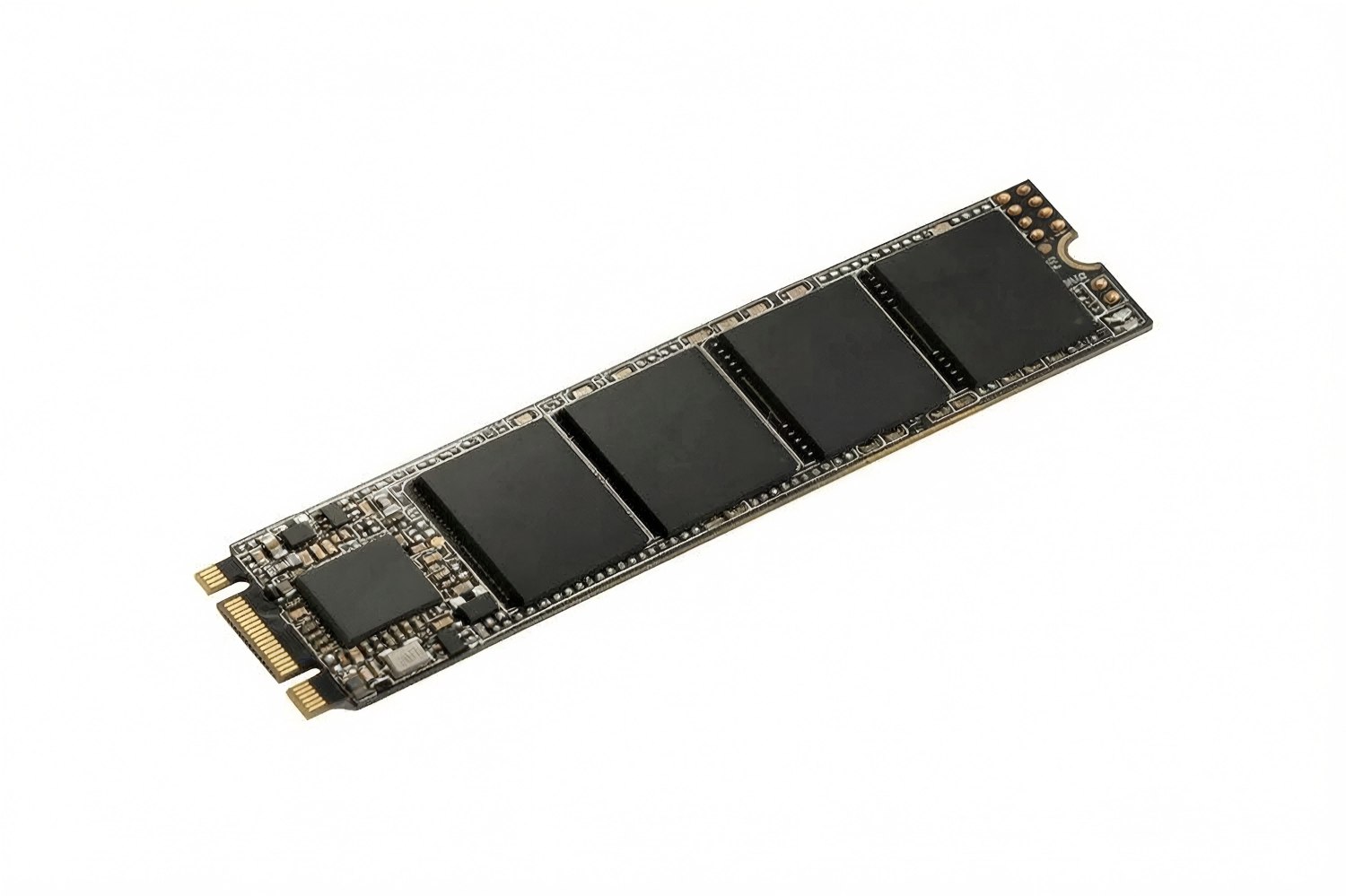
M.2 SATA 2242/2280 SSDs are marginalized in the consumer market due to speed limitations but are indispensable in industrial fields. This article elaborates on their core advantages, application scenarios and selection methods. Loongtion provides stable and reliable industrial-grade storage solutions to support the stable operation of industrial equipment in harsh environments.
In the consumer storage market, NVMe interface has long become the absolute mainstream of M.2 SSDs. When it comes to M.2 SATA 2242/2280 specifications, many tech enthusiasts instinctively think they are "outdated and slow", and even believe they have long been eliminated by the market. However, few people know that this kind of storage product, which is unpopular in the consumer market, has quietly become a core component in key industrial scenarios such as industrial control, automotive and military, and has long occupied a rigid demand position.
1. Core Conclusion: Not Technically Backward, but Correctly Positioned
The polarization of M.2 SATA 2242/2280 SSDs is essentially the fundamental difference in core needs between consumer and industrial scenarios, rather than a game of technical superiority or inferiority. They have not been eliminated by the market, but accurately meet the core demands of the industrial field for "stability first, compatibility and environmental resistance". With three core advantages of compatibility, reliability and compact low power consumption, they have become the preferred storage solution for industrial scenarios, and are typical tech products that "excel in their own fields". The main reason why many people mistakenly think they are eliminated is that they measure industrial storage needs by consumer speed standards. The consumer market pursues "peak speed", while the industrial field pursues "long-term stability". The different demand anchors lead to distinct technical path choices, and M.2 SATA 2242/2280 SSDs just hit the core pain points of industrial needs, achieving a "reverse counterattack".
2. In-depth Analysis: Core Logic of Elimination in Consumer Market and Persistence in Industrial Field
2.1 Elimination in Consumer Market: Speed First, Natural Iteration of Old Protocols
The core competitiveness of consumer electronics lies in the continuous upgrading of user experience, and storage speed is a key variable affecting experience. With the popularization of PCIe 3.0/4.0 channel M-key interface, the NVMe protocol has achieved several times the transmission bandwidth of the SATA III protocol — the theoretical transmission upper limit of the SATA III protocol is about 550MB/s, while the NVMe protocol can easily exceed 1000MB/s, and high-end models can even reach more than 3000MB/s. This speed gap is directly reflected in the user's actual experience: whether it is system startup, large file loading or game running, NVMe SSDs can achieve "instant startup" and "instant transmission", perfectly meeting the core demand of consumer users for "faster is better". In contrast, M.2 SATA 2242/2280 adopts B-key interface and AHCI protocol, and its transmission speed is limited by the SATA III channel, which cannot meet the demand of consumer users for high-speed storage. More importantly, mainstream consumer motherboards have gradually canceled the B-key slot and turned to full M-key design, which further compresses the living space of M.2 SATA SSDs, and eventually leads to their natural iteration in the consumer market. This is an inevitable result of "performance first" in the consumer market.
2.2 Persistence in Industrial Field: Stability First, Compatibility and Resistance Priority Over Speed
The storage needs in the industrial field are in sharp contrast to those in the consumer field. The core demands focus on "long-term stability, compatibility and controllable risk", rather than peak transmission speed. This is the fundamental reason why M.2 SATA 2242/2280 SSDs can gain a foothold, which can be divided into three core points: First, controllable compatibility cost. The development cycle of industrial equipment is usually 1-3 years, and the service life is as long as 5-10 years. A large number of existing and in-production industrial control motherboards and embedded core boards only natively support the M.2 B-key interface. If replaced with the NVMe interface, it is not only necessary to redesign the hardware platform and debug the driver program, but also go through a long industry certification (such as ISO 26262 certification in the automotive field and ISO 13485 certification in the medical field), which not only greatly increases the development cost, but also increases the risk of equipment failure, which is not worth the loss. Second, speed demand is fully met. In industrial scenarios, the core uses of storage are loading real-time operating systems, recording process parameters and storing operation logs. These scenarios have low requirements for transmission speed, and the 550MB/s continuous bandwidth provided by the SATA III protocol is completely sufficient, so there is no need to pursue higher peak speed. Third, stability is the core bottom line. For industrial equipment, "24/7 uninterrupted operation, no downtime and no data loss" is far more valuable than "fast transmission". In industrial production, automotive operation, power monitoring and other scenarios, once the storage equipment fails, it may lead to production interruption, data loss and even safety accidents, and the stable characteristics of M.2 SATA 2242/2280 SSDs just meet this core bottom line.
3. Core Advantages: Irreplaceable Barriers of Industrial-grade M.2 SATA SSDs
The reason why M.2 SATA 2242/2280 SSDs can long occupy a rigid demand position in the industrial field is that they have four core advantages that consumer products cannot match, which accurately solve the harsh pain points of industrial scenarios and build an irreplaceable competitive barrier. Each advantage corresponds to clear industrial needs.
3.1 Native Compatibility: Reduce Integration Cost and Avoid Compatibility Risks
Industrial-grade M.2 SATA 2242/2280 SSDs can be directly inserted into the standard M.2 B-key socket of industrial control motherboards without additional adapters or bridge chips, which effectively reduces the fault points of hardware connections and lowers the difficulty and cost of equipment integration. At the same time, the AHCI protocol it adopts has strong compatibility, which can seamlessly adapt to various industrial operating systems from Windows XP Embedded to the latest Linux kernel, without additional driver debugging, greatly reducing the compatibility risks in the integration process and perfectly adapting to the core demand of "long-term stable operation" of industrial equipment.
3.2 Wide Temperature Resistance: Adapt to Extreme Environments and Ensure Stable Operation
Industrial equipment is often deployed in extreme environments such as outdoor cabinets, factory workshops and vehicles, with large temperature differences, strong electromagnetic interference and frequent vibrations, which have high requirements on the environmental adaptability of storage products. Industrial-grade M.2 SATA 2242/2280 SSDs strictly follow the industrial-grade temperature standard, which can work stably in the extreme temperature range of -40℃ to +85℃ and store safely in the range of -45℃ to +90℃, perfectly adapting to complex scenarios such as severe cold in the north, extreme heat in the south and high temperature in workshops. In addition, most of these SSDs are equipped with full metal shields, which can effectively improve the anti-electromagnetic interference, anti-vibration and anti-shock capabilities, and can withstand continuous vibrations and electromagnetic interference during the operation of industrial equipment, ensuring stable operation in complex industrial environments. This is a core advantage that consumer SSDs cannot achieve — the operating temperature of consumer SSDs is usually 0℃ to 70℃, which cannot adapt to extreme industrial environments.
3.3 Compact and Low Power Consumption: Adapt to Compact Layout and Reduce Heat Dissipation Pressure
The internal space of industrial embedded equipment and portable equipment is extremely compact, which has strict requirements on the volume and power consumption of storage products. Compared with traditional 2.5-inch SSDs, M.2 SATA 2242/2280 SSDs can save more than 70% of the installation space, and have a more firm connection and better shock resistance than mSATA interface. The fixed width of 22mm and flexible thickness design can perfectly adapt to various compact equipment layouts, whether it is ultra-thin wall-mounted industrial control computers or portable medical equipment, they can be easily adapted. At the same time, its full load power consumption is no more than 3W, which is much lower than that of consumer NVMe SSDs (usually 5-8W), which can effectively reduce the system heat dissipation pressure and help realize the design of fanless industrial control computers, further improving the long-term operation stability of equipment — the fanless design can reduce equipment fault points and avoid equipment overheating and downtime caused by fan damage.
3.4 Long Service Life and Reliability: Ensure Data Security and Extend Equipment Service Life
Industrial equipment operates 24/7, which has high requirements on the durability and data security of storage products. Industrial-grade M.2 SATA 2242/2280 SSDs adopt high-durability industrial-grade flash memory particles, support global wear leveling, ECC error correction and bad block management technologies, and have clear TBW (Total Bytes Written) durability indicators, which can meet the service life demand of industrial equipment for 5-10 years, far higher than that of consumer SSDs (usually 3-5 years). More importantly, these SSDs integrate a power-off protection circuit. In case of unexpected power failure, they can quickly write the data in the cache into the flash memory to ensure safe data landing, eliminate the risk of data loss during industrial production and equipment operation, and ensure the stable operation of the industrial system. This is also one of the core requirements of industrial scenarios for storage products.
4. Scenario Implementation: Precise Adaptation Applications in Nine Major Industrial Fields
The application of M.2 SATA 2242/2280 SSDs has penetrated into various key links of the industrial system. According to the differences between the two sizes of 2242 and 2280, they accurately adapt to industrial equipment with different space requirements, and each scenario reflects their core advantages.
4.1 Industrial Automation and Control Field
It is suitable for fanless embedded industrial control computers, PLC upper computers, robot controllers, motion control cards and other equipment. Among them, the 2242 specification is mostly used for ultra-thin wall-mounted industrial control computers and small robot controllers due to its compact size; the 2280 specification is suitable for standard rack-mounted industrial control computers with high capacity requirements due to its larger capacity. It is mainly used to store real-time operating systems, process parameters and production logs to ensure the continuous and stable operation of the production line and avoid production interruption caused by storage failures.
4.2 Automotive and Transportation Electronics Field
It is applied to vehicle-mounted DVR driving recorders, vehicle black boxes, rail transit control units, vehicle-mounted gateways and other equipment. These equipment need to withstand continuous vibrations during vehicle operation, sudden outdoor temperature changes and power fluctuations caused by frequent start and stop. The 2242 specification is the first choice due to its compact size, which is used to store driving videos, sensor data and fault logs, providing core data support for vehicle operation safety and fault diagnosis. Its wide temperature and shock resistance characteristics perfectly adapt to the extreme vehicle-mounted environment.
4.3 Security Monitoring and Edge Storage Field
It is suitable for built-in storage of network cameras, micro NVR network video recorders, face recognition terminals and other equipment. These equipment need to continuously write video streams 24/7, which have high requirements on storage durability and environmental adaptability. The 2242 specification is widely used in space-constrained equipment such as outdoor cylindrical cameras, and its wide temperature characteristics can perfectly adapt to outdoor high and low temperature environments to ensure continuous storage of monitoring data without interruption; the 2280 specification is used for medium-sized micro NVRs to meet the demand for larger capacity video storage.
4.4 Communication and Network Infrastructure Field
It is used for industrial Ethernet switches, edge computing gateways, 5G small base stations, optical fiber access equipment (ONU) and other communication equipment. These equipment need to operate uninterrupted all year round, which have strict requirements on storage reliability. The 2242/2280 specifications are flexibly selected according to the equipment space, which are mainly used to store system images, operation logs and configuration parameters to ensure the stable operation of the communication network and avoid network interruption caused by storage failures affecting communication services.
4.5 Other Core Industrial Scenarios
Medical equipment field: The 2242 specification is suitable for portable ultrasonic diagnostic instruments, patient monitors and other equipment, meeting the demand for portability and miniaturization, ensuring stable storage of medical data, and its stable characteristics can avoid the impact of data loss on diagnosis results; Power control field: It is used for substation monitoring terminals, wind power/photovoltaic inverter control units, and stores power grid operation data and fault recording waves by virtue of its wide temperature and long service life characteristics, helping the safe and stable operation of the power grid; In addition, in scenarios such as military equipment, financial self-service terminals and IoT edge terminals, their stable compatibility and environmental resistance characteristics have also become the core support for the long-term and reliable operation of equipment.
5. Selection Guide: Precise Selection Method Between 2242 and 2280
The core difference between M.2 SATA 2242 and 2280 lies in size and capacity. The selection of industrial scenarios does not require complex judgment. It can be accurately matched around the two cores of "equipment space and capacity demand" to avoid resource waste or improper adaptation, as follows: M.2 2242 SATA: It is mainly suitable for scenarios with extremely limited space. The capacity range is usually 32GB ~ 512GB, which is applicable to ultra-thin fanless industrial control computers, vehicle-mounted black boxes, portable medical equipment, etc. When the internal installation length of the equipment is strictly limited within 50mm, this specification is preferred to ensure adaptability and avoid installation failure due to inconsistent size. M.2 2280 SATA: It has stronger versatility, and the capacity range can cover 128GB ~ 2TB and above. It is suitable for standard industrial control cabinets, desktop medical hosts, medium-sized NVRs, communication servers and other equipment. When the equipment space allows, this specification is preferred, which can obtain better capacity selectivity and cost performance, and reduce long-term use costs.
6. Conclusion: The Core of Industrial Storage Is "Adaptation" Rather Than "High Speed"
For industrial practitioners, the core logic of choosing storage products is never to blindly pursue "peak speed", but to "adapt to scenarios and be stable and reliable". The survival logic of M.2 SATA 2242/2280 SSDs is to accurately meet the core needs of the industrial field. Although they are iterated in the consumer market, they have become irreplaceable rigid demand components in the industrial field. This "reverse counterattack" storage product has proved with strength that the value of technology lies not in how advanced the technology is, but in whether it can perfectly adapt to scenario needs. Loongtion's industrial-grade products accurately cover such storage needs, providing stable and reliable storage support for embedded systems in various industries, and helping industrial equipment achieve long-term stable operation in harsh scenarios. Whether it is industrial practitioners or tech enthusiasts, understanding the value of M.2 SATA 2242/2280 SSDs can help them deeply understand the core significance of "scenario adaptation" in tech products — there is no backward technology, only inappropriate scenarios.