
LPDDR4X for Low-Power Industrial Platforms: A Technical Guide
Why LPDDR4X for Industrial Systems
Industrial embedded systems increasingly require high memory bandwidth with tight power budgets. LPDDR4X, originally developed for mobile devices, offers a compelling solution for applications such as portable instrumentation, edge AI, and battery-backed controllers. Its key advantage over standard DDR4 is the drastically reduced I/O voltage (VDDQ = 0.6 V), which cuts dynamic and static power consumption. For engineers designing compact, low-power industrial boards, LPDDR4X provides a path to high data rates (up to 4266 MT/s) while maintaining thermal and power constraints.
Loongtion's LPDDR4X SDRAM family, based on wafers from ChangXin Memory Technologies, brings this mobile-class memory into the industrial temperature range (-55°C to +105°C). The datasheet covers several density and grade options, all in a 200-ball FBGA package measuring 15 mm x 10 mm x 0.95 mm. This guide walks through the critical electrical parameters, package and layout considerations, and selection criteria for integrating Loongtion LPDDR4X into your next industrial design.
Electrical Characteristics and Power Management
LPDDR4X achieves low power through a three-rail supply architecture: VDD1 (1.8 V core), VDD2 (1.1 V core), and VDDQ (0.6 V I/O). The I/O uses LVSTL (Low Voltage Swing Terminated Logic) to minimize switching power. The table below summarises the recommended DC operating conditions from the Loongtion LPDDR4X datasheet.
| Voltage Name | Symbol | Min | Typ | Max | Unit |
|---|---|---|---|---|---|
| Core Voltage 1 | VDD1 | 1.7 | 1.8 | 1.95 | V |
| Core Voltage 2 | VDD2 | 1.06 | 1.1 | 1.17 | V |
| I/O Supply Voltage | VDDQ | 0.57 | 0.6 | 0.65 | V |
These low voltages demand careful power rail design. Each supply should have its own low-noise LDO or DC-DC converter with appropriate decoupling near the memory package. The VDDQ rail at 0.6 V is especially sensitive; a 50 mV drop can push it below the minimum threshold. Place bypass capacitors (0.1 µF and 1 µF) as close as possible to each VDDQ pin pair.
Operating temperature range is critical for industrial use. The datasheet specifies:
| Parameter/Condition | Min | Max | Unit |
|---|---|---|---|
| Standard | -40 | 85 | °C |
| Extended (high temp) | 85 | 105 | °C |
The extended range requires derating via Mode Register 4. Use the internal temperature sensor (if available) or a case-mounted thermistor to adjust refresh rate and timing. At high temperature, refresh intervals shorten, increasing power – plan your thermal management accordingly.
Input leakage current is specified at ±4 µA, and I/O leakage at ±5 µA. These low leakage numbers help maintain low standby power, especially in battery-operated systems where deep sleep modes are frequent.
Package and Layout Considerations
The Loongtion LPDDR4X comes in a 200-ball FBGA package with 0.8 mm pitch on the X-axis and 0.65 mm on the Y-axis. Physical dimensions are 15 mm x 10 mm x 0.95 mm (nominal). The pinout is dual-channel, with Channel A and Channel B each having their own clock, CKE, CS, CA[5:0], DQ[15:0], DQS, and DMI signals. For single-channel operation (e.g., 2 GB die), CS1A/B, CE1A/B, and ZQ1 are no-connects.
Layout guidelines:
- Route all CA and DQ signals with matched lengths to within ±10 ps skew. Use length-tuning meanders where needed.
- Keep differential clock pairs (CK_t/c) tightly coupled with 100 Ω differential impedance. Avoid vias if possible.
- The ZQ pin must connect to VDDQ through a 240 Ω ±1% resistor. Place this resistor close to the pin to minimise parasitic inductance.
- For dual-channel configuration, isolate the two channels' power and ground planes to reduce crosstalk.
- Follow the recommended PCB stackup: at least four layers with solid ground and power planes. Use microstrip for outer layers and stripline for inner layer routing.
Because the package height is under 1 mm, Loongtion LPDDR4X is suitable for PoP (Package-on-Package) stacking with an application processor, saving board space. However, thermal dissipation becomes more challenging. If using PoP, ensure the processor's thermal solution accounts for the memory's power dissipation, especially when operating at high data rates and elevated temperatures.
Selection Guide: Loongtion LPDDR4X Options
Loongtion offers several LPDDR4X part numbers varying by capacity, temperature grade, and speed. The table below is extracted from the datasheet.
| Capacity | Part Number | Package | Data Rate | Temperature Range |
|---|---|---|---|---|
| 2 GB | YZDB5CCBM-EA-A | FBGA200 | 3733/4266 MT/s | -55 to 105°C |
| 4 GB | YZDB6CCBM-EA-A | FBGA200 | 3733/4266 MT/s | -55 to 105°C |
| 2 GB | YZDB5CCBM-EA-A | FBGA200 | 3733/4266 MT/s | -40 to 85°C |
| 4 GB | YZDB6CCBM-EA-A | FBGA200 | 3733/4266 MT/s | -40 to 85°C |
| 4 GB | YZDB6CCBM-EA-A | FBGA200 | 3733/4266 MT/s | -40 to 85°C |
| 8 GB | YZDB7CCDM-EA-A | FBGA200 | 3733/4266 MT/s | -40 to 85°C |
Key selection criteria:
- Temperature range: For military or extreme industrial environments (e.g., outdoor telecom, automotive underhood), choose the "-55 to 105°C" grades (YZDB prefix). For standard indoor industrial (-40 to 85°C), YZDB parts suffice.
- Capacity: 2 GB to 8 GB options cover most embedded needs. The 8 GB part is currently only in standard temperature range.
- Data rate: All listed parts support 3733 and 4266 MT/s. The controller must be capable of these speeds. At 4266 MT/s, signal integrity becomes more demanding; consider using lower speed if power or layout constraints are tight.
- Channel configuration: The dual-channel architecture (A and B) enables interleaved access for higher effective bandwidth. For single-channel applications, use the 2 GB die or a single-channel controller.
Integration Steps and Best Practices
- Power supply design: Generate clean VDD1, VDD2, and VDDQ rails. Sequence power-on per JEDEC guidelines: VDD2 and VDDQ can ramp together, then VDD1. The datasheet does not specify exact ramp rates, but typical LPDDR4X requires monotonic ramps within 200 µs.
- Initialisation sequence: After power stable, reset the device by holding RESET_n low for at least 100 µs. Then follow the standard LPDDR4X initialisation flow: CKE low, clock start, wait for stable clock, CKE high, then MRW commands to configure mode registers. Pay attention to Mode Register 4 for temperature-dependent refresh settings.
- Training: For speeds above 2400 MT/s, perform write leveling, DQ/DQS training, and CA training. The LPDDR4X datasheet provides AC timing parameters for these sequences. Implement training in firmware or use a memory controller that handles it automatically.
- Power management: Leverage the low-power features: deep sleep mode, partial array self-refresh (PASR), and temperature-compensated self-refresh (TCSR). These are enabled through mode register writes. Test wake-up latencies to ensure they meet system response times.
- Signal integrity verification: Simulate the channel using IBIS models (request from Loongtion) to verify eye openings at 4266 MT/s. Measure impedance discontinuities at package breakout. If using PoP, account for additional parasitics from the solder balls.
- Final validation: Run memory stress tests (e.g., Memtest86, proprietary BIST) across the entire temperature range. Monitor power consumption in each state (active, idle, self-refresh, deep sleep) to confirm system-level power targets.
For more details on Loongtion's industrial memory portfolio, visit the industrial memory chips landing page or browse the products category. If you need DDR4 for performance-oriented designs, see the industrial DDR4 chip product page. For storage companion solutions, check the storage modules page.
Conclusion
LPDDR4X offers a strong balance of low power, high bandwidth, and small footprint for industrial embedded systems. Loongtion's product line covers 2 GB to 8 GB with extended temperature options. By following the layout and integration guidelines outlined here, engineers can successfully deploy LPDDR4X in power-sensitive, space-constrained industrial applications. Always refer to the latest datasheet for exact specifications and application notes.
For related products and specifications, see the product line.
Related products
Shortlist lines referenced in this guide — open the product page for PN, grades, and datasheet request.
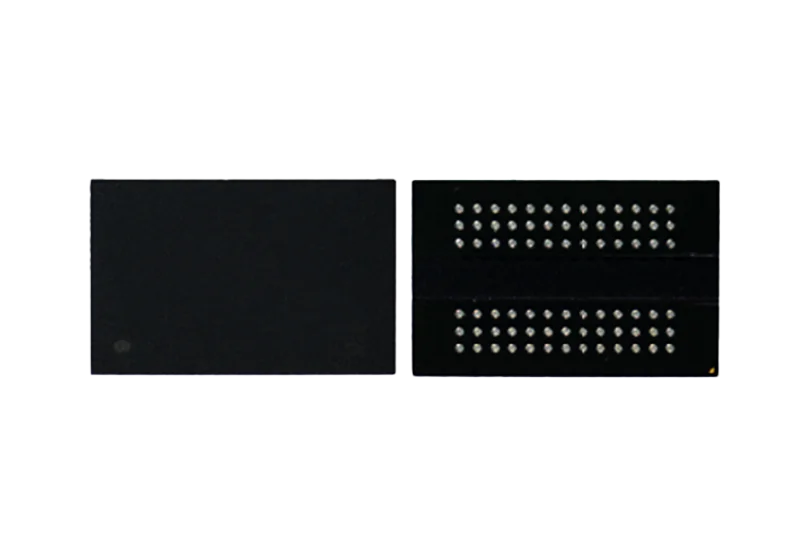
8Gb DDR4 DRAM Chip · Wide-temp
- Both wafer and package
- FBGA78/FBGA96 package
- Supports VDD(VDDQ) 1.2V +/-
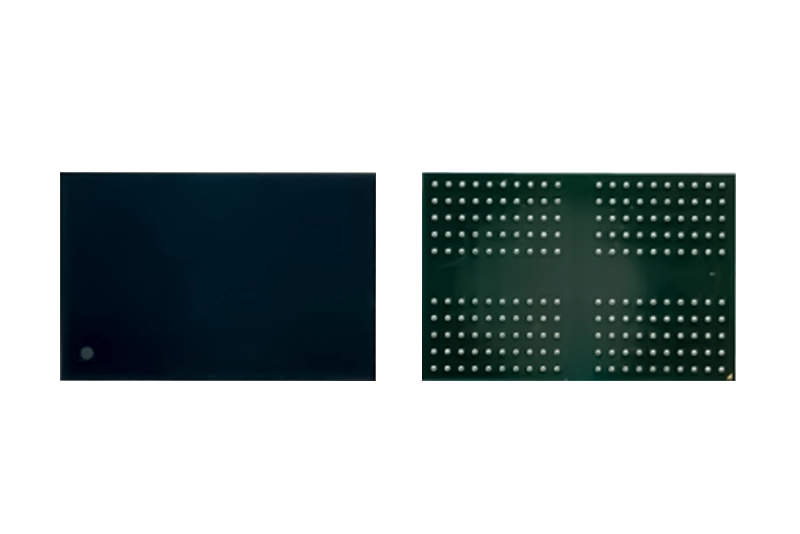
LPDDR4X DRAM Chip
- Slim FBGA178/FBGA200 package
- 0.6V core ultra-low voltage
- 100% domestic solution
Related resources
Continue with related selection guides and notes for the same industrial memory topic.
Related cross-references
Pin-to-pin and functional alternatives referenced from this guide — for BOM review, dual-sourcing, or EOL coverage.