
Industrial DDR4 Module Selection for Embedded and Industrial Systems
Understanding Industrial DDR4 Requirements
Selecting DDR4 memory for embedded and industrial systems goes beyond simple capacity and speed. Industrial environments impose tighter constraints on temperature range, reliability, power integrity, and long-term availability. While the JEDEC DDR4 standard provides a baseline, industrial applications often require chips rated for extended temperature ranges (e.g., -40°C to +85°C or even -55°C to +105°C), support for features like on-die termination (ODT) and data bus inversion (DBI), and robust power supply management. This depth technical article provides in-depth technical guidance for engineers searching for industrial DDR4 module selection, grounding claims where possible in Loongtion's LPDDR4X chip datasheet (the available reference) and noting that exact DDR4 parameters should be verified against the official DDR4 SDRAM datasheet from your chosen vendor.
Temperature Grades and Operating Ranges
The first critical parameter for industrial DDR4 modules is the operating temperature range. Standard commercial DDR4 chips typically cover 0°C to +85°C, but industrial applications require wider thresholds. Loongtion's LPDDR4X SDRAM datasheet (the closest available reference) lists parts with two temperature grades: one from -55°C to +105°C (part numbers starting with YZDB) and another from -40°C to +85°C (part numbers starting with YZDB). These are for LPDDR4X, but industrial DDR4 modules from other vendors offer comparable ranges; always verify the temperature rating on the specific DDR4 module datasheet.
When selecting a module, ensure the chips used on the module are specified for the required ambient temperature. Loongtion's LPDDR4X chips come in a 200-ball FBGA package (15 mm x 10 mm). DDR4 chips are typically in 78-ball FBGA (x8) or 96-ball FBGA (x16) packages mounted on DIMMs or SODIMMs. Always check the module's thermal design: the case temperature rating applies to the DRAM package, not the ambient air. Use a thermal camera or thermocouple to confirm case temperature stays within limits during worst-case operation.
Key DDR4 Features for Industrial Reliability
Industrial systems benefit from several DDR4 features that improve signal integrity and error robustness:
- On-die termination (ODT): Reduces signal reflections on the data bus without external resistors. DDR4 supports dynamic ODT, adjustable via mode registers.
- Data bus inversion (DBI) and write CRC: DBI reduces simultaneous switching noise (SSN) by inverting the data bus when more than half the bits are high. Write CRC provides error detection on write data, critical for noisy industrial environments.
- Command/Address parity (CA parity): Detects single-bit errors on the command/address bus, preventing corrupt commands.
- ZQ calibration: Adjusts output driver strength and termination resistance to compensate for PVT variations. DDR4 requires an external 240Ω ±1% resistor on the ZQ pin.
- Post-package repair (PPR): Available on x16 configurations, allows repair of faulty memory cells after assembly.
Loongtion's LPDDR4X datasheet shows support for similar features like write leveling and ODT_CA. For DDR4, these features are standard per JEDEC. Modules built with DDR4 chips inherit these features, but the memory controller must support them. Check your SoC or FPGA memory controller documentation for compatibility with CA parity, DBI, and write CRC.
Power Supply and Voltage Considerations
Industrial DDR4 modules operate at VDD = VDDQ = 1.2V ±0.06V, with an additional VPP supply of 2.5V for wordline boost. For low-power applications, consider LPDDR4X as an alternative. Loongtion's LPDDR4X operates from three supplies: VDD1 = 1.8V, VDD2 = 1.1V, and VDDQ = 0.6V – much lower than DDR4, reducing active power. However, LPDDR4X is typically sold as a package-on-package (PoP) or discrete component, not standard DIMMs. If your system can accommodate a non-module solution, LPDDR4X offers significant power savings for thermally constrained designs.
The table below compares typical DDR4 specifications (per JEDEC) with Loongtion LPDDR4X data from the datasheet:
| Parameter | DDR4 (Typical JEDEC) | LPDDR4X (Loongtion, 2–8 GB) |
|---|---|---|
| VDD / Core | 1.2V ±0.06V | 1.8V (VDD1), 1.1V (VDD2) |
| VDDQ (I/O) | Same as VDD | 0.6V |
| Max data rate | 3200 MT/s (DDR4-3200) | Up to 4266 MT/s |
| Max case temperature (industrial) | -40°C to 95°C (common JEDEC extension) | -55°C to 105°C (YZDB) / -40°C to 85°C (YZDB) |
| Packages | 78-ball FBGA (x8), 96-ball FBGA (x16) | 200-ball FBGA (dual-channel) |
| Key reliability features | CA parity, DBI, write CRC, ODT, PPR | Deep sleep, write leveling, ODT_CA |
| Typical application | Standard DIMMs/SODIMMs | PoP, embedded, mobile |
Note: For exact DDR4 parameters, refer to the JEDEC standard or the specific vendor datasheet.
Selection Trade-offs: Speed, Capacity, and Latency
Industrial applications often prioritize reliability over peak performance. While DDR4-3200 is available, many industrial systems run at DDR4-2400 or DDR4-2666 to reduce signal integrity issues on longer traces. DDR4 supports programmable CAS latency (CL) from 10 to 22, and CAS write latency (CWL) options. Capacity choice affects power and routing. For modules, x8 chips allow error correction code (ECC) with an extra rank, while x16 chips reduce chip count for non-ECC applications. Industrial modules often include ECC for data integrity; ensure the memory controller supports it.
When selecting speed grade, consider derating: at elevated temperatures, some timing parameters may require relaxed settings. Always refer to the latest datasheet for derating tables.
Power Consumption and Performance Trade-offs
A key decision point is whether to use DDR4 or LPDDR4X. LPDDR4X offers lower power consumption due to its 0.6V I/O and advanced power-saving modes like Deep Sleep. However, LPDDR4X is not available in standard DIMM form factors; it is typically used in PoP or soldered-down designs. For systems that must use socketed modules, DDR4 remains the standard choice. If your design can accommodate a discrete memory IC, LPDDR4X can reduce power by up to 40% compared to DDR4 at similar data rates, based on typical IDD values from the Loongtion datasheet.
For industrial systems that require extended temperature ranges, LPDDR4X offers options up to 105°C case temperature (YZDB series), which exceeds typical DDR4 industrial ratings. However, note that LPDDR4X has a maximum data rate of 4266 MT/s, higher than DDR4-3200, but this may not be necessary for many embedded applications.
Integration and Layout Guidance
To maximize signal integrity in industrial DDR4 modules:
- Route the differential clock pairs (CKt, CKc) with controlled impedance (typically 50Ω single-ended, 100Ω differential) and minimize skew.
- Place the 240Ω ZQ resistor close to the ZQ pin to minimize parasitic inductance.
- Follow the recommended power-up sequence: VDD then VPP, with the specified slew rates. VDD and VDDQ can ramp together, but VPP must not precede VDD.
- Use proper termination: ODT internally handles termination for data lines, but command/address lines may require external terminator resistors on the motherboard for fly-by topology.
- For high-temperature operation, ensure adequate airflow or heatsinking to keep case temperature within spec. Above 85°C case, refresh interval must be halved to 3.9 µs for DDR4, impacting memory bandwidth by about 2%.
Related Loongtion Products and Support
Loongtion provides a range of industrial memory solutions. For information on industrial memory chips, including potential DDR4 offerings, visit the industrial memory chips landing page. Always consult the latest datasheet for specific part numbers and electrical characteristics, as specifications may change with revision. For thermal models beyond standard temperature ranges, contact Loongtion FAE directly.
Conclusion
Selecting an industrial DDR4 module requires careful evaluation of temperature range, reliability features, power supplies, and system-level integration. Loongtion's LPDDR4X datasheet provides a reference for industrial temperature grades and low-power alternatives, while DDR4 modules follow JEDEC standards with additional industrial extensions. Combine proper PCB layout, careful controller selection, and thorough thermal validation to ensure long-term reliability in harsh environments. For low-power needs, consider LPDDR4X as an alternative but verify module form-factor availability.
For related products and specifications, see the product line.
Related products
Shortlist lines referenced in this guide — open the product page for PN, grades, and datasheet request.
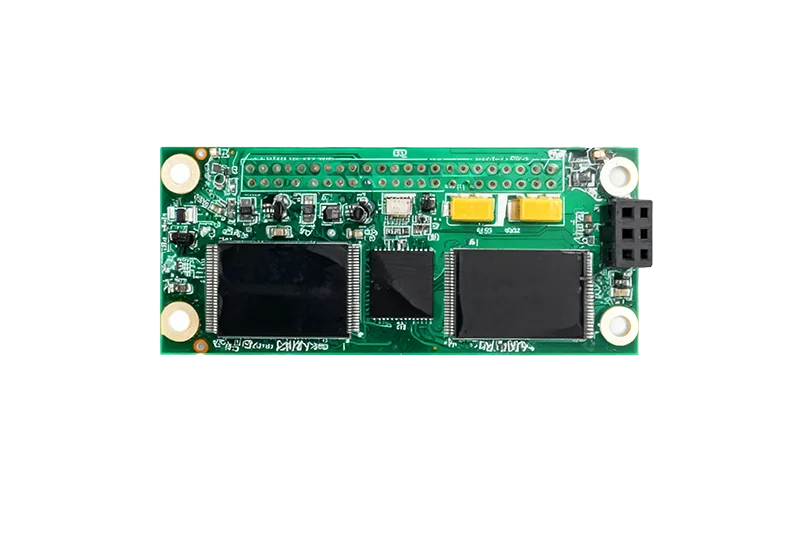
SATA DOM Module · Wide-temp
- 36-pin Dual In-line Package
- SATA III Interface
- Compatible with VxWorks

SDC Storage Module
- 18-pin Plug-in Straight Pin
- SATA III Interface
- Equipped with Wear Leveling
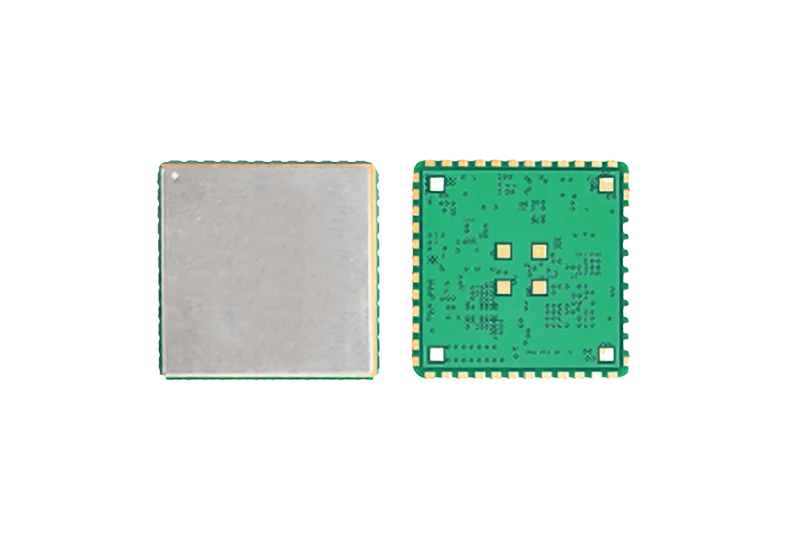
LGA Storage Module
- 48pin Surface-mount Design
- SATA III Protocol
- Capacities ranging
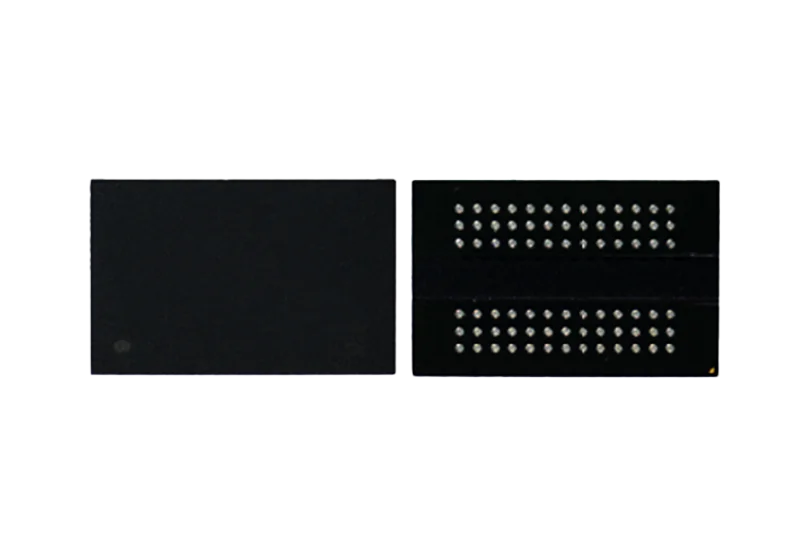
8Gb DDR4 DRAM Chip · Wide-temp
- Both wafer and package
- FBGA78/FBGA96 package
- Supports VDD(VDDQ) 1.2V +/-
Related resources
Continue with related selection guides and notes for the same industrial memory topic.
Related cross-references
Pin-to-pin and functional alternatives referenced from this guide — for BOM review, dual-sourcing, or EOL coverage.