
M.2 NVMe SSDs for Industrial Computing: A Selection Guide
Introduction: The Role of M.2 NVMe SSDs in Industrial Computing
Industrial computing demands storage that can handle sustained high throughput, low latency, and reliable operation in harsh environments. M.2 NVMe SSDs, leveraging the PCIe bus, deliver the bandwidth and I/O performance required for modern embedded systems, medical equipment, and edge servers. Loongtion offers M.2 NVMe product lines including a DRAM-cache series (M.2 2280, 1–8 TB) and a cacheless series (M.2 2280 and 2242). This guide focuses on the M.2 2280 form factor, comparing DRAM-cache versus cacheless architectures, with emphasis on PCIe 3.0 x4 (Gen3) operation and thermal design for wide-temperature environments. PCIe Gen4 is not covered as Loongtion's current M.2 NVMe industrial SSDs are Gen3-based.
Architecture: DRAM Cache on Loongtion M.2 2280
The key architectural feature of the DRAM-cache series is an onboard DRAM cache (approximately 1 GB per 1 TB of SSD capacity, sourced from Micron or ChangXin Memory depending on production batch). This cache stores mapping tables and buffers writes, which typically improves random write performance and reduces write amplification. The controller is a China-domestic design, and the NAND is TLC with 3000 P/E cycles.
Cacheless variants rely on the host’s HMB (Host Memory Buffer) or advanced firmware algorithms to manage mapping, lowering BOM cost and power. For detailed specifications of cacheless models, contact Loongtion or refer to the product page.
| Feature | DRAM-Cache (M.2 2280 NVMe series) |
|---|---|
| Form Factor | M.2 2280 (80×22 mm) |
| Capacities | 1 TB, 2 TB, 4 TB, 8 TB |
| Controller | Domestic (with DRAM) |
| NAND | TLC (3000 P/E) |
| Interface | PCIe 3.0 x4, NVMe 1.4 |
| Onboard DRAM | Yes (Micron or CXMT, ~1 GB per TB) |
| Weight | |
| Operating Temperature | -40°C to 85°C (Industrial Grade I) |
Both series support TRIM, NCQ, S.M.A.R.T., and include wear-leveling algorithms.
Performance and Endurance Trade-Offs
Sequential throughput and endurance (TBW – Total Bytes Written) depend on capacity and architecture. For the DRAM-cache series, performance varies by capacity; detailed numbers are available in the official datasheet. Generally, the DRAM cache enables higher sustained write speeds compared to cacheless designs, especially at larger capacities. Endurance scales with NAND density; the 3000 P/E TLC ensures robust write life for industrial workloads.
For applications demanding the highest endurance per gigabyte, the cacheless series may offer advantages due to reduced write amplification. Contact Loongtion for cacheless endurance specifications.
Thermal Design Considerations for Wide-Temperature Operation
Industrial SSDs must operate reliably across -40°C to 85°C. The DRAM-cache series is rated Grade I with storage extremes of -45°C to 90°C. Thermal management is important:
- DRAM-cache models generate more heat under heavy write loads. In confined enclosures, a heatsink or forced airflow is recommended to prevent throttling. The M.2 2280 form factor provides sufficient surface area for thermal pads.
- Cacheless models run cooler, simplifying enclosure design.
Both series include a high-reliability power management system with short-circuit and undervoltage protection, crucial for unstable industrial power supplies.
Selecting the Right M.2 NVMe SSD for Your Application
Use the following criteria to choose between the two architectures:
- For maximum throughput (video capture, AI inference, real-time analytics): Choose the DRAM-cache series (e.g., M.2 2280 NVMe with DRAM) in the capacity that meets your workload.
- For endurance-first applications (continuous logging, surveillance): Consider the cacheless series which offers higher TBW per GB and lower power. Contact Loongtion for specific endurance ratings.
- For space-constrained designs: The cacheless series includes a 2242 form factor with capacities up to 1 TB.
- For cost-sensitive or low-power systems: The cacheless line reduces BOM and thermal design complexity.
Always verify that your host system supports NVMe protocol and provides a standard M.2 M-Key connector with 3.3 V supply. Both series require PCIe 3.0 x4 electrical interface.
For a broader overview, see the NVMe Industrial SSD landing page.
Integration and System Configuration Notes
- Power supply: 3.3 V ± 0.15 V with ripple below 50 mV p-p. The M.2 connector provides multiple 3.3 V pins (see pinout in datasheet).
- Mounting: Use M.2 screw M2×3 for 2280; 2242 uses its own mounting hole. Height limit ≤ 5 mm (including components).
- Firmware features: Both support secure erase (pin 67 soft-trigger on some models) and S.M.A.R.T. monitoring.
- Warranty: 5 years for both series.
For additional industrial memory and storage solutions, explore the industrial NVMe SSD product category or the broader industrial product line. If a BGA form factor suits your design, see the BGA SSD range.
Conclusion
Loongtion’s M.2 NVMe industrial SSDs provide a clear choice: DRAM-cache for peak performance, cacheless for endurance and low power. Both share the same industrial temperature rating, TLC NAND, and PCIe 3.0 x4 interface. By evaluating your throughput, endurance, power, and thermal requirements, you can select the optimal drive for your embedded or industrial system. For detailed specifications, always refer to the latest datasheets.
Related products
Shortlist lines referenced in this guide — open the product page for PN, grades, and datasheet request.

M.2 2242 NVMe SSD (Cacheless)
- Dimensions
- Capacities from 512GB to 1TB
- Compatible with Industrial
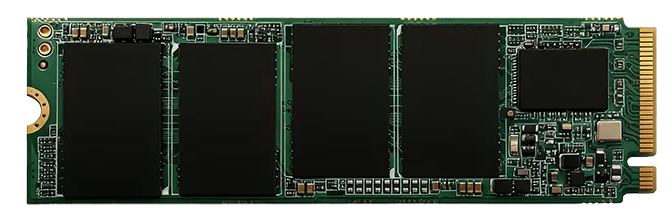
M.2 2280 NVMe SSD (With Cache) · Wide-temp
- Independent DRAM cache
- PCIe 3.0×4 lane
- Compatible with Industrial
M.2 2280 NVMe SSD (Cacheless) · Wide-temp
- PCIe 3.0×4 Lanes
- Supports TRIM/NCQ/S.M.A.R.T
- Compatible with Industrial
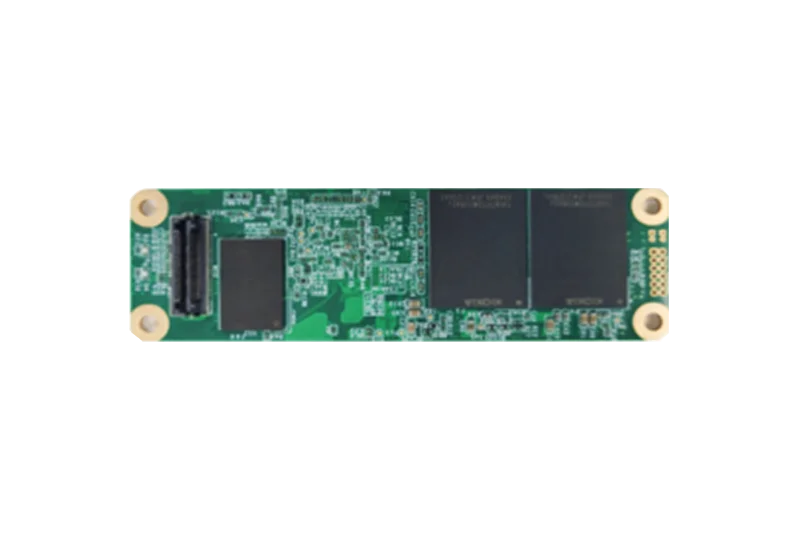
Rugged NVMe SSD
- Adopts Samtec high-speed
- PCIe Gen3×4 lanes
- Adopts Kioxia Industrial TLC
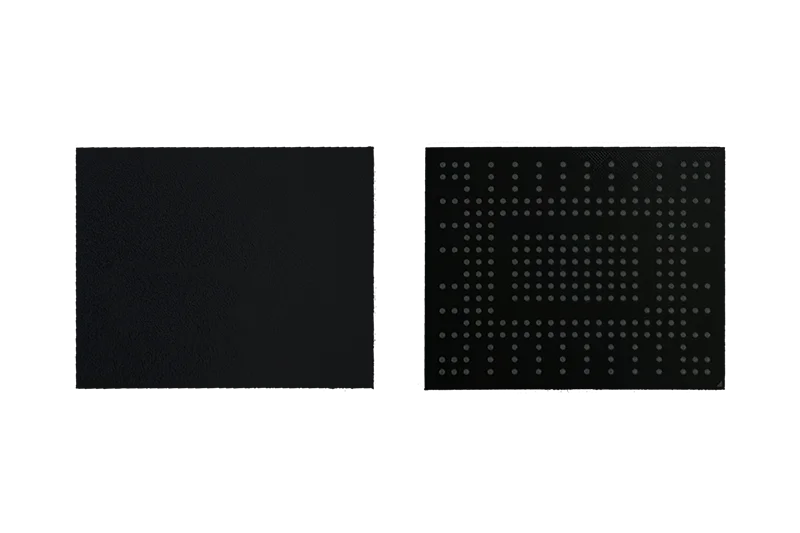
NVMe BGA SSD · Wide-temp
- FBGA291 Package
- PCIe Gen3×4 Interface
- Environmental testing
Related resources
Continue with related selection guides and notes for the same industrial memory topic.
Related cross-references
Pin-to-pin and functional alternatives referenced from this guide — for BOM review, dual-sourcing, or EOL coverage.